This month marks the 25th anniversary of the September 11, 2001 terrorist attacks on the U.S., which we have marked with this article to honor both those who died and the countless others who selflessly helped the victims and their loved ones.
Many of us remember what is now known simply as “9/11.” Most were watching the horrors unfold on their screens and finding out what was going on by phone. Some were handling the waves of calls from worried customers, family members, and employees, and managing the overloaded networks.
But some of us were in New York City and Washington, D.C., witnessing the attacks, evacuating to safety, trying to reach out to loved ones and colleagues, and finding our way home.
Accordingly, we have asked our Advisory Board to share both their recollections and, critically, what, if any, long-lasting effects they think 9/11 has had on contact centers and what we have learned since then. Both our publisher, Linda Harden, and I have also shared our experiences and observations.
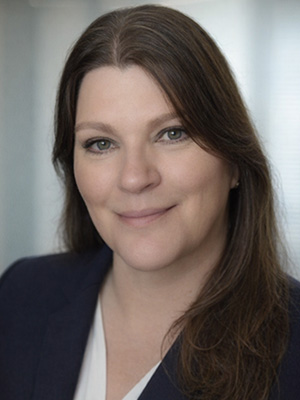
DR. DEBRA BENTSON
9/11 Lessons for Business
9/11 was a shock to America. The horror of it all played out on television over and over, burning it into the American psyche.
9/11 had many lessons. The one top of mind for me is the need for strong safety and security policies. It starts with having rigor around who you let in.
Safety and security are everyone’s job. Make detailed policies to protect people and property (in that order), train everyone, and vigorously exercise the plans regularly. I learned this early in my career when I was trained as a guard like everyone else I worked with.
Here are a few tips to consider when developing security/safety plans:
1. Badging policies must include badging both in and out
Most places I have worked and visited require badging in when entering but most do not require badging out when exiting the building.
Example: The building is on fire, and the fire department needs to know who is actually inside.
2. Temporary/visitor badges need expiration dates and, if issued to an employee, be linked to the employee’s record
Anecdote: I conducted a security audit on an employee and found there were no badge records for them for months.
I discovered that the employee misplaced her badge and got a temporary one. She never found her badge and just kept using the temporary badge.
The lost badge was not reported or cancelled, a new badge was not ordered, and no one seemed to notice day after day, she had a temporary badge.
“9/11 had many lessons. The one top of mind for me is the need for strong safety and security policies. It starts with having rigor around who you let in.” —Dr. Debra Bentson
3. “When in doubt, keep ‘em out”
Employees must swipe their own badge at every security door when entering or exiting. Strangers should not be allowed entry without proper vetting.
Anecdote: A group of well-dressed people asked me to let them into the building to attend a meeting. I didn’t know them; I instructed them to wait outside while I verified them.
I was told they were executives who were there for a meeting. When asked why I did not let the executives in the building, I simply stated I did not know them and was not going to let them in the building.
4. “See something, say something”
Employees need regular training to normalize taking action and reporting suspicious people and activity: even if they are employees. (But do not put yourself in danger!)
Anecdote: I heard a thud over the partition near where I was meeting with my team. I asked who was there and if they were ok.
There was no response. So, I walked around to the spot where the thud came from and found an employee who had fallen unconscious. I waited with her while a teammate called for medical help.
Keeping people safe and the workplace secure isn’t a nice-to-have: it’s mandatory.
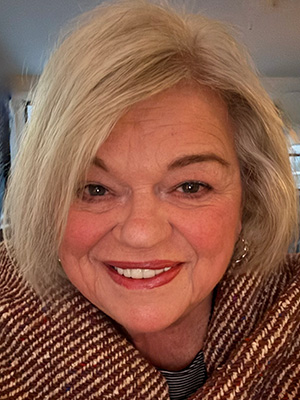
KATHLEEN M. PETERSON
“From The Sidelines”
The Engine Was Already Running
When I was first asked to contribute to this column, my initial thought was, wow, 25 years—where has the time gone? Events like 9/11 are seared into the memories of those of us old enough to have experienced them firsthand. Looking back, it seemed like an appropriate opportunity to consider what impact, if any, 9/11 had on contact centers.
I began by reviewing the projects we were working on at the time. There were many, spanning multiple industries, but the themes were remarkably similar. Organizations were trying to learn everything they could about building and growing contact centers—technology, staffing, training, workforce management, quality, leadership—all in support of rapidly expanding customer service operations and new business opportunities.
Of course, 9/11 had a profound emotional impact. The reaction was a mixture of shock, grief, outrage, and perhaps most noticeably, connection. For a brief period, people seemed more patient with one another, more thoughtful, more willing to extend grace. It was a difficult time, but also one that reminded us of our shared humanity.
“What 9/11 may have accelerated was the recognition that connectivity, resilience, and business continuity mattered more than ever.” —Kathleen M. Peterson
Businesses, meanwhile, were scrambling to assess emergency response plans, security measures, business continuity capabilities, and customer communication strategies. Yet what struck me during my review was that many organizations had only recently emerged from another crisis: Y2K. While the feared system failures never materialized on the scale many anticipated, Y2K had already driven significant investment in technology infrastructure, contingency planning, and operational readiness. Many organizations had upgraded or replaced critical systems shortly before 9/11.
This led me to wonder whether 9/11 changed the direction of contact centers or simply accelerated changes already underway.
Throughout the 1990s, government deregulation, digital telecommunications, toll-free services, centralized operations, and the emergence of internet commerce were reshaping customer service. Contact centers were growing rapidly, both in scale and strategic importance. Organizations were beginning to recognize that customer interactions represented far more than transactions—they provided insight into customer needs, operational performance, and business opportunities. At the same time, offshoring was gaining momentum, and the industry was expanding globally.
From that perspective, the “engine of change” was already running well before September 2001.
What 9/11 may have accelerated was the recognition that connectivity, resilience, and business continuity mattered more than ever. I remember my first airline trip after 9/11. The lines were long, armed military personnel were visible throughout the airport, and the message was unmistakable: the party was over. The experience reflected a broader shift taking place throughout business and society. Security, preparedness, and risk management had become priorities in ways they had not been before.
Was 9/11 causal? Not directly. The major forces transforming contact centers were already in motion. But it reinforced the importance of those investments and likely accelerated ongoing efforts to improve infrastructure, preparedness, and communication capabilities.
Looking across the past 25 years, however, I would argue that Covid ultimately had the most profound impact on contact centers. Decades of investment in technology, centralization, and remote connectivity were tested almost overnight. Contact centers shifted to remote operations at remarkable speed, proving the value of capabilities that had been evolving for years.
Perhaps that is the lesson from all of these events. Y2K tested systems. 9/11 tested resilience. Covid tested adaptability. Through each challenge, contact centers continued to evolve, serving as a critical link between organizations and the customers who depend on them.
Looking back, I never would have predicted half of what we’ve experienced over the past 25 years.
Can you imagine what the next 25 years will bring?
9/11 Reflections
Perhaps Alan Jackson said it best when he asked, “Where were you when the world stopped turning on that September Day?”
It is a question to which none of us will ever forget the answer. I was in an office in Annapolis. We were all huddled around a little 5-inch black and white TV set, trying to get all the news we could about the events of that day while feeling dumbfounded and numb.
It is a day that had such a profound impact on us personally and as a nation. I think it also had important effects on our contact center industry in ways we could not fully appreciate at the time.
We realized the importance of dispersed operations. It showed us that multisite centers could be an organization’s asset in the face of crisis and emergency. We understood that if one center went down, we could still work and communicate through our network.
I know that remote work really became a necessity during our Covid years, but I do believe that 9/11, followed by Covid, had a profound effect on remote work in our industry.
As much as we realized that a multisite center could provide backup, individuals working from home also ensured that business could resume during disasters. Working from home provided scheduling flexibility, as well as the ability to work across time zones, providing better business continuity.
I’m not sure why it always takes a disaster, but isn’t that the time when we focus on our operations and procedures? Self-service had been introduced in the late ‘90s and was taking hold in our industry. But I feel like 9/11 really gave it a boost to advance significantly. If customers couldn’t reach an agent, how could we enable them to help themselves?
Disaster recovery has always been top-of-mind in our centers, but I feel like the meaning really evolved when we started talking about evacuating buildings and the need for mass messaging, not only to our employees but also to our customers. How would that look, and how could we improve for the next event, be it weather-related or an outside attack?
We have learned a lot from this unfortunate experience. In addition to learning what was really important to us personally, we learned how to improve our work environments in areas of safety, mental health for staff, efficiency, and protection of our ongoing business operations.
As President George W. Bush said five years later, “Yet on that awful day, we witnessed something distinctly American, ordinary citizens rising to the occasion and responding with extraordinary acts of courage.”
Lastly, I would love to think that for all the destruction and sadness of 9/11, we learned to be a little kinder and show a little more empathy to others. It was a day that brought us together as a nation.
–Linda Harden
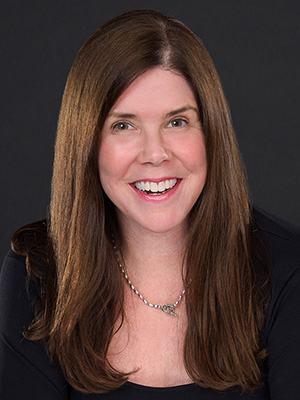
MICHELE ROWAN
At the time of the terrorist attacks on September 11, 2001, I was managing a large contact center in Tampa, Florida for Hilton Worldwide.
I was enroute to the contact center when the first building was struck and watched the news from our office as the second was struck. Those moments will stay with me forever, as they will for every one of us…
Employee safety was always a priority at Hilton; we had communication and evacuation actions that were practiced frequently (one of the many benefits of being part of a top shelf and global hospitality company).
“Network redundancy and emergency planning moved from the middle (or bottom) of the priorities list to the top, full stop.”
—Michele Rowan
During the emergency, Hilton’s frontline reservations and customer care representatives worked tirelessly to help customers book and rehouse travelers who were stuck or stranded. And as leaders we focused on furnishing our teams with as much intel, tools, and resources as we possibly could in real time.
The key priorities that I saw arise as a result of 9/11 in our industry were primarily in disaster recovery planning and geographical redundancy. Hilton was already geographically dispersed across the U.S.
Certainly, business continuity plans were prioritized after 9/11: both within the U.S. and internationally. Network redundancy and emergency planning moved from the middle (or bottom) of the priorities list to the top, full stop.
Several years later, remote readiness followed in our disaster recovery planning via remote work readiness. Our early adoption of work from home for contact centers (2007-2008) certainly prepared us well for the COVID-19 pandemic years later.
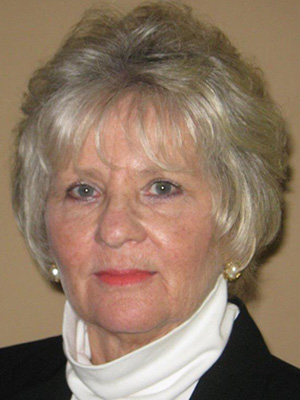
LAURA SIKORSKI
Following 9/11 I cancelled a few consulting engagements as I just didn’t want to fly, and Zoom was not even an option back then. But I did do a few Skype calls.
I also remember data centers were greatly harmed as most of their networks were fed through the World Trade Center, albeit through different service companies and entrances, to a single address location.
Today, most data centers are in different time zones. So are enterprise contact centers, serviced by contact center-as-a-service (CCaaS) and the cloud. Outsourcing interactions to other countries has become the norm as even accents are no longer a problem due to AI.
“I also remember that data centers were greatly harmed as most of their networks were fed through the World Trade Center… Today, most data centers are in different time zones.”
—Laura Sikorski
Here are a few personal memories I would rather not have…
- My brother and his wife were in Las Vegas to adopt and bring home their baby daughter. Plane travel was pretty much nonexistent, but with the help of my sister-in-law, who worked for an airline, they were able to get back home by 9/16. Very stressful and sad for all of us.
- My other brother had just dropped our mom and her friend at LaGuardia Airport (LGA) to fly out for a speaking event in Washington D.C. about the Holocaust. I called him several times on his cell to explain what was happening – calls were dropping – and stressing he had to get them home. It was difficult for him to get back into the airport and park due to police redirecting traffic away from the airport. The traffic out of LGA was pretty much a parking lot and it took him hours to find them and get them home.
- Another moment that stands out for me was going to a wedding at a venue in Queens, New York City a few days after 9/11 and still seeing the smoke out the floor to ceiling windows. Every time I see this couple I remember their wedding, why they chose not to cancel, and why my entire family went…we wanted to remember their wedding as the happiest day of their lives and how it brought joy to all who came.
The weirdest part? I live on Long Island about 50 miles from New York City and two miles from the Long Island Sound. For days we heard our military jet fighters that were protecting our airspace. We felt safe and were very proud.
How 9/11 Altered Where to Work
It was one of those bright September mornings with a premonition of fall in the air.
My wife and I were on the M6 bus from South Ferry that we had boarded from the Staten Island Ferry when our driver gaped through his left rear view mirror and screamed: “The World Trade’s on fire!!!”
I stepped off at 23rd Street and stared at the smoke billowing from the north tower. Not long afterwards I watched the plane hit the south tower in an orange and black fireball…
When I got into my office I called my wife, who worked at 34th Street, and said, “We’re getting out of here!” The Empire State Building and Madison Square Garden were nearby, and we feared that we could be next.
My wife was also on the phone with our son, a paramedic. He was being called in and would later be performing triage at what would forever be known as Ground Zero…
We decided to evacuate to New Jersey and began walking to the New York Waterway ferry terminal, joined by my sister-in-law. She had taken the 1 subway train and had heard a boom as it passed beneath the towers. But she fell ill, and when we docked was taken to a nearby hospital, accompanied by my wife.
I was hoping to cross back into Staten Island and get my car to pick up my wife and sister-in-law. But the authorities weren’t letting people cross from New Jersey to New York, so I stayed at a friend’s house. That evening I sent – and answered – all too many “Are You OK?” emails…
Our family would be reunited a few days later, thanks to our son who could get through the security cordons. But I would only go back into the office once; I had carried out my company-issued laptop and connected it at home.
There would eventually be a return-to-office so-called “normal.” But it wasn’t the same. My wife endured far longer commutes where sometimes the other commuters would start crying.
The Remote Work Shift: and Risks
After each disaster like the SARS outbreak, Hurricane/Superstorm Sandy, and particularly after the COVID-19 pandemic, more people worked remotely and wanted it to continue.
Each time the technologies improved, and more best practices were developed, which made remote work even more practical and attractive.
Remote work has also proven critical for call centers. Customers want to know what is going on, especially when events happen, so agents need to be in safe locations.
But workers were reminded that they too were vulnerable to disasters at home and must plan (and improvise) accordingly.
We were living on the Jersey Shore when Sandy hit and evacuated to my sister-in-law’s apartment; again, I was carrying a laptop. When we returned, we found that our apartment was intact, had heat and hot water, but there was no power and little connectivity.
So, each day we drove to the nearest coffee shop that had both, joined by many others, and drove back in time to meet the National Guard-enforced curfew.
Even with the risks, one can’t blame workers, like call center agents, for preferring to work remotely. It enables them to live where they want, free from expensive, time-draining, and dangerous commutes, and perhaps most importantly, to be close to their loved ones.
–Brendan Read