TechNews
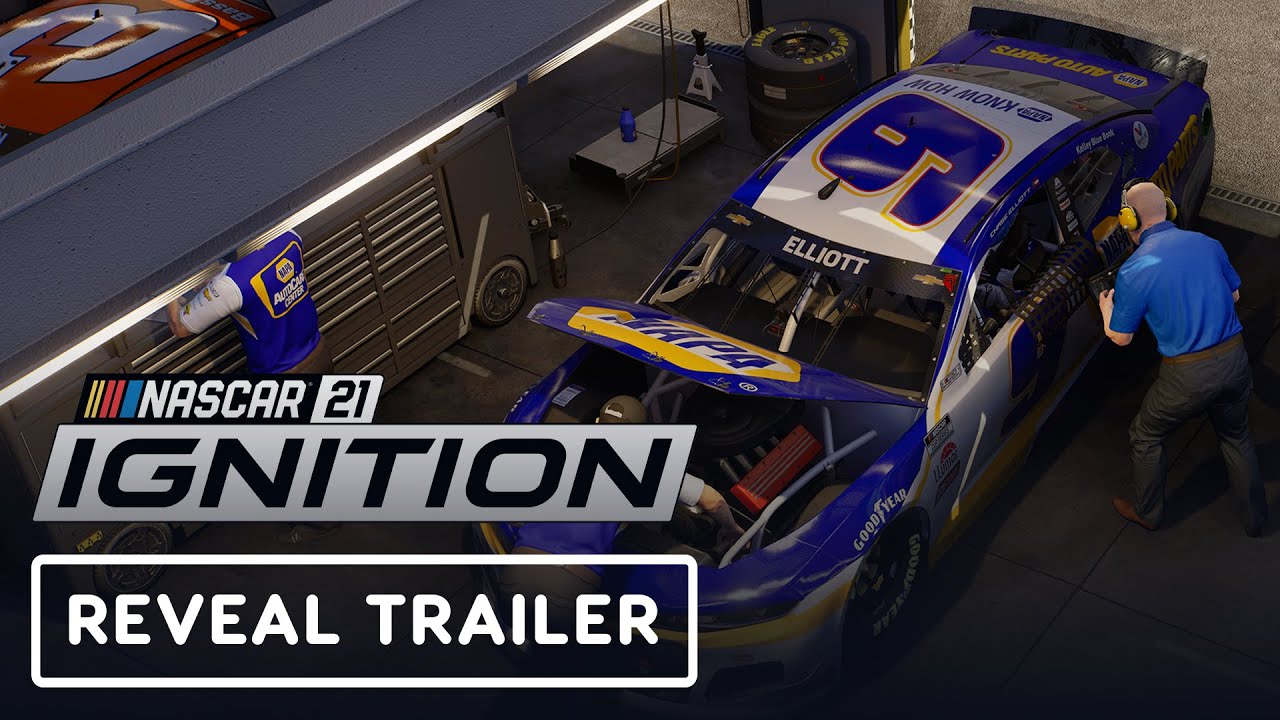
NASCAR 21: Ignition – Reveal Trailer – IGN
Samsung Galaxy Unpacked August 2021: Watch with us LIVE – Engadget
Assassin's Creed Valhalla: The Siege of Paris DLC Review – IGN
The Amiga is the latest game system to get a mini retro remake
Commodore’s Amiga 500, a home computer that became a popular game system, is receiving a remake. The A500 Mini is being developed by Retro Games Ltd, which previously released a mini version of the Commodore 64.
The Amiga 500 was the most successful model in the Amiga family of PCs, which started to appear in the mid-’80s and drew a devoted following as gaming systems, particularly in Europe. While the A500 Mini is clearly based on the Amiga 500, Retro Games Ltd says it’ll also emulate the more powerful AGA graphics hardware from the Amiga 1200.
The list of games confirmed so far includes:
- Alien Breed 3D
- Another World
- ATR: All Terrain Racing
- Battle Chess
- Cadaver
- Kick Off 2
- Pinball Dreams
- Simon the Sorcerer
- Speedball 2: Brutal Deluxe
- The Chaos Engine
- Worms: The Director’s Cut
- Zool
There’ll be 25 included in total, and you’ll also be able to add more yourself with WHDLoad, an installation package for Amiga software. Other system functions include the ability to switch between 50Hz and 60Hz screen refresh rate, save states, a built-in CRT filter, and various scaling options.
The A500 Mini comes with a two-button USB mouse that is already making my hand cramp up with nostalgia, as well as a gamepad reminiscent of the one from the CD32, an ill-fated attempt to convert the Amiga into a traditional game console. The keyboard on the case is sadly not functional, but you can hook up your own over USB.
Retro Games Ltd will release the A500 Mini early next year. It’ll cost $139.99 in the US and £119.99 in the UK.
US Senators Ask Game Devs to Abandon Greedy Loot Box practices – IGN Daily Fix – IGN
- US Senators Ask Game Devs to Abandon Greedy Loot Box practices – IGN Daily Fix IGN
- Democrats Are Already Bungling New Call For Laws To Protect Kids From Loot Boxes Kotaku
- Congress turns its eye toward loot box regulation in letter to developers Gamasutra
- US Politicians Call on Developers to Reduce Predatory Game Design – IGN IGN
- Gaming companies should avoid predatory designs, lawmakers say The Verge
- View Full Coverage on Google News
PS5’s Abandoned Trailer a No Show as Blue Box Cites Technical Issues

The first full-length trailer for PlayStation 5 survival game Abandoned, purportedly slated to debut 10th August in the title’s previously released Realtime Experience app, has missed its release window. The game’s mysterious developer, Blue Box Game Studios, had promised that the footage would debut at 9PM CET – but over four hours after the fact it’s reported “technical issues”.
“We are working to get [the patch] live ASAP,” the team said. “We apologise for the inconvenience.” A couple of hours later, it added: “We are still working on it. We sincerely apologise for the inconvenience.” The idea, we think, was that the app would be updated on the PS5 so that fans could watch the trailer, rendered in realtime on their consoles.
There are two possibilities here: Blue Box Game Studios has realised that releasing a PS5 patch on a timetable is impossible – especially with the way Sony operates these days. Alternatively, it still doesn’t actually have a full-length trailer to show, and it’s simply buying itself some more time. This, after all, isn’t the first time the developer has missed a deadline.
It did show a brief five-second clip, presumably from the trailer, on Twitter earlier in the day. The hype builder simply shows a wooden floor and a man in a suit walking on it. As has become common for this game, engagement is through the roof: it’s attracted almost 10,000 likes at the time of typing – these are the kind of numbers that AAA blockbusters would be proud of.
Alas, as we write this, there’s nothing more to see other than apologies from the Dutch developer. Things may change overnight, and we’ll of course update you when we know more.
Abandoned PS5 Demo Delayed by Technical Issues
After announcing yesterday that a “Realtime Experience” patch would be available universally starting at 12pm PT / 3pm ET time today, Blue Box Game Studios announced that a demo for its upcoming project Abandonded has been delayed due to technical issues.
Quick update: we are still working on it. We sincerely apologize for the inconvenience.
— BLUE BOX Game Studios (@BBGameStudios) August 10, 2021
The Realtime Experience demo is available to download right now on the PlayStation Store. Launching the app loads the game up to where it prompts you to select a language, before displaying a message that notes that it is not a playable teaser but an introduction of what to expect. Yet, launching the demo now, you will be met with a “Check back soon…” message over a black background.
What the screen currently reads when launching the Abanonded Realtime Experience patch.
The delay of the Realtime Experience comes at an awkward time for Blue Box Game Studios, which previously postponed the reveal in late June. Abandoned has also been the subject of numerous rumors, most notably that the game is tied to Hideo Kojima and/or a new entry in Konami’s dormant franchise, Silent Hill.
Blue Box has denied rumors, stating that it has no relations with Konami or Hideo Kojima. Abandoned’s director, Hasan Kahraman, made a video on the studios’ Twitter account confirming he is not Kojima in disguise.
Developing…
Taylor is the Associate Tech Editor at IGN. You can follow her on Twitter @TayNixster.
Democrats Are Bungling Call For Lootbox Laws Aimed At Kids
A group of Democrats have sent out letters to some of the biggest names in games publishing, asking them to voluntarily adopt rules soon to be implemented in the UK, designed, they say, to protect children from exploitative practices in video games. Except, that’s not what the UK code is about at all, making the entire effort extremely confusing.
Loot boxes—paid-for items in games whose contents are only revealed after paying—are now widely considered a form of online gambling, and have even been banned in some countries. However, they continue to be a prominent part of many major games, with perennial calls for better regulation. So this latest attempt isn’t anything new, but it’s certainly more strange.
As The Verge reports, Sen. Ed Markey (D-MA), Rep. Kathy Castor (D-FL), and Rep. Lori Trahan (D-MA) have written a letter to twelve major players in gaming—including Epic, Activision, Disney and Microsoft—asking that they extend the UK’s new Age Appropriate Design Code (AADC) regulation to American children, in order to protect them from loot box gambling and micro-transactions. Although they really do seem to be stretching beyond credulity what the UK code is covering.
Next month the UK brings in the AADC, meaning from September 2 the nature of data collected about children by games, websites and social media comes under far stricter regulation. While not a law, the regulations “set standards” across 15 categories, focusing on “high privacy by default,” not sharing children’s data, and keeping geolocation off by default. It goes further in requiring that “nudge techniques” not be used to coerce children into sharing further data, nor “weaken or turn off their privacy settings.”
However, the code explicitly mentions neither loot boxes nor in-game gambling, nor ever really even alludes to them. While the subjects of loot boxes and IAPs came up during the UK regulator’s research into “Detrimental use of data,” it’s not a factor of the final publication. It’s certainly a stretch to see how the content of the AADC relates to what’s raised in the letter sent to US publishers.
G/O Media may get a commission
While the AADC is about regulating the collection and monetization of children’s data from gaming and social media, the Democrats’ letter also drops in “exposure to violent content” and “online predators,” which absolutely have nothing whatsoever to do with the code they cite. (In fact, their footnotes reference entirely different Unicef publications.) The letter continues,
“The prevalence of micro-transactions—often encouraged through nudging— have led to high credit card bills for parents. Loot boxes go one step further, encouraging purchase before a child knows what the “bundle” contains— akin to gambling. Children are uniquely vulnerable to manipulation and peer pressure associated with in-game purchases and loot boxes. Experts suggest that Entertainment Software Rating Board (ESRB) ratings and parental controls are insufficient. The AADC represents a monumental step towards child centric design by default.”
Calling for better regulation protecting children from exploitative content such as micro-transactions and loot boxes seems immediately laudable, it’s more than a little odd that they are attempting to raise these issues via the AADC, which mentions neither. In fact, the code’s references to “nudging” are specifically about manipulative techniques designed to encourage children to volunteer out of data protection, while also suggesting such nudges instead be used to increase privacy, or even promote “health and wellbeing.” Certainly nothing to do with micro-transactions.
Again, the requests the Dems are asking for would mostly be benevolent. Their desire that games aimed at children be designed in their “best interests,” and not include manipulative techniques associated with micro-transactions and loot boxes, sound positive. But attempting to piggyback it onto a foreign regulatory code that has all but nothing to do with these subjects seems weirdly deceptive. Not least when the majority of the content of the AADC is already covered by the US’s COPPA.
The real red flag, however, is that “exposure to violent content.” It’s dropped in the opening paragraph of the letter, then never even alluded to again throughout. While unlike the US the UK has enforced age ratings on games, preventing their sale to children if classified a 12, 16 or 18, that too is a whole other subject, covered by a whole different set of regulations.
The letter concludes with a rather aggressive challenge:
“It is imperative that Congress acts with urgency to enact a strong privacy law for children and teens in the 21st century. As we work towards that goal, we urge you to extend to American children and teens any privacy enhancements that you implement to comply with the AADC. We also request responses to the following questions by August 26, 2021.
1. Do you intend to make changes to your product or service’s design or data collection and use to comply with the UK Age Appropriate Design Code?
2. Will you implement these changes for users in the United States? If not, why not? If yes, will these changes be reflected on a public-facing website or in your terms of service?”
Given the completely erratic nature of the letter, it might not take much for the recipients to quickly dismiss it. Which seems a big whiff.
How Apple’s email privacy update will change what’s in your inbox
Apple is changing the ability of advertisers and publishers to see whether consumers open emails — and it could mean big changes for the way email marketing looks going forward.
Apple announced several new features in June for mobile and desktop operating systems that will have major impacts for email.
The company will give its users the option to do away with tracking pixels, or small images that email marketers use to tell if you actually opened an email. There’s also a feature called “Private Relay” for subscribers to Apple’s iCloud storage service iCloud+ that would hide IP addresses. Finally, a feature called “Hide My Email” will let users share “unique, random” email addresses that can forward to their personal inbox, which they’re able to delete to control who contacts them.
Of course, not every email user uses Apple email products. But they do account for a large proportion: An analysis of 3 billion email opens in January through March from email marketing company Litmus found Apple on iPhone held the biggest share of email opens, at 38.9%. Google‘s Gmail came next at 27.2%, and Apple Mail (on desktop) at 11.5%. IPad email opens also accounted for a little more than a percent.
That means a significant portion of marketing emails that get sent out every day may be tougher for senders to get data on.
The changes, expected to arrive with software updates in the fall, are forcing marketers and publishers who use email to reach their subscriber base to rethink some of the ways they’ve measured, monetized or used email.
As a result, consumers might eventually notice a difference in the marketing emails they’re getting — and may see brands reaching them in other ways outside the inbox, like texting.
The great open rate rethink
The way a burrito chain or credit app emails consumers has often gone something like this: Marketers can use tracking pixels inside emails to give them an idea when someone actually opens that message. Under the new changes, users will be prompted to select whether they’d like to opt in to “protect” their mail activity by hiding IP addresses and privately loading remote content.
Open email rates have not been a perfect metric. In the email industry, the “open” of an email has been seen as a signal of interest or engagement. But if you’re someone who indiscriminately clicks to open emails just to mark them as read, that doesn’t mean much.
Going forward, emails to consumers who use Apple mail products and opt into “Mail Privacy Protection” will appear like they were read as soon as it was sent, meaning that information won’t be very useful for marketers.
For a company like Domino’s, email is of huge importance: The company uses email to communicate with tens of millions of customers, to update customers on where their order is, updating them about deals and offers, and more.
Domino’s VP of Digital Marketing Christopher Thomas-Moore said timing, for instance, in terms of when people are opening dinnertime emails has been helpful to send the right message when people actually want it.
“We potentially lose that data,” he said. “So we maybe are going to be a little less relevant now when we’re sending you information. Because we’re not hitting those times that are most important for you.”
Thomas-Moore said there may be an evolution for the company in figuring out how to do those types of functions without all the data it may have had before. He said there are still questions across the entire industry about what the real impacts will be, and he expects it will take some time to know.
Erik Fialho, chief operating officer at LeftLane Sports, said the change makes it more difficult to do things like A/B testing subject lines to figure out which one is most successful in getting people to open. LeftLane is a parent company of outdoor-focused adventure travel and e-commerce sub-brands.
Fialho said his company already looks at other metrics outside email opens, like how many consumers click through the email, or how many are buying.
Some marketers use email open data to do “retargeting” of sorts that relies on whether someone opened an email and didn’t end up trying to make a purchase.
What email marketers are curious about is how email service providers will tweak how they do “deliverability,” or how they decide which emails make it through to your inbox, or which are doomed to the spam filter. Blasting emails at customers who continually don’t read them can hurt deliverability.
“You ultimately need your email to actually get delivered to somebody’s inbox and not to their spam for them to even react,” Fialho said. “And if the email service providers don’t take into account that suddenly a lot of these email marketers aren’t going to have one of their key rates to look at, of whether or not they should send an email to a customer and whether that customer is engaged or not, can be a challenge.”
It’ll also pose challenges for newsletter-based businesses. Myles Kleeger, president of customer engagement platform Braze, said companies that monetize audiences based directly in the content from emails are ones that are probably most affected by Apple’s changes, since they often charge based on open rates.
“A lot of them charge based on some of that granular detail that maybe you won’t be able to get any more,” he said.
But those companies will likely seek out other ways to drive readers to click and prove they were reading, whether it’s a survey or some “thumbs up” button to show they’re engaging somehow.
Future Plc, which has more than 180 media brands including Marie Claire and Golf Monthly, already uses metrics that rely on more first-party data, said Allison Markert, VP of B2B Advertising & Sales Operations. That’s especially important as increasingly more privacy-focused initiatives are happening in the industry.
One result of all this is that marketers will likely make a bigger push to ask consumers their permission to send them emails and to continue sending them emails, and relying on explicit permission rather than implying based on open rate data.
Inundating consumers with unwanted messages could not only get consumers to unsubscribe, but if consumers are turned off enough, they could turn to Apple’s “hide my email” feature when signing up, said Nirish Parsad, marketing technologist at Tinuiti.
Marketers are also grappling with a number of other privacy changes in the industry, including previous changes from Apple that gave users more transparency and control over apps that want to track them for advertising.
“My first reaction [to the email announcements] was ‘Here we go again,'” said Domino’s Thomas-Moore. “There are some assumptions that are kind of floating as to what the impacts are going to be. But we’re still so early in discovery and understanding that I expect that we’ll find ourselves moving to the center point as we continue to move forward.”
A move away from email?
All of this could also mean a shift to other means of customer communication.
“Ultimately, it’s just going to be more difficult over time to use email, in general,” Fialho said. “And it doesn’t necessarily mean that email is going to go away. It’s still a very profitable marketing channel. It’s still a very useful tool. But that’s one of the reasons that we started to look at other communication methods.”
LeftLane Sports has been making a big push to text messaging this year, he said.
Fialho said results on text have been positive in terms of click-throughs and conversions. But he notes they have to be texts the consumer would actually want. He gave the example of a consumer who has been interested in New Balance running shoes that have been out of stock, and shooting them a text when they’re back in stock with a coupon they can use.
“You definitely want to make sure that you’re not overburdening that customer with just pointless texts, so they have to really be personalized and important,” he said.