- Evertried – Launch Trailer – Nintendo Switch Nintendo
- Nintendo Switch Online’s Expansion Pack Won’t Stop Players from Using Emulators GameRant
- Mario Party Superstars: The Final Preview IGN
- Nintendo Switch Online deal – save 40% now before price hike hits T3
- WarioWare: Get It Together! – WAHccolades Trailer – Nintendo Switch Nintendo
- View Full Coverage on Google News
TechNews
Masahiro Sakurai On How Sora Came To Super Smash Bros. Ultimate
As announced earlier this month, Sora became Super Smash Bros. Ultimate’s final DLC character. But how did Sora, Keyblade and all, end up in Smash Bros.? In his latest Weekly Famitsu column, creator Masahiro Sakurai explains just that.
Sakurai noted how Sora was the number one choice among players for a new character. The Kingdom Hearts character seems like such an obvious choice, too—especially because the character’s name is the same as Sakurai’s company. (This is something Sakurai humorously acknowledged in the reveal, and in a photo caption in the Famitsu article, writing, “Yeah, his name is the same as my company’s.”)
“As I think some can imagine, the barriers for Sora entering the battle were quite high,” he writes. “Even though players’ expectations were great, I honestly thought it was impossible.” According to Sakurai, the team that handles external negotiations thought the same.
However, one day everything changed. “By chance, I met a higher-up at Disney at an awards show,” Sakurai writes in the column. “I talked about how I’d like Sora to join the battle [in Smash Bros.], and I was told that they also thought it would be good if he was able to join the battle. What a surprise!”
After the chance meeting, Disney, Square Enix, and Nintendo all entered into long discussions about bringing Sora to Smash Bros. And in the end, Sakurai got the okay.
But why did Sakurai originally think it would be impossible? When characters come from other companies to the fighting game franchise, it’s not just a matter of adding them to the game. There are requirements, issues, and concerns about how they are depicted in game—companies are extremely protective of their characters. Sakurai and his team, of course, are incredibly sensitive to all of this; however, considering that he would not only need to approach Square Enix but also Disney, I guess he wasn’t initially optimistic.
“Supervision from both Disney and Square Enix is required for anything that Sora does [in Smash Bros.],” explained Sakurai. “It did feel like the various hurdles were high, and in reality, there were various rules in place for development to go forward.”
The development team created a high-quality character model from the start, and production was going more smoothly than Sakurai had expected. However, things were still difficult. In Kingdom Hearts, Sora uses aerial combat, and the challenge was bringing that style of fighting to Smash Bros. in a way that made sense, worked in-game, and was still true to the character.
“I think we got the feeling of the original games,” writes Sakurai. “What do you think?”
CoD Mobile Season 9 Nightmare update patch notes: Halloween event, new maps & weapons
CoD Mobile Season 9 is here, as the popular handheld title gears up for another big Halloween event. From new weapons and maps to the return of Undead Siege, here’s included in the huge October 20 update.
Another new season in CoD Mobile has finally arrived after Season 8 and the second-anniversary celebrations begin to wind down. As always, players are in store for another massive update with tons of new content on the way.
Season 9 brings the fright again for Halloween: From spooky map overhauls to a frightening ‘Nightmare’ theme, the devs are going all in for the 2021 spectacle.
CoD Mobile Season 9: release date & time
The CoD Mobile Season 9 update arrived on Thursday, October 21 at 5PM PT / 8PM ET / 1AM BST (October 22). Players were immediately able to jump in and access all the latest spooky content in the handheld title.
Halloween Standoff is back in CoD Mobile Season 9.
CoD Mobile Season 9 Nightmare theme
As The Haunting takes over in Black Ops Cold War and Warzone, the Nightmare is taking over CoD Mobile.
CoD Mobile Season 9’s theme is a chilling one as the Halloween celebrations take full effect. From creepy skins to scary menus, every aspect of CoD Mobile has been tweaked to provide a true Nightmare-inducing experience.
Prepare for a frightening season in CoD Mobile.
New CoD Mobile Season 9 maps
No different from every recent season, CoD Mobile Season 9 has brought with it some interesting new maps.
First up is Hovec Sawmill, another map from 2019’s Modern Warfare making the jump to CoD Mobile. This medium-sized map features multiple lanes, a mix of verticality, and opportunities for both indoor and outdoor engagements.
Fitting the Halloween theme, the CoD Mobile rendition has Hovec Sawmill set at night, so be sure to crank your brightness up.
🆕📍New location disclosed & incoming!
🗺Hovec Sawmill coming to #CODMobile in the next season! pic.twitter.com/07Fr9aHj6Y
— Call of Duty: Mobile (@PlayCODMobile) October 15, 2021
Next is the return of Halloween Standoff in CoD Mobile Season 9. While the original version of the map quickly became a fan favorite, the yearly Halloween overhaul has become iconic.
Halloween Standoff functions just the same way as before, though CoD Mobile devs have teased “new content” in this year’s iteration of the famous map. We’ll be sure to keep you updated as we learn of any new features or easter eggs.
👍 And of course we can’t forget about this one.
🎃 Halloween Standoff is returning for the next season of #CODMobile. A surprise mystery lies ahead… pic.twitter.com/4d2jo9OkSB
— Call of Duty: Mobile (@PlayCODMobile) October 16, 2021
New weapons in CoD Mobile Season 9
Two new weapons have arrived in CoD Mobile’s Season 9 update and both should be familiar to longtime fans of the series.
Up first is the Thumper, a deadly Grenade Launcher that’s featured in numerous mainline CoD titles. Scoring a direct hit with a projectile from the Thumper will secure a single-shot kill more often than not. Next, we have a more recent addition joining the mix in CoD Mobile Season 9 as the Swordfish Tactical Rifle will soon be available. Players will be able to grab this classic gun at Tier 21 of the Season 9 Battle Pass.
This four-round burst weapon first appeared in Black Ops 4 and while it may have a slow rate of fire, it packs one hell of a punch in any gunfight.
CoD Mobile Season 9 brings two classic CoD weapons to the handheld title.
CoD Mobile Season 9 Battle Pass
As players have come to expect with each new season in CoD Mobile, another fresh Battle Pass is indeed available to grind in Season 9.
The first battle pass reveal came on October 18, with devs confirming a new Operator Skill for the rewards track. The TAK 5 Operator Skill – unlocked at Tier 14 – instantly gets your entire team back to full health, and even overheals an extra 50 HP on top.
Free Battle Pass
- Scythe Time – Sticker (tier 1)
- Ninja – Dark Flower (tier 8)
- New Operator Skill TAK-5 (tier 14)
- Charm – Cymbal Monkey (Tier 16)
- New Weapon Swordfish (tier 21)
- Pharo – Covenant (tier 28)
- PDW-57 – Covenant (tier 31)
- M4 – Covenant (tier 36)
- Fields of the Fallen Calling Card (tier 46)
- Striker – Covenant (tier 50)
Premium Pass
- Artery – Nosferatu (tier 1)
- UL736 – Gourd Loader (tier 1)
- On the Prowl Calling Card (tier 1)
- Charm – Zom-bale (tier 1)
- HS0405 – Skeletal Ignition (tier 10)
- Iskra – Arachnis (tier 12)
- Generous Giver Emote (tier 15)
- Peacekeeper MK2 – Spine Rattle (tier 30)
- Nikto – Scarecrow (tier 35)
- PP19 Bizon – Haunted Haystack (tier 40)
- Swordfish – MKII (tier 50)
- Rott – Tomb Bound (tier 50)
We’ll keep you updated here with a full rundown on the CoD Mobile Season 9 Battle Pass once more details emerge now that the patch is live.
New CoD Mobile Battle Royale class in CoD Mobile Season 9
Get ready to soar through the skies in CoD Mobile’s battle royale playlist. ‘Pumped’ is an all-new class that’s landed in the Season 9 patch; one that gives your character a functioning jet pack.
With the Power Jump Active Skill and the Pump Up Passive Skill you’re able to leap into the air and reach new heights. Not only does this completely buff your mobility, but it also lets you fire on enemies from new angles.
⬆👍 Better vertical = more advantage!
🚀 Take flight in the new Battle Royale class, Pumped, coming as a part of the next new season in #CODMobile. pic.twitter.com/8N8dHTIBbg
— Call of Duty: Mobile (@PlayCODMobile) October 18, 2021
CoD Mobile Season 9 Trick or Treat event
It wouldn’t be a new CoD Mobile season without a new limited-time event. As Season 9 is doubling down on its Halloween theme, the latest mode is a trick-or-treat special.
All you have to do is “go door to door,” visiting your friend’s rooms online. Upon interacting with them, you’ll either be tricked or treated. If you land on a trick, you have to complete “an in-game task to get your candy.” But if you’re treated, that candy becomes available right away.
Every treat hands you some event XP to get you closer to unlocking each seasonal reward.
Trick or Treating is a must on Halloween.
New Drop Zone multiplayer mode in CoD Mobile Season 9
The devs have added a new multiplayer experience in CoD Mobile too: Drop Zone has finally arrived in Season 9.
Players have to fight for control over a specific Drop Zone that’s constantly rotating around any given map. By controlling the Drop Zone, teams can then earn Scorestreaks that will quickly drop in from above.
Modern Warfare’s Drop Zone mode has arrived in CoD Mobile in Season 9.
Undead Siege returns in CoD Mobile Season 9
After its introduction in August, Undead Siege has finally returned to CoD Mobile. Not only is the popular Zombies mode back in action in Season 9, but devs have revealed some fresh changes to keep players on their toes.
Dropping into the Isolated Battle Royale map, those in the casual playlist will notice more of a challenge right away. Zombie spawns have been increased and enemies will now dynamically spawn across both casual and hard modes.
Moreover, expect to find plenty of new secrets and easter eggs scattered throughout the mode.
Full CoD Mobile Season 9 patch notes
Multiplayer mode and survival mode
CR-56 AMAX (equipped with M67 magazine):
- Reduced the range, the first range was adjusted from 36M to 30M, and the second range was adjusted from 51M to 42.5M
- Reduced the damage on the upper arm from 62 to 48
- Slightly increased vertical recoil.
M13:
- Increased the basic movement speed of the base gun from 0.6 to 0.65
- Increased the reload speed of the base gun from 3 to 2.5
- Increased the basic bullet velocity of the multiplayer mode from 600 to 900
- Heavy long barrel – Reduced the movement speed penalty from 4% to -2%
- 300 RTC-30 rounds magazine: Replaced the bullet speed increasing effect with a silencer effect; ADS speed -8% → -3%
- 300 RTC-double-row 40 rounds magazine: Replaced bullet speed increasing effect with silence effect; added bomb reload speed +10%; movement speed -2% → -1%
- Fixed the issue of BSA Mod not working in Battle Royale.
KN-44:
- Reduce the horizontal recoil of the base Gun
- Reduced hip fire spread of the base gun from 0.08 to 0.06, reduce the minimum 0.15 to 0.14
- Increase the damage of the upper body: Arm 26 increased to 28 Chest 28 increased to 31 Head 31 increased to 33
- Marksman Long Barrel: Horizontal recoil increased from -3.2% to -8%
- Ranger Long Barrel: Horizontal recoil force increased from -3.2% to -6%
- Strike Stock: Horizontal recoil force increased from -3.2% Increased to -6%
Chopper:
- Increased base gun damage range from 10m to 14m.
UL736:
- Base gun damage increased from 25-22-20-19 to 28-24-20-19
- Base gun movement speed increased from 1.04 to 1.06
- Base gun ADS speed increased from 0.448 to 0.4
- Adjusted base gun’s recoil
- Reduced the movement speed of the 50-round magazine from -1% to -1.5%
- Reduced the movement speed of the 60-round magazine from -1.5% to -2.5%
S36:
- Adjusted the recoil of the base gun to make it more controllable during continuous firing
Perk – Disabled:
- After adding disabled perk for assault rifles and light machine guns hitting anywhere in the body will reduce the movement speed.
Battle Royale Mode
MX9:
- Reduced base gun damage from 30-24-16-15 to 25-21-18-16
SKS:
- Increased the vertical recoil of the first shot by 50%
- Bullet spread during continuous firing has been increased by 35% starting from second shot
- Fixed the bug that SKS bullets do not require bullet velocity in BR mode.
Scorestreaks
SAM Turret:
- The explosion damage of the Sam turret has been greatly increased from 198 to 385
- The score of the SAM Turret has been slightly reduced from 850 to 660.
Swarm:
- Increased the number of drones from 4 to 6. We’ve increased the number of drones to improve Swarm’s cost-effectiveness.
Napalm:
- Reduced the score of Napalm from 1500 to 1190
Lighting Strike:
- Slightly reduced the score of rapid air strikes from 1050 to 850
- Increased missile explosion range from 10 meters to 15 meters.
MacBook Pro’s M1 Max GPU is Over 3x Faster Than M1 in First Metal Benchmark
Multiple benchmarks have already given us a general estimate of the CPU performance of the M1 Max chip, but we’ve had little insight into GPU performance. The M1 Max is equipped with up to 32 graphics cores, marking a vast improvement over the 8-core GPU of the M1, which was Apple’s first chip.

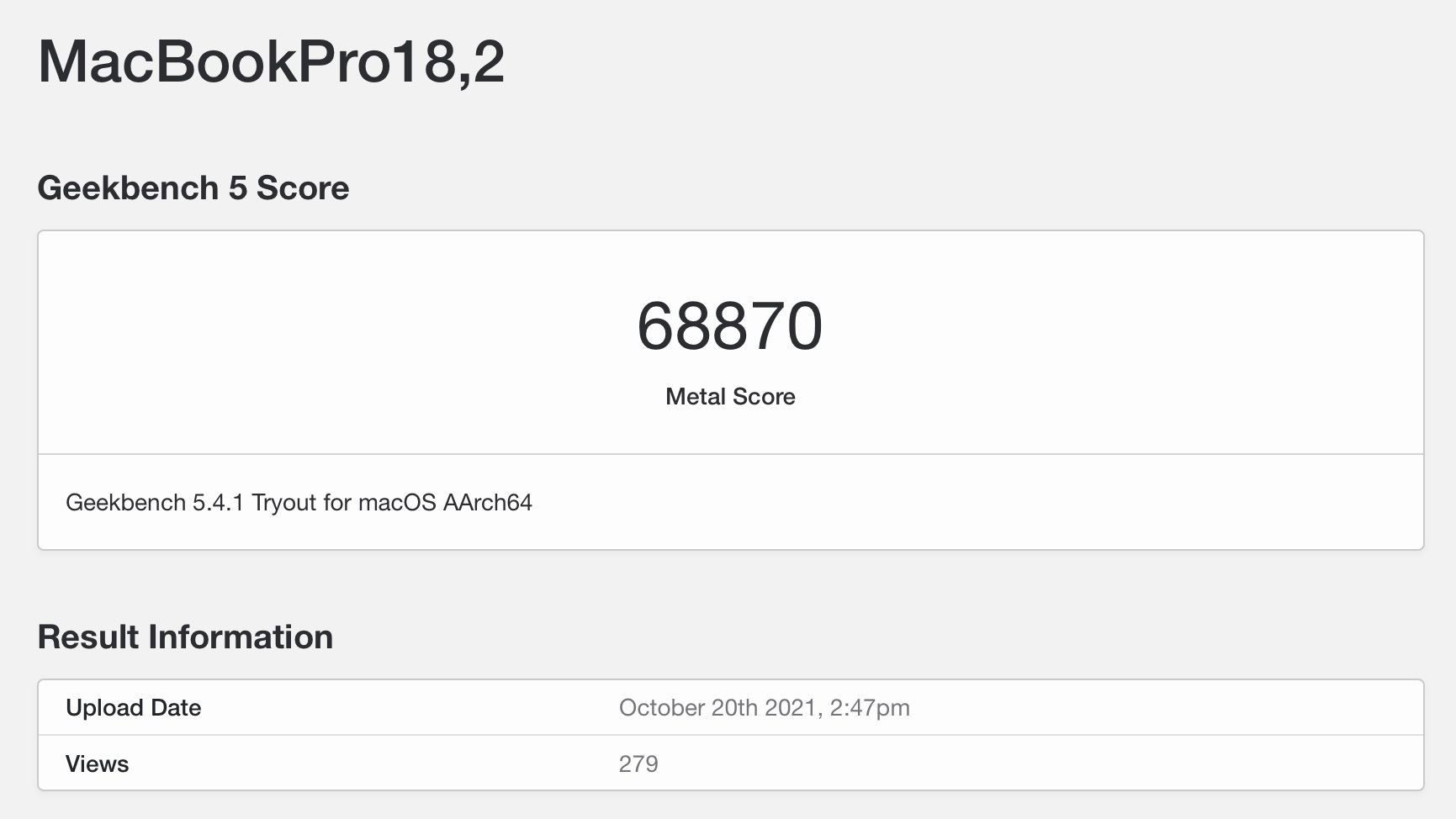
The first Metal benchmark for the M1 Max surfaced this afternoon, with the chip earning a score of 68870. Comparatively, the M1 chip in the 13-inch MacBook Pro has a Metal score of 20581, and the Radeon Pro 5600M, which was the highest-end GPU option for the prior Intel-based 16-inch model, has a Metal score of 42510.
Compared to the fastest chip available in Apple’s previous-generation 16-inch MacBook Pro, the M1 Max is 62 percent faster, and it’s 3x faster than the M1 chip in the 13-inch MacBook Pro, based on the Metal score we have so far.
It’s not clear if this M1 Max chip is the 24-core variant or the 32-core variant. This is also just one result, so we should be able to get a better picture of the graphics performance when additional benchmarks are available.
According to Apple, the 32-core GPU in the M1 Max is up to 4x faster than the M1. Apple has said that the chip delivers performance “comparable to a high-end GPU in a compact pro PC laptop” while consuming up to 40 percent less power.
Since we last shared CPU benchmarks for the M1 Max/Pro chip, several additional results have surfaced. Comparing multiple benchmarks, the M1 Max/Pro earns an average single-core score 1742 and an average multi-core score of 12135.
The chip has the highest single-core score of any Mac to date, and it is only beaten in multi-core performance by the 16, 18, 24, and 28-core Intel Xeon chips used in the higher-end iMac Pro and Mac Pro models.
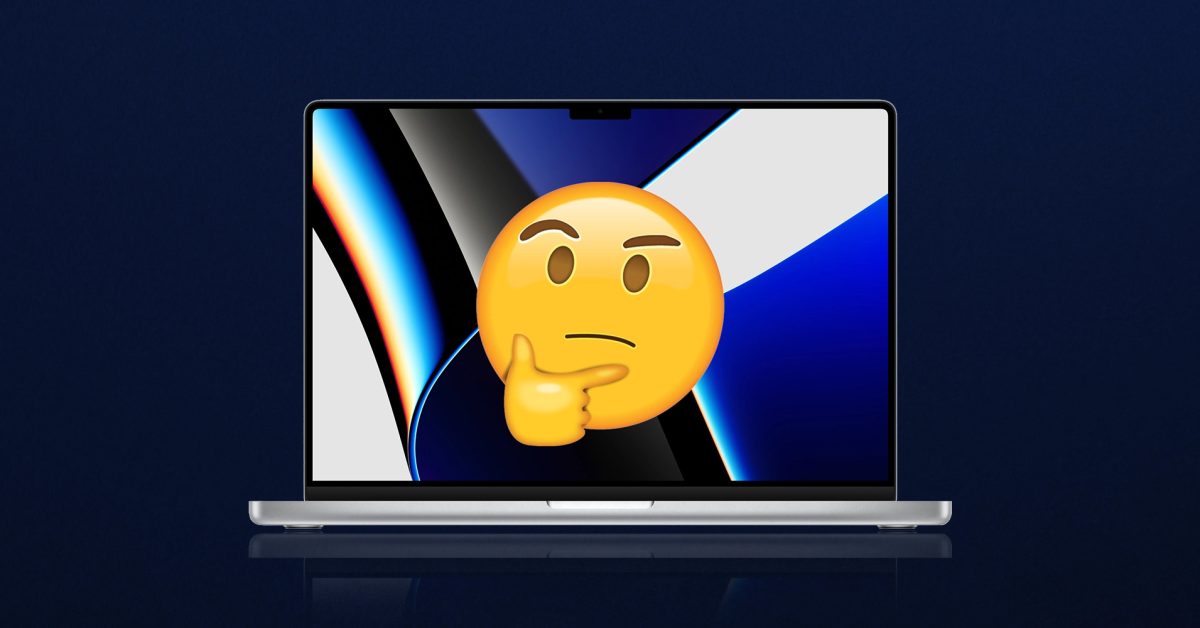
What do you think about the new MacBook Pro having a notch on the screen?
Along with AirPods 3 and new colors for the HomePod mini, Apple introduced the new 14-inch and 16-inch MacBook Pro this week. In addition to a new design and the superpowered M1 Pro and M1 Max chips, the new MacBooks feature a rather controversial addition: a notch at the top of the screen. Now we want to know your opinion on the notch coming to the Mac.
The cutout at the top of the screen on some devices is popularly called the “notch.” Apple first adopted the notch in 2017 with the iPhone X, as it was the first iPhone to have an edge-to-edge display. Although the notch is now present in pretty much every iPhone model, Apple had kept the notch limited to its phone until now.
Just like the iPhone, the new 14-inch and 16-inch MacBook Pro feature an edge-to-edge display. As a result, Apple has added a cutout at the top of the screen to house the new 1080p front-facing camera. Interestingly, the new MacBook Pro doesn’t have a TrueDepth camera for Face ID, so it’s unclear why the company opted for such a large notch.
As we covered on Monday, developers can choose whether they want to take advantage of the notch area on these new Macs, or whether the app should run with a black bar on top. It’s worth noting that by default, non-updated apps will run in a “compatibility mode” with the black bar at the top when in full screen.
Apple also pointed out that it made the screen taller in order to place the macOS menu bar in the notch area, so the user will end up having more area to view content.
Of course, some users didn’t seem to like the idea of having a notch on a Mac, while others agreed with Apple. Whether you like it or not, I can definitely see the notch coming to other Mac computers in the future.
With that in mind, what do you think about having a notch on the MacBook Pro – and possibly other computers? Let us know in the poll and also in the comments section below.
FTC: We use income earning auto affiliate links. More.
Hyper’s new 245W USB-C battery pack and charger are here to help charge all your gear at once
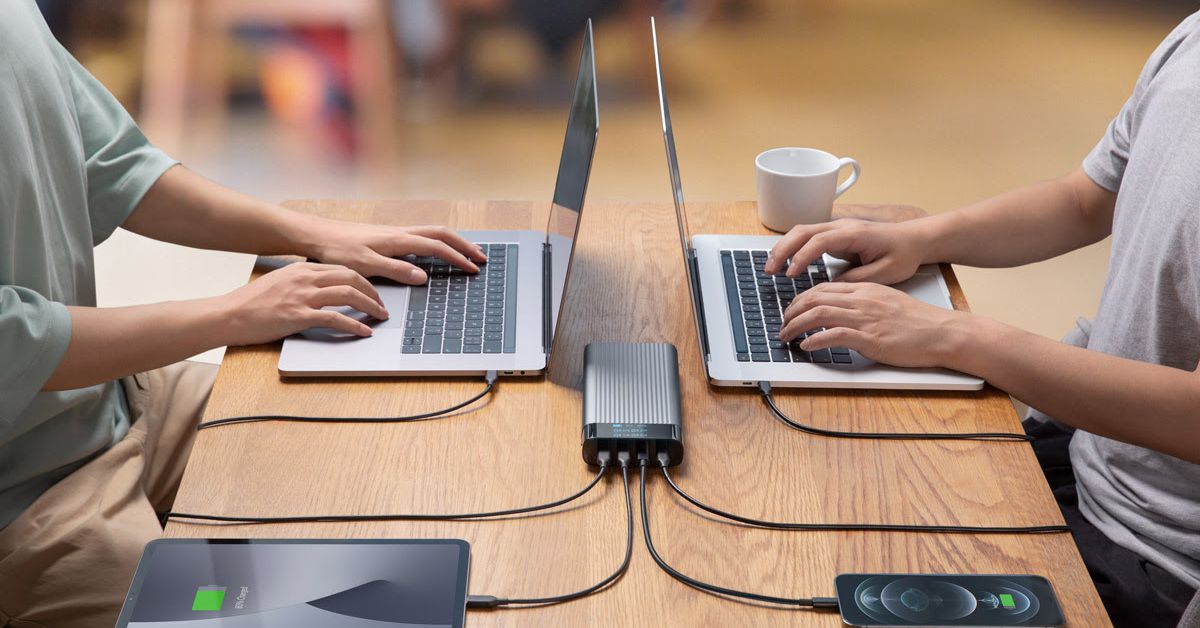
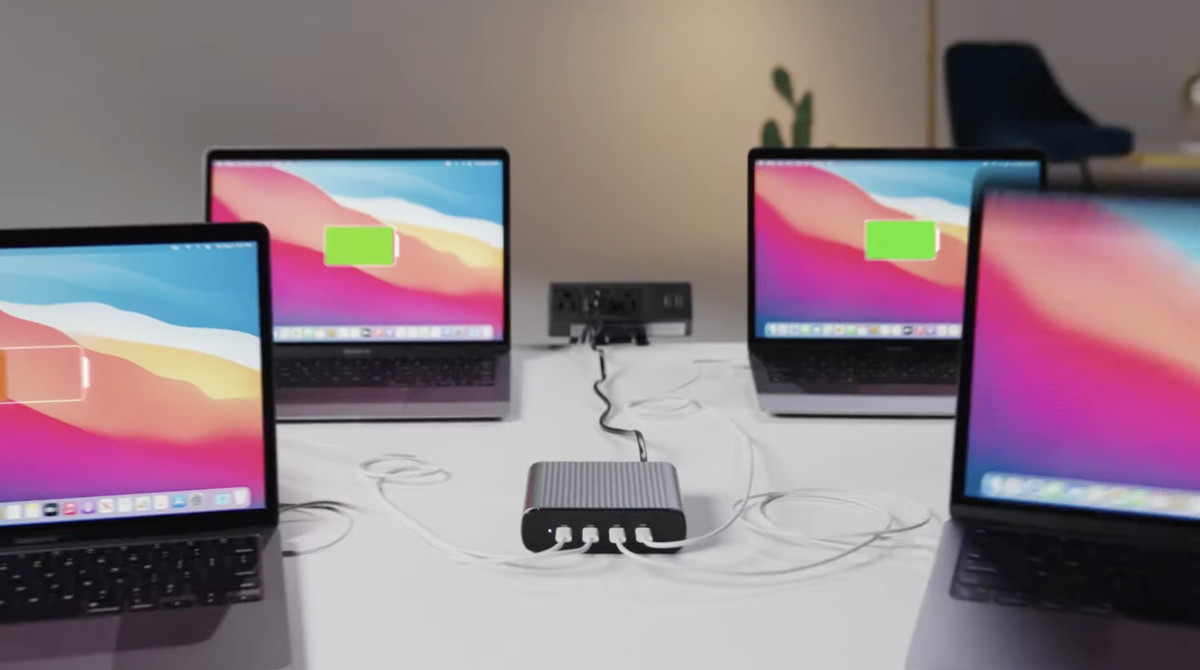
Hyper has announced a pair of over-the-top USB-C accessories: HyperJuice 245W USB-C Battery Pack and the HyperJuice 245W USB-C GaN Charger, each of which offers four USB-C ports for charging up all your gadgets at once.
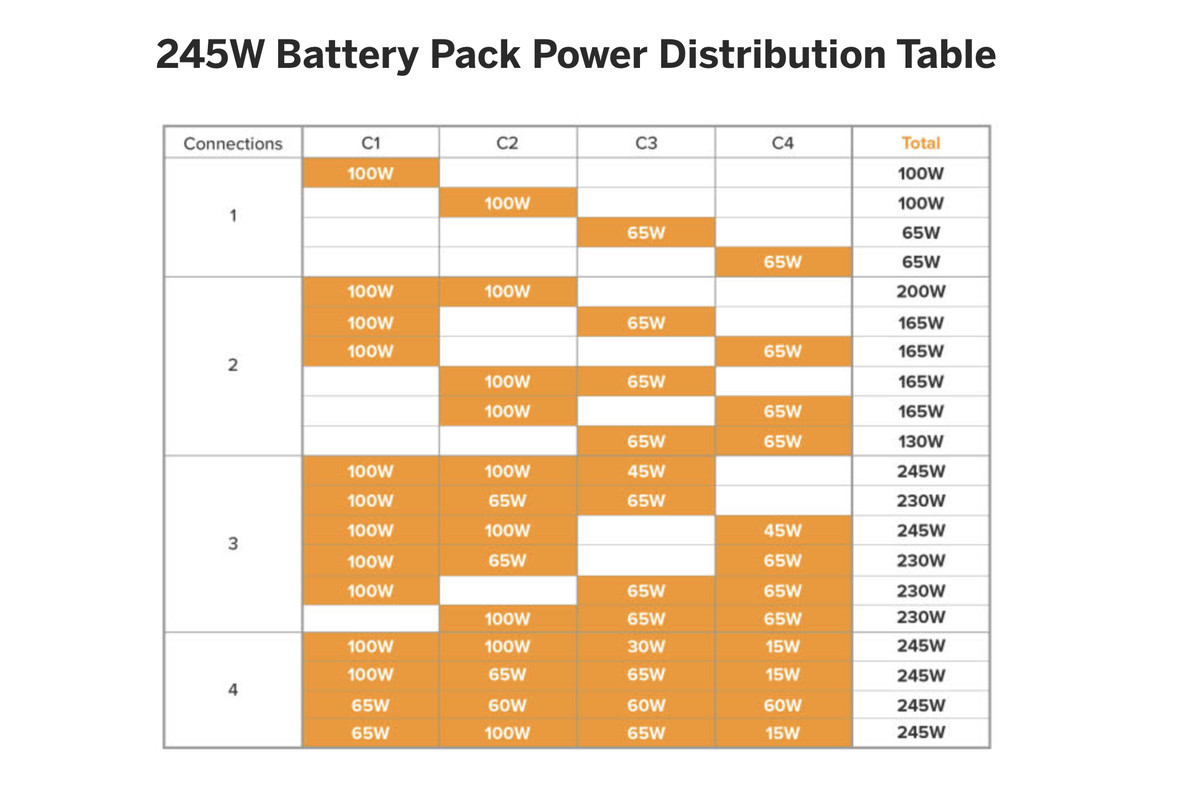
Despite the big “245W” in the names here, neither the new charger nor the new battery pack uses the recently released USB-C PD 3.1 spec that enables charging at up to 240W. Rather, the number refers to the total combined wattage that the new products can put out across the four total ports; each port still maxes out at 100W, though. (Which means that you won’t be able to use it for the 140W fast charging on a new 16-inch MacBook Pro, for example.)
The HyperJuice 245W USB-C GaN Charger features four ports, each rated for 100W, although due to the vagaries of USB-C specs, the charging breaks down as follows: one device at up to 100W; two devices at up to 100W each; three devices with two at up to 100W and one at up to 45W; or four devices with one at 100W and three at 45W.
Similarly, the battery pack also has various limitations; consult the following chart here for the breakdown of the various power distribution options. The battery pack itself is a 27,000mAh (100Wh) battery, meaning that it just fits under the maximum limit for bringing on planes.
The two products aren’t the first high-wattage USB-C chargers or battery packs we’ve seen; Zendure released similar products last year, including its SuperTank Pro battery pack that’s so similar to the new HyperJuice that they appear to have identical displays and iconography.
The new HyperJuice charger and battery pack are available to back on Indiegogo, with shipping planned for December. The charger starts at $99 with early bird pricing, with an expected retail price of $199, while the battery pack starts at $149 with an expected retail price of $299.
Cyberpunk 2077 and The Witcher 3 PS5 and Xbox Series versions delayed to 2022
The PS5 and Xbox Series X versions of Cyberpunk 2077 and The Witcher 3: Wild Hunt have been delayed to 2022.
CD Projekt Red announced the revised schedule for the new-gen versions today. Cyberpunk 2077 is now scheduled to arrive on new consoles in the first quarter of the year, between January and March, with The Witcher 3 targeting sometime in quarter two, between April and June. PC players will receive the improvements included in these new versions at the same times.
“Based on recommendations supplied by teams supervising the development of both games, we decided to postpone their releases until 2022,” CD Projekt Red said in its statement. “Apologies for the extended wait, but we wanted to make it right.”
Earlier this year, Michał Nowakowski, senior vice president of business development at CDPR, suggested that Cyberpunk 2077, at least, could be delayed, citing lessons learned from the RPG’s disastrous launch.
“Keeping in mind the lessons we have learned during the past year and taking into account that this project still remains in development, we can’t say with full certainty that the production schedule will not change,” Nowakowski said.
At the time, it was unclear if a delay was set or if The Witcher 3 would be affected in the same way, but it’s now clear that CD Projekt Red chose to push both games back to give them both room to breathe. This follows CD Projekt Red’s clarification on the ESRB and PEGI listings for The Witcher 3’s new-gen version, which seemed to hint at an impending release.
The PS5 and Xbox Series X versions of Cyberpunk 2077 and The Witcher 3 were previously on track for a late-2021 launch, but they’ve now been added to the staggering and rapidly expanding list of early-2022 releases, which now includes everything from Elden Ring to God of War PC.
Cyberpunk 2077 tips | How long to beat Cyberpunk | Cyberpunk 2077 lifepath guide | Cyberpunk 2077 map | How to steal cars in Cyberpunk 2077 | Cyberpunk 2077 best weapons | Cyberpunk 2077 Romance options | Cyberpunk 2077 ending | Cyberpunk 2077 Mantis Blades | Cyberpunk 2077 change appearance | Cyberpunk 2077 builds | Cyberpunk 2077 hacking guide | Cyberpunk 2077 bugs | Cyberpunk 2077 patch notes
Resident Evil 4 VR – First 16 Minutes of Gameplay (Village & Chainsaw Fight) – IGN
Tensor explained: Why Google built a custom chip for Pixel 6
In teasing the Pixel 6 at the start of August, Google very much framed the preview around its first custom-built System on a Chip (SoC). At the Pixel Fall Event today, Google fully detailed Tensor and called it the “biggest mobile hardware innovation in the history of the company.”
Why Tensor
Google’s stated goal for building Tensor is to push what’s possible on smartphones. The company wants to bring “AI breakthroughs directly to Pixel” and drive its vision of always-available technology, i.e. Ambient Computing
The former is born out of Google’s hardware division believing that AI-backed smart features are how it can differentiate Pixel against competitors, while Google considers phones the “central control device of an ambient system.” The Pixel Launch Event notably saw Google talk about Ambient Computing again. The last time that occurred in a significant manner was the 2019 Pixel 4 launch.


In an interview with The Verge, Rick Osterloh said that work started in 2017 after coming to the realization that Google couldn’t take a piecemeal approach — like building a single co-processor, e.g. Pixel Visual/Neural Core — to boost AI models. Rather, an entire chip that’s optimized for desired tasks is needed.
The Tensor chip is specifically designed to offer Google’s latest advances in AI directly on a mobile device. This is an area where we’ve been held back for years, but now, we’re able to open a new chapter in AI-driven smartphone innovation.
The Tensor CPU + GPU
At the Pixel Launch Event, Google went into Tensor and explicitly touted the inclusion of two high-performance ARM Cortex-X1 cores at 2.8 GHz. They are joined by two “mid” 2.25 GHz A76 CPU cores, with Ars Technica’s Google Silicon interview pointing out how they are based on a 5nm process rather than the 7nm original found in flagship phone chips last year. Four high-efficiency/small A55 cores round out the CPU.
The dual-X1 approach allows Google to throw more power at workloads that are of medium intensity. In a normal CPU, the mid cores would handle such tasks, like Google Lens visual analysis, but be “maxed out.” Google says using two X1 cores in that scenario would be more efficient, and that’s what Tensor is optimized for. In real terms, it’s 80% faster than the Pixel 5’s Snapdragon 765G.

“You might use the two X1s dialed down in frequency so they’re ultra-efficient, but they’re still at a workload that’s pretty heavy. A workload that you normally would have done with dual A76s, maxed out, is now barely tapping the gas with dual X1s.”
Phil Carmack, VP and GM of Google Silicon
There’s also a 20-core GPU that Google says “delivers a premium gaming experience for the most popular Android games.” It is 370% faster than the Pixel 5, which uses the Adreno 620 GPU.

Tensor security ft. Titan M2
Meanwhile, the Tensor security core is a CPU-based subsystem that’s isolated from the application processor, and dedicated to running sensitive tasks and controls. It works with the dedicated Titan M2 security chip, which is not part of Tensor but Google touts as being resilient to advanced attacks like electromagnetic analysis, voltage glitching, and laser fault injection.
The original Titan M chip works, in conjunction with software, to stop your phone from being rolled back to an older version of Android that might have security vulnerabilities. It also prevents bootloader unlocking and verifies your lockscreen passcode.

TPU, ISP, and Context Hub
There’s also of course the “Tensor Processing Unit.” This ML engine is said to be “custom-made by Google Research for Google Research,” and built with where “ML models are heading, not where they are today.”
The Image Signal Processor (ISP) features an accelerator that runs the HDRNet algorithm, a key reason the Pixel 6 and Pixel 6 Pro can do Live HDR+ Video at 4K 60FPS, more efficiently.
The Context Hub brings “machine learning to the ultra-low power domain.” It allows the always-on display (AOD), Now Playing, and other “ambient experiences” to “run all the time, without draining your battery.”
All together now, or heterogeneous computing
All these components together make up Tensor, with Google prioritizing “total performance and efficiency.” This specifically involves excelling at heterogeneous computing tasks that require various parts of the SoC to work together. For example, Lens makes use of the CPU, GPU, ISP, and TPU to run efficiently.

As software applications on mobile phones become more complex, they run on multiple parts of the chip. This is heterogeneous computing. To get good performance for these complex applications, we made system-level decisions for the SoC. We ensured different subsystems inside Tensor work really well together, rather than optimizing individual elements for peak speeds.
What Tensor can do
Besides Live HDR+, which makes colors more accurate and vivid, at 4K60, Tensor allows other computational photography and video features like Motion Mode in Google Camera. Action Pan blurs the background, while Long Exposure works on the subject (as seen below).
Meanwhile, face detection is more accurate on the Pixel 6 and works faster — due to the integrated subsystems, while consuming half the power compared to a Pixel 5.
Assistant on Tensor is using the “most advanced speech recognition model ever released by Google” at, again, half the power. The high-quality ASR (automatic speech recognition) model is used to transcribe voice commands, as well as in long-running applications like Recorder and Live Caption “without quickly draining the battery.”
Meanwhile, there’s Assistant voice typing for editing what you just transcribed in an entirely-hands free manner, and Live Translate, with the Pixel’s translation quality improving by 18%, “a level of improvement that typically takes multiple years of research:”
Google Tensor also enables Live Translate to work on media like videos using on-device speech and translation models. Compared to previous models on Pixel 4 phones, the new on-device neural machine translation (NMT) model uses less than half the power when running on Google Tensor.
Tensor’s future
Google is not giving Tensor a generation signifier at launch, but the company will presumably append a number on the next version. (For example, the Titan M is succeeded by the Titan M2.)
There’s no doubt that Google is making more chips for phones (and other form factors are rumored). SVP Rick Osterloh said as much at the event:
Tensor also gives us a hardware foundation that we’ll be building on for years to come, so you get the personal, helpful experiences you’d expect from a Google phone.

FTC: We use income earning auto affiliate links. More.
Pixel 6 first look: Google’s Tensor chip, $599 price, new cameras and more
The new Google Pixel 6 and Pixel 6 Pro showcase one of the biggest year-to-year phone upgrades I’ve seen in a long time. In the lead-up to Google’s fall Pixel event Tuesday, the company behind Android and YouTube did something many other phone-makers don’t and announced both new Pixel 6 phones back in August. The Pixel 6 has new camera hardware, runs on Google’s first in-house processor and has a design that looks unlike any other phone sold today.
The Pixel 6 series is an important release for Google because it’s a big shift away from the company’s pleasant midtier phone strategy of the past and a significant step toward a portfolio designed to compete with premium phones from Apple, Samsung and Huawei.
Thematically, Google has aimed to make the Pixel 6 work well for more people. Part of that means making the cameras work better for people with different skin tones and improving voice recognition to easily identify different speaking patterns and accents.
Of the two phones, the $599 (£599) Pixel 6 is the more affordable model. It’s priced to compete with the iPhone 13, the Samsung Galaxy S21 and other midtier Android phones such as the current Motorola Edge. For more information on the Pixel 6 Pro, check out my comparison below or read our first impressions of the Google Pixel 6 Pro by my colleague Andrew Hoyle. (Pricing for Australia hasn’t been announced, but the price in the UK, which has similar tax, converts roughly to AU$1,100.)

The Pixel 6 has one of the most eye-catching designs of 2021.
James Martin/CNET
The Pixel 6 design highlights its camera bump strip
Google used 100% recycled aluminum for the body of the Pixel 6. The sides have a matte finish and overall the Pixel 6 has an IP68 rating for water and dust resistance. The Pixel’s defining physical feature is its horizontal camera bump strip. It would be easy to say the camera strip was inspired by Robocop’s visor, or the visor on Cylons from Battlestar Galactica. But Google said it wanted to make a unique camera bump that celebrates the camera system. So instead of a square in the corner the designers went for a strip.

Instead of a square in the corner, the camera bump on the Pixel 6 runs horizontally across the back of the phone.
James Martin/CNET
In person it looks like a piece of a black mineral that has been cut, shaped and polished into a camera bump that keeps your phone level so it doesn’t wobble. The camera bump houses wide and ultrawide cameras (more on those in a moment).
On the front of the Pixel 6 is a 6.4-inch display covered in Gorilla Glass Victus with an under-display fingerprint reader. The screen has a 90Hz high refresh rate, which should make animations look smoother and feel more responsive.
Tensor defines the Google Pixel 6
The brains of the new Pixel don’t come from Qualcomm. Instead the phone’s powered by a brand-new chip called Tensor. It’s the first processor designed by Google and it’s been custom-made for the Pixel. Google said that it’s 80% faster than the Qualcomm Snapdragon 765G chip found in last year’s Pixel 5.
Google wanted to go farther with software and computations and hence created the Tensor chip. As much as the camera bump strip defines the design, Tensor defines the Pixel. It allows for on-device AI like faster, more accurate speech recognition and image processing.
I asked about the possibility of seeing a Tensor chip in another device and while Google declined to comment, the company did say that this was not a one-off.
Pixel 6 camera gets better at skin tones with Real Tone
The main camera on the Pixel 6 has a wide angle lens and a 50-megapixel sensor, which is the largest sensor ever in a Pixel camera. The camera uses pixel-binning to combine multiple pixels together to create a 12.5-megapixel photo. The results are brighter photos with better details and more accurate colors. Google claims the new main camera can capture 150% more light than the main camera on the Pixel 5.
There is a new ultrawide camera with a 12-megapixel sensor and a 114-degree field of view. Around the front is an 8-megapixel selfie camera.

These are three photos Google provided us with that were taken with the Pixel 6.
But if there’s one thing Google Pixel cameras are known for, it’s software and computational photography. Google designed the Pixel cameras and computations to be more accurate no matter your complexion with Real Tone. For the past 18 months Google has partnered with directors, photographers and cinematographers like DP Kira Kelly and colorist Alex Bickel, known for their beautiful depictions of communities of color. The idea was to improve the Pixel’s cameras and algorithms in two ways.
The first is detection. Google wanted the phone to be able to identify a face, no matter how light or dark someone’s skin is or how complex the lighting is. The second part is working with engineers to improve the aesthetics of how photos were rendered. When a subject has a darker complexion, the algorithm adds more nuance to midtones and undertones.
Android 12 and other notable software additions for the Pixel 6
The Pixel 6 runs Android 12, which offers more customization around preferences and aesthetics. Just as the Pixel 6 represents the biggest phone upgrade from Google in years, Android 12 marks the biggest OS update in years. Android 12 is packed with visual upgrades like customizable color palettes, bigger buttons and updated notifications.

This is the Android 12 lock screen for the Pixel 6.
James Martin/CNET
And the Pixel 6 gets a bunch of new nifty software updates, notably Wait Time, which lets you know the best times to call a business so you won’t have a long wait. There’s also Direct My Call, which uses Google Assistant to work its way through the automated prompts of a call until it gets to an actual person.
In photos, there’s a new tool called Magic Eraser that lets you quickly remove unwanted things and people from your photos. RIP, all you photobombers. There’s also a Motion mode, which can create Action Pan photos where the background is blurred to mimic your subject moving quickly. Motion mode can also create Long Exposure photos that make running water look like silk and capture light trails from car traffic.
Read more: Google Pixel 6 vs. 6 Pro vs. Pixel 5 vs. 5A: What are the differences?
Pixel 6 vs. Pixel 6 Pro: All the differences
The two phones Google launched Tuesday are similar in a number of ways. But there are differences that set them apart and perhaps the largest difference is price. In the US, the Pixel 6 starts at $599 and the Pixel 6 Pro at $899.

On the left is the Google Pixel 6 Pro and on the right the Pixel 6.
Patrick Holland/CNET
The screen on the Pixel 6 has a 6.4-inch, FHD Plus, high refresh-rate display that can switch between 90Hz and 60Hz. The Pixel 6 Pro has a larger 6.7-inch QHD LTPO (that’s low-temperature polycrystalline oxide) that can adapt the refresh rate between 10Hz and 120Hz. The display on the Pro curves over the sides of the phone.
In terms of cameras, the Pro has a 48-megapixel, 4x optical zoom telephoto camera. The Pixel 6 doesn’t. The Pixel 6 has an 8-megapixel front-facing camera with an 84-degree field of view that can record 1,080p video at 30 frames per second. The Pro has an 11-megapixel selfie camera with a wider 94-degree field of view that can record 4K 30fps videos.
Other differences:
- The back of the Pro has Gorilla Glass Victus and the Pixel 6 has Gorilla Glass 6.
- The Pixel 6 Pro has an ultrawideband chip and the Pixel 6 doesn’t.
- The Pixel 6 has a 4,614-mAh-capacity battery and the Pro has a 5,003-mAh one.
- The Pixel 6 Pro supports both sub-6 and mmWave 5G.
- The Pixel 6 supports sub-6 5G. A more expensive carrier version also supports mmWave.
The Pixel 6, 5G and battery life
The Pixel 6 supports sub-6 5G. Some carrier versions of the Pixel 6 will also support mmWave, which is the fast version of 5G that’s not widely available. Google says that battery life is a single day when using 5G. The Pixel 6 has a 4,614-mAh battery and supports 30-watt USB-C fast charging, but as with pretty much every other phone-maker, the fast-charger is sold separately.
Google Pixel Pass
Google promises to support the Pixel 6 and 6 Pro with five years of OS and software upgrades. The search giant also has a new subscription service called Pixel Pass that lets you buy the Pixel 6 and get phone protection, YouTube Premium, YouTube Music Premium, Google One and Google Play Pass for $45 a month over two years. You can get a Pixel pass for the Pixel 6 Pro for $55 a month.
Here’s everything to know about the Pixel 6 Pro and Google’s new Tensor chip. Plus, why Pixel phones are great alternatives to Apple and Samsung phones (and why the Pixel 6 is more exciting than the iPhone 13), and whether it’s still worth it to buy a Pixel 3, 4 or 5.
Google Pixel 6 specs vs. Google Pixel 6 Pro, Google Pixel 5, Apple iPhone 13
| Google Pixel 6 | Google Pixel 6 Pro | Google Pixel 5 | Apple iPhone 13 | |
|---|---|---|---|---|
| Display size, resolution | 6.4-inch OLED; 2,400×1,080 pixels; 60Hz or 90Hz | 6.7-inch LTPO OLED; 3,120×1,440 pixels; 10-120Hz | 6-inch FHD+ OLED; 2,340×1,080 pixels | 6.1-inch OLED; 2,532×1,170 pixels |
| Pixel density | 411 ppi | 512 ppi | 432 ppi | 460 ppi |
| Dimensions (inches) | 6.2×2.9×0.4 in | 6.5×3.0x0.4 in | 5.7×2.8×0.3 in | 5.78×2.82×0.3 in |
| Dimensions (millimeters) | 158.6×74.8×8.9mm | 163.9×75.9×8.9mm | 144.7×70.4x8mm | 147x72x7.65mm |
| Weight (ounces, grams) | 7.3 oz; 207g | 7.41 oz; 210g | 5.33 oz; 151g | 6.14 oz; 174g |
| Mobile software | Android 12 | Android 12 | Android 11 | iOS 15 |
| Camera | 50-megapixel (wide), 12-megapixel ultrawide | 50-megapixel (wide), 12-megapixel (ultrawide), 48-megapixel (telephoto) | 12.2-megapixel (standard), 16-megapixel (ultrawide) | 12-megapixel (wide), 12-megapixel (ultrawide) |
| Front-facing camera | 8-megapixel | 11-megapixel | 8-megapixel | 12-megapixel |
| Video capture | 4K 30, 60fps (rear), 1,080p 30fps (front) | 4K 30, 60fps (rear), 4K 30fps (front) | 4K | HDR video recording with Dolby Vision up to 4K at 60fps |
| Processor | Google Tensor | Google Tensor | Qualcomm Snapdragon 765G | Apple A15 Bionic |
| Storage | 128GB, 256GB | 128GB, 256GB, 512GB | 128GB | 128GB, 256GB, 512GB |
| RAM | 8GB | 12GB | 8GB | Undisclosed |
| Expandable storage | No | No | No | No |
| Battery | 4,614 mAh | 5,003 mAh | 4,000 mAh | Undisclosed; Apple lists 19 hours of video playback |
| Fingerprint sensor | Under display | Under display | Rear | No (Face ID) |
| Connector | USB-C | USB-C | USB-C | Lightning |
| Headphone jack | No | No | No | No |
| Special features | 5G sub 6 (some carrier models also have 5G mmWave) support, Wi-Fi 6E, 30W fast-charging, wireless charging, Magic Eraser, Motion mode, Real Tone, Face Unblur, Cinematic Pan, 5 years OS security updates, IP68 rating for dust and water resistance, Gorilla Glass Victus (front), Gorilla Glass 6 (back), dual-SIM capabilities (nano-SIM and e-SIM) | 5G sub 6 and mmWave support, Wi-Fi 6E, Ultrawideband, 30W fast-charging, wireless charging, Magic Eraser, Motion mode, Real Tone, Face Unblur, Cinematic Pan, 5 years OS security updates, IP68 rating for dust- and water-resistance, Gorilla Glass Victus (front and back), dual-SIM capabilities (nano-SIM and e-SIM) | 5G enabled; water-resistant (IP68); 90Hz-refresh-rate display; dual-SIM capabilities (nano-SIM and e-SIM); reverse wireless charging; fast charging | 5G enabled; MagSafe; water-resistant (IP68); wireless charging; dual-SIM capabilities (nano-SIM and e-SIM) |
| Price off-contract (USD) | $599 (128GB) | $899 (128GB) | $699 | $799 (128GB), $899 (256GB), $1,099 (512GB) |
| Price (GBP) | £599 (128GB) | £849 (128GB) | £599 | £779 (128GB), £879 (256GB), £1,079 (512GB) |
| Price (AUD) | Converts to AU$1,100 | Converts to AU$1,570 | AU$999 | AU$1,349 (128GB), AU$1,519 (256GB), AU$1,869 (512GB) |