
- Simpsons: Hit and Run Remade in Unreal Engine – IGN Daily Fix IGN
- ‘Simpons: Hit & Run’ Unreal Engine 5 Fan Remake HYPEBEAST
- This ‘Simpsons Hit & Run’ Fan Remade The Game In A Week Using Unreal Engine Nintendo Life
- Simpsons: Hit and Run Remade in Unreal Engine, and the Original Designer Is Impressed – IGN IGN
- This fan made Simpsons Hit and Run remaster looks like it could be the real thing Destructoid
- View Full Coverage on Google News
TechNews
Fortnite – Official Mecha Morty Trailer – IGN

Twelve Minutes Review: Mediocre Game, Terrible Ending

Twelve Minutes is, or at least should be, a game about trauma. It is, but it isn’t.
It is but it isn’t? What does that even mean? Start the story over.
Twelve Minutes is a game about a man stuck in a time loop. That time loop gives him the opportunity and impetus to do terrible things to his wife. There are moments where it made me feel sick.
Getting there, but not enough context for a real thesis. Try again.
Twelve Minutes released one week after Boyfriend Dungeon, a queer action RPG/dating sim hybrid, which was met with immediate controversy over what some claimed to be inadequate content warnings. Twelve Minutes asks you to drug your wife upwards of a dozen times as you puzzle your way through torturing a man into giving up plot-critical information. The same discourse has not repeated itself, despite a complete lack of content warnings.
G/O Media may get a commission
Closer, but wordy.
Twelve Minutes is a game about hurting everyone around you as an excuse to process your own trauma. It is, in its most hopeful and generous reading, a game about a bad man trying to be better. I do not think it deserves that reading. It does, however, deserve the quiet storm brewing over its true ending.
Good enough, for now.
The setup for Twelve Minutes is simple: a cop is coming to kill you and your wife, and you will be stuck in a 12-minute time loop until you stop him. To break said loop, you will adventure-game your way through a series of puzzles, uncovering more information about character motivations and relationships each time. The game’s animations are stiff, and its puzzles are obtuse. The star-studded voice cast isn’t given much to work with, and fails to contribute to the experience in any meaningful way. Its ending is terrible. This is the most I can say without spoiling the entire game. Consider yourself warned.
Twelve Minutes has three major twists. First, that your wife killed her father. To learn this, you have to watch her get murdered from the closet. Second, that she failed to kill her father and it was actually you, the protagonist, who killed him. Oh, and you’re her brother. To learn this, you have to drug her and torture a man. And third, that all of this was part of your psychosexual mind palace and the only thing that really happened was the incest. That part was real. The rest has been a fantasy.
And what a gross fantasy it is.
Twelve Minutes makes you watch as your pregnant sister/wife (this was tough to type) is kicked in the stomach, shot in the head, and strangled. Drugging your sister/wife is plot critical, and must be repeated multiple times. To get enough information from the cop, you must zip tie him on the ground and shoot his limbs until he talks. Also, there’s a really graphic animation for stabbing your wife to death in the game for…some reason? No one’s quite sure.
All of this shit sucks, which is compounded by how poorly delivered it is. It’s as if Twelve Minutes was supporting its entire body weight on its nose, and that nose is breaking.
The cop who keeps killing you and your wife is actually the psychosexual representation of your own (shared) father. You can tell because they have the same voice actor, and in the game’s true ending, your father uses the cop’s most oft-repeated line to get you to stop fucking your sister: “Thank you for understanding why it needs to be this way.” He also reminds you that “you can’t just try again,” cementing the game’s time loop narrative as a failed attempt to envision a world where you happily get to continue your relationship with your sister/wife.
The cop’s daughter, who is dying from cancer, then becomes a stand-in for how he sees your sister/wife. See, in the mind palace, the cop is coming to kill your wife for revenge and to steal your father’s pocket watch in order to sell it for his daughter’s cancer treatment. Killing you, your wife, and stealing the pocket watch, thus becomes the metaphorical representation of ending your relationship. To save his daughter, he has to get you to give up on the idea that you two can be together.
All of this Psych 101 writing could be fine if it were delivered with grace, or tact, or care. But it isn’t. It feels pretentious and exhausting, like trauma porn for the sake of itself.
There is a more generous reading to this game. That its depiction of your fucked-up mind palace is a way of centering the fact that the power dynamics inherent in a secret incestuous relationship will always lead to its demise, and to the people therein getting hurt. That the only way to maintain this lie is to be an abusive, violent shitheel. That leaving someone you love will always be hard, regardless of the context. And that good choices rooted in a care for other people are always possible, even for someone preoccupied with violent ideations. The game could earn this reading if it weren’t trying so fucking hard to be smart, from its psychosexual mind palace to its convoluted puzzle design that at one point asks you to show a baby shirt to the man you’re torturing.
This attempt to present itself as smart, and serious, and worthy of intellectual rigor, has seeped into Twelve Minutes’ every pore, including its marketing rollout. Of course it opens with an orchestra tuning, that’s how you know it’s smart. Of course they secured major actors for its voice cast, that’s how you know it’s serious. Of course terrible things happen over and over and over again, how else would you know it is worthy of intellectual rigour? I have heard people call the game’s twist edgy, and I think they’re wrong. Twelve Minutes isn’t edgy, it is desperate.
It seems to have emerged from a previous era. One where the medium had yet to prove itself as art to a wider world, and so instead tried to spin itself into being a shadow of film. It is a David Cage game in miniature, all the way down to its star-studded voice cast, and I wish it had the confidence or capacity to be more.
T-Mobile is giving customers a free year of Apple TV Plus

T-Mobile has announced a new promotional perk for its customers: starting on August 25th, both new and existing subscribers to its Magenta and Magenta Max plans can get a year’s subscription to Apple TV Plus.
The deal applies to virtually any of T-Mobile’s post-paid customers that it classifies as part of those plans, including its Magenta 55 Plus, Magenta Military, Magenta First Responders, Sprint Unlimited Plus, Sprint Premium, and T-Mobile for Business plans. Better yet, the deal isn’t just for newcomers to T-Mobile; it seems that anyone subscribing to those plans can get the free year of Apple TV Plus.
Customers under T-Mobile’s Magenta, Magenta Max, and T-Mobile for Business can find the offer listed under their rate plan details on T-Mobile’s website or app to get the free year, while customers who are still under Sprint’s umbrella will have to go to T-Mobile’s promotional site and apply the code 2021APPLETVP1 to get the offer. (Regular T-Mobile customers can do that, too, should they prefer.)
T-Mobile also notes that the free 12 months on offer here will seemingly apply even if you’ve had a subscription or trial to Apple TV Plus before, meaning that customers can stack the deal with other free trials, like the three months of service that come with the purchase of a new Apple device.
The freebie also comes as T-Mobile is reckoning with its recent massive data breach, which exposed data for millions of its customers, including first and last names, dates of birth, Social Security numbers, driver’s license / ID numbers, phone numbers, and IMEI / IMSI information for 7.8 million postpaid customers. Additionally, T-Mobile says that data on over 40 million “former or prospective customers” was compromised in the breach.
And while it’s certainly a nice bonus for customers, it’s likely that a few months of Foundation or Ted Lasso will not make up for having to deal with the ramifications of having that much personal data leaked.
Marty Cooper, the father of the cellphone
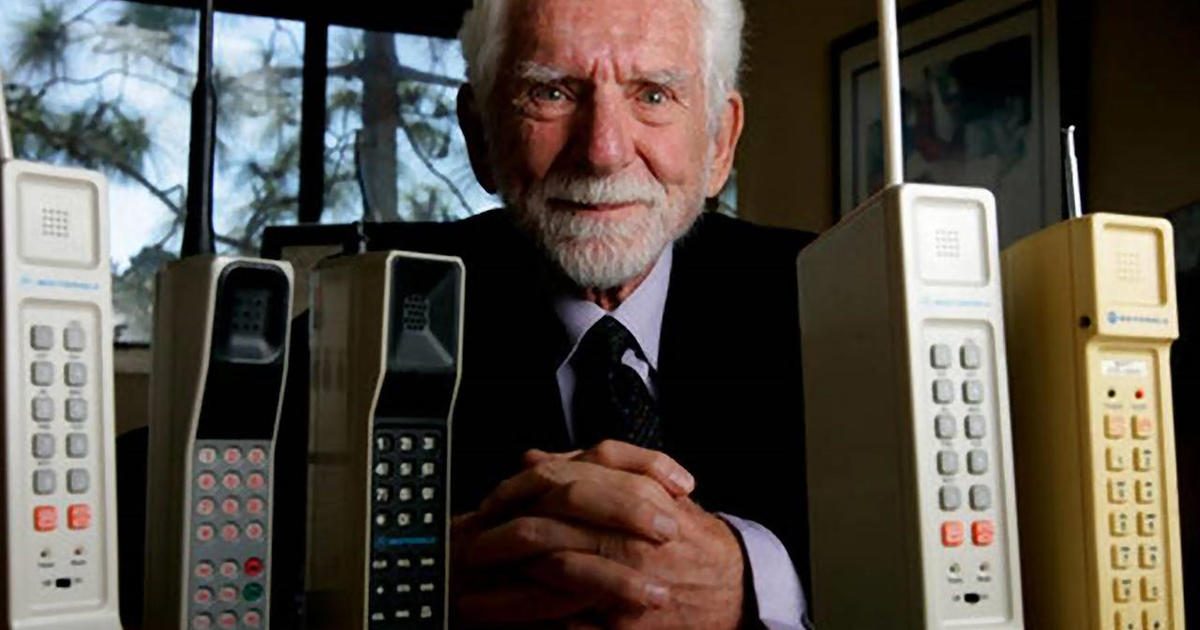
There wouldn’t be Uber or Lyft or Google Maps or FaceTime or Instagram or Tinder or Snapchat or TikTok or iPhones or Android phones if someone hadn’t invented the cellphone. Fortunately, somebody did.
It was Marty Cooper. “I know a lot about the future, ’cause I spend all my time there,” he laughed, “when I should be thinking about practical things of today.”
Cooper’s memoir, “Cutting the Cord” (Rosetta Books), tells the story. He is a Chicago native, Navy submarine officer, and, eventually, an executive at Motorola, maker of police and military radios – and in the early 1970s the two-way radio known as the car phone.
Those early car phones were not cellular telephones: “They had one transmitter in a city, and a very limited amount of radio channels,” Cooper told correspondent David Pogue. “The chances were one in 20 that you could make a phone call, that’s how bad that service was.”
In 1972, the idea of a cellular network was catching on, in which cities would be divided into smaller land regions (called cells), each with a transmission tower. As you moved from cell to cell, your call would be handed off from one tower to another.
AT&T, Motorola’s much bigger rival, asked the FCC for a monopoly on cellular communications, not because it had a vision of phones in our pockets, but to expand its car phone business.
Cooper said, “They were gonna take over our business as well as this whole new thing, and do it wrong! People had been wired to their desks and their kitchens for over 100 years, and now they’re gonna wire us to our cars, where we spend five percent of our time.”
Motorola wanted to prove that opening up the airwaves to competition would spur more innovation.
“So I thought about, ‘How could we do a dazzling demonstration? The only way to do it is to have a working … something,'” Cooper said.
Cooper’s team began with the design, not the technology: “Small enough to put in your pocket, big enough so that it could go between your ears and your mouth,” he explained.
He showed Pogue a model of the early design. “This isn’t a miniature – this is what they actually had in mind? It’s a tenth the size of the final one,” Pogue marveled.
CBS News
By the time Motorola had added the battery and all the circuitry, it grew to this size:
Motorola
In only three months, Marty Cooper had overseen the construction of a working cellphone. Cooper named it the DynaTAC. “You could talk for 25 minutes before the phone ran down,” he said.
On April 3, 1973, Cooper made the world’s first public cellphone call, as a demonstration for a reporter.
“So, we met this guy on Sixth Avenue in New York, in front of the Hilton,” he recalled. “And then I had to make a phone call to demonstrate it.”
And whom did he call? Joel Engel, his archrival over at AT&T. “And I said, ‘Joel, I’m calling you on a cellphone, but a real cellphone, a personal, handheld portable cellphone.’ Silence on the other end of the line.”
Cellphone inventor Marty Cooper on making his first public call:
Cooper’s gambit worked. The FCC was so impressed that it opened the cellular industry to competition.
Cooper left Motorola in 1983; since then, he and his wife Arlene Harris, a tech inventor in her own right, have started a series of companies in the cellular industry.
Pogue asked, “Isn’t the general advice for relationships not to work with your spouse?”
“We don’t agree about everything,” Cooper said. “But you know, that’s the spice of life, is disagreement – as long as it’s friendly.”
Pogue asked Cooper, “But it seems like, if there’s a technological dispute, can’t you just go, ‘I’ll have you know I’m the father of the cellphone!’ Wouldn’t you automatically win?”
Harris deadpanned, “No.”
The cellphone has come a long way, but Cooper thinks that we’ve only begun to tap its potential: “We are only at the very, very beginning. We are going to revolutionize mankind in many ways. I believe that the whole process of education is going to be revolutionized. And the other revolutions that are gonna happen is in health care. I know I sound like an optimist, but poverty is going to be a thing of the past.”

Rosetta Books
Already, Cooper said, workers in poorer countries use their cellphones to move money around without needing a bank. “This has stimulated entrepreneurism. People’s lives are being saved. People are being moved out of poverty.”
Cooper is a notorious fitness buff. At 92, he lifts weights and takes walks, sometimes on the beach in front of his home. But he considers mental exercise even more important.
“If you don’t keep learning all your life – keep an open mind, soak up stuff, be curious – you lose the ability to learn,” he said. “And to me, that’s the scariest thing of all.”
As for his new book, well, Hollywood has already bought the film rights. Pogue asked, “Who’s gonna play you in the movie?”
“I was hoping that you would do it, David,” he laughed. “You’re the only star that I know.”
“Have your people talk to my people,” Pogue said. “Here’s what I find strange, Marty: I know this is a stereotype, but as a 92-year-old guy, I might expect you to relish the stories from the past more than the stories of the future.”
“Well, I have observed that things in the past have continued to improve, you know?’ Cooper replied. “People are richer today. They are healthier today. We’ve still got a lot of problems, but there’s no reason to think that we aren’t gonna keep improving.”
For more info:
Story produced by Michelle Kessel. Editor: Emanuele Secci.
Call of Duty Vanguard Alpha Trailer – GameSpot

- Call of Duty Vanguard Alpha Trailer GameSpot
- Call of Duty: Vanguard Alpha Begins Next Week for All PS5 and PS4 Players – IGN IGN
- Call of Duty: Vanguard’s alpha preview is free this weekend for PS4 and PS5 gamers Techradar
- TRN WEEKLY: August 22, 2021 Fortnite Tracker
- Call of Duty: Vanguard Alpha & Beta Dates Announced With New Footage Screen Rant
- View Full Coverage on Google News
RTX 3090 Owner Finds Old Glove Inside $1500 GPU
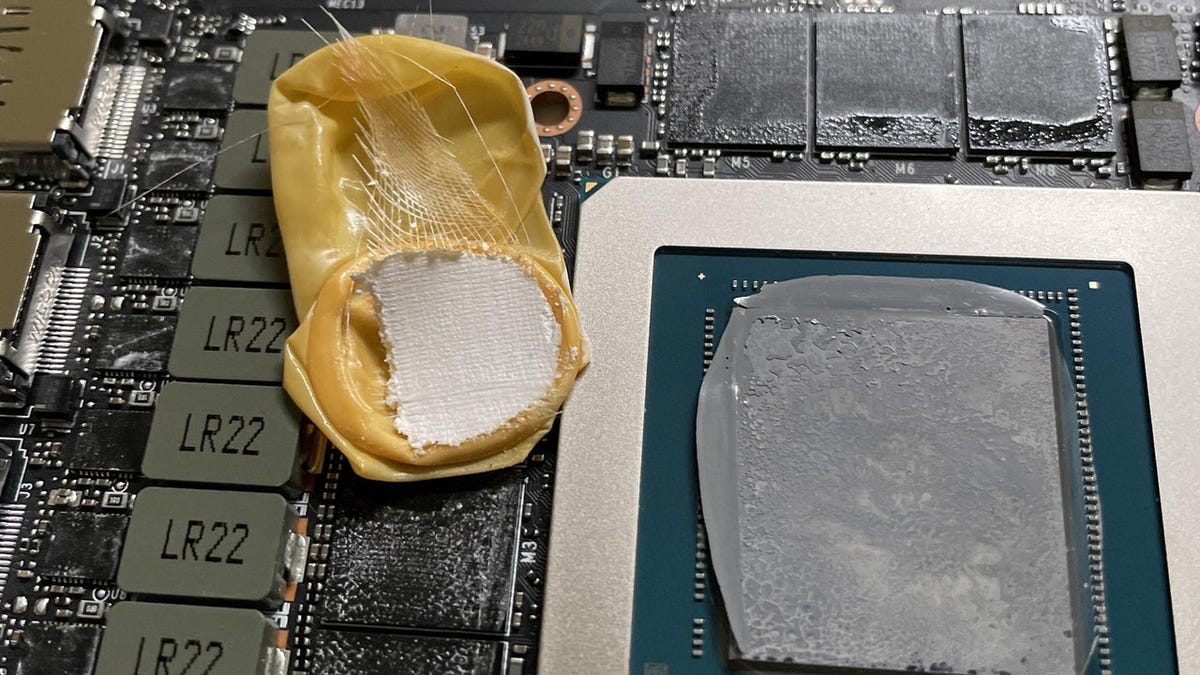
Imagine this. You’ve just paid a ton for a new RTX 3090 Founders Edition GPU. You plug the card in, boot everything up and … wait, why is my super-expensive GPU running at 230 degrees?
Reddit user antonyjeweet asked themselves that very same question. Given that GPUs shouldn’t be running above195 degrees fahrenheit/90c well, ever, they figured there was something wrong with the internals.
This sort of thing is pretty rare, but it does happen. Igor’s Lab reported earlier this month how a user received an AMD Radeon 6700 XT with all the thermal pads still installed. The thermal pads are basically small bits of plastic or tape that are supposed to be removed before the GPUs are shipped to users.
And after rolling the dice and taking his GPU apart to replace the thermal pads, antonyjeweet discovered an unwelcome surprise: a finger glove, hidden inside the thermal pads:
G/O Media may get a commission
“Now I know why my memory temps easily hit 110c very very fast. Now they stay at 86c max after 1.5 [hours] of stress testing. Also the core dropped 10c (from 75 to +/-65c after stress testing),” they wrote.
Interestingly, Nvidia at first followed procedure. They refused to honour the card’s warranty because antonyjeweet had taken the GPU apart, which is all pretty standard. However, after discovering someone in the Founders Edition assembly chain had left the little plastic surprise behind, they’ve agreed to help out antonyjeweet if they want it.
“Nvidia told me at first I lost my warranty. But after seeing this they said we will give you warranty (got that on mail). No swap or anything. If it works fine just keep it, if not, contact us and we will fix it,” the Netherlands-based user wrote.
If you’re wondering how something like this even happens, the real answer is there’s a global chip shortage. Customers usually don’t care too much the how’s and why’s, only that they get supply of their flash new consoles, CPUs, GPUs and everything else as soon as possible. That pressure and crushing demand often results in crippling conditions for those working on the factory floor. One factory in Vietnam that’s part of the Samsung and Apple supply chain has around 150,000 workers living at the factory full time, while another major Taiwanese semiconductor manufacturer forced some migrants back into shared accommodation despite the intensity of that country’s COVID wave.
On the bright side, everything worked out fine in this instance. But it’s a reminder to everyone that luxury consumer tech isn’t always going to work as advertised. If you’re going to drop thousands for real-time ray-tracing and all the bells and whistles at 4K, you might as well spend a little bit extra time making sure it’s running the way it should.
This story originally appeared on Kotaku Australia.
Google Pixel 5a Review – MobileTechReview

- Google Pixel 5a Review MobileTechReview
- Tired of waiting for the Pixel 6? Google’s Pixel 3, 4, 5 or 5A could be a good choice for you CNET
- Google Pixel 5a vs. Pixel 4a: Is the new affordable Pixel worth it? Tom’s Guide
- Weekly poll: if you could, would you buy a Pixel 5a 5G? – GSMArena.com news GSMArena.com
- Here’s why the Pixel 5a makes sense XDA Developers
- View Full Coverage on Google News
Samsung Teases 512 GB DDR5-7200 Modules

This week as part of the annual Hot Chips semiconductor conference, Samsung’s memory division has presented a poster/slides on a project it is currently working on with impressive end-point results. The company details a 512 GB module of DDR5 memory, running at DDR5-7200, designed for server and enterprise use. This is a step up from the 256 GB modules at the top end of the market today, but to get there, Samsung has been introducing some new features and functionality.

As per standard DDR5 specifications, the modules will run at 1.1 volts with standard JEDEC DDR5-7200 timings, however even JEDEC has not declared an official DDR5-7200 standard at this stage, choosing only to go to DDR5-6400. There are placeholders for future standards, such as DDR5-7200, and based on how the latencies increase from slower speed to higher speed, these should be in the realm of 50-50-50 to 60-60-60*.
*There are three variants for each DDR5 standard – A, B, or C.
DDR5-6400A is 46-46-46 for example, but
DDR5-6400C is 56-56-56.
As part of the presentation, Samsung states that the introduction of Same-Bank refresh (SBR) into its DDR5 will increase the efficiency of the DRAM bus connectivity by almost 10%, with DDR4-4800 showing the best efficiency in terms of energy from bit.

In order to support the higher memory transfer rates of DDR5, Samsung has introduced a new DFE (Decision Feedback Equalizer) for better signal stability. It allows for a more variable data-path location, as well as per-pin calibration techniques.

One of the big things about increasing capacity in memory is that you end up stacking more memory together. For their part, Samsung is stating that they can stack 8 DDR5 dies together and still be smaller than 4 dies of DDR4. This is achieved by thinning each die, but also new through-silicon-via connection topographies that allow for a reduced gap between dies of up to 40%. This is partnered by new cooling technologies between dies to assist with thermal performance.
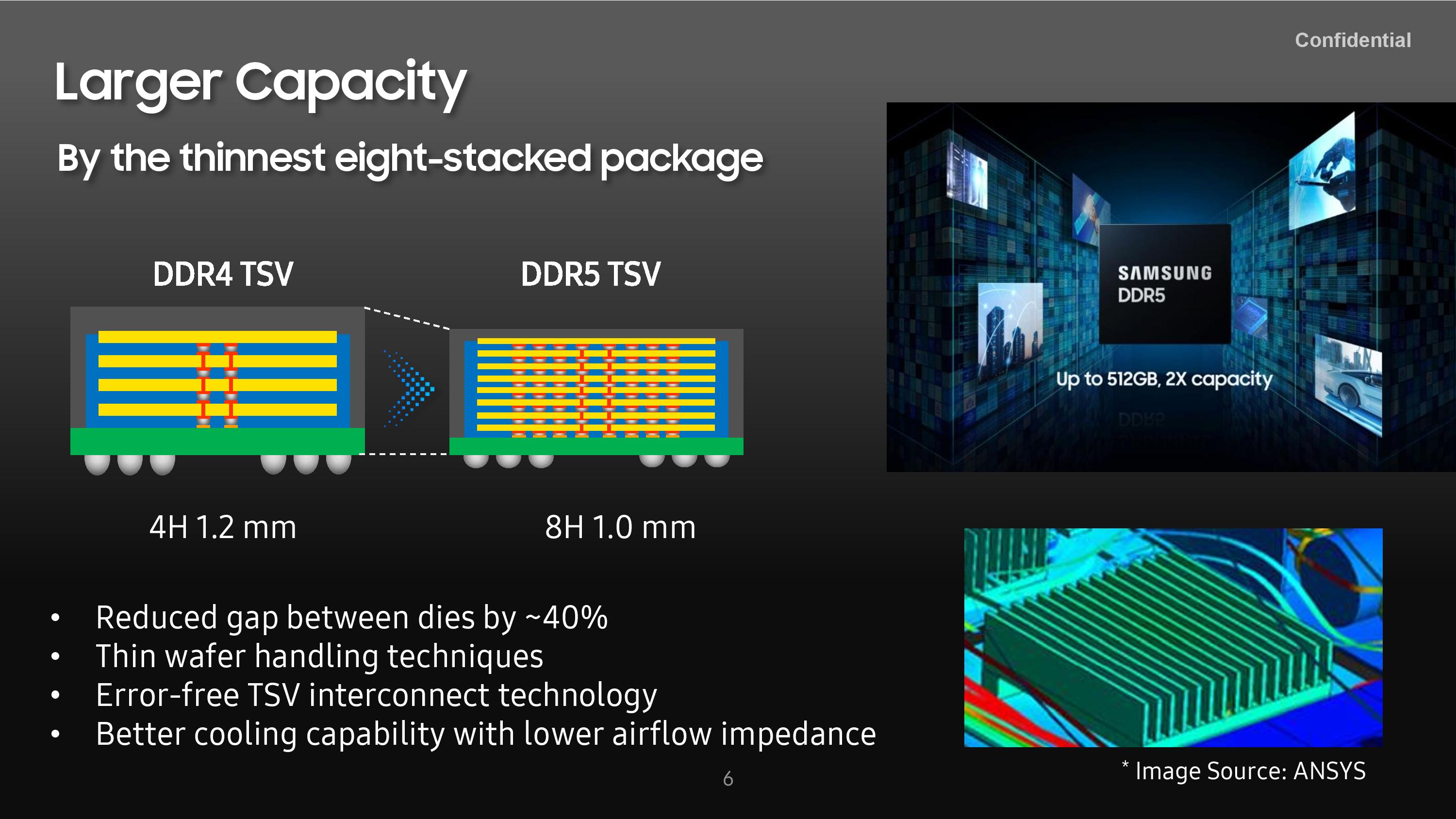
On power, we’ve known that one of the drivers for JEDEC’s newest memory specifications is lower power, and for DDR5 the major thing aside from the lower voltage is to bring the voltage regulator from the motherboard on to the memory module. This allows for the memory module manufacturer to more tightly control the power requirements and consumption of the memory, especially should the motherboard be a very cheap model that might skimp on valued components at the voltage regulation level. For this 512 GB module, Samsung is using a high-efficiency Power Management IC (PMIC) – Samsung as a company has a lot of PMIC experience through its other electronic divisions, so no doubt they can get high efficiency here. Samsung also states that its PMIC has reduced noise, allowing for lower voltage operation, and also uses a High-K Metal Gate process (introduced on CPUs at 45nm) in a first for DRAM.

One of the talking points on DDR5 has been the on-die ECC (ODECC) functionality, built in to DDR5 to help improve yields of memory by initiating a per-die ECC topology. The confusion lies in that this is not a true ECC enablement on a DDR5 module, which still requires extra physical memory and a protected bus. But on the topic of ODECC, Samsung is showcasing an improvement on its bit-error rate of 10-6, or a factor of a million lower BER. How much of this is required by the DDR5 JEDEC specification is unclear at this point, but it’s still a good direction to have.

At the end of the slide deck from Samsung, it states that its first 512 GB module should be ready for mass production by the end of 2021 – it’s unclear if this is a DDR5-7200 module or something else, as the slide could be interpreted differently. But one of the key aspects to this discussion is when the market expects the crossover of DDR4 and DDR5 to occur: Samsung has a big window of 2023-2024 planned for that crossover, which does align with other market analyst predictions.
This stuff is still going to cost some serious money, which makes me wonder what this means for consumers. Right now the supply of 32 GB modules (UDIMMs) seems to be plentiful for those that want 128 GB of memory in a consumer system. The advent of these new memory packages from Samsung might suggest a path to 64 GB modules for DDR5 on the consumer platform, however you can bet your bottom dollar that they’ll stay for enterprise for a while as they will command a price premium.
Stay tuned for AnandTech’s Hot Chips content throughout this week.
Stop carrying around your vaccination card. Here’s how to keep a digital copy on your phone
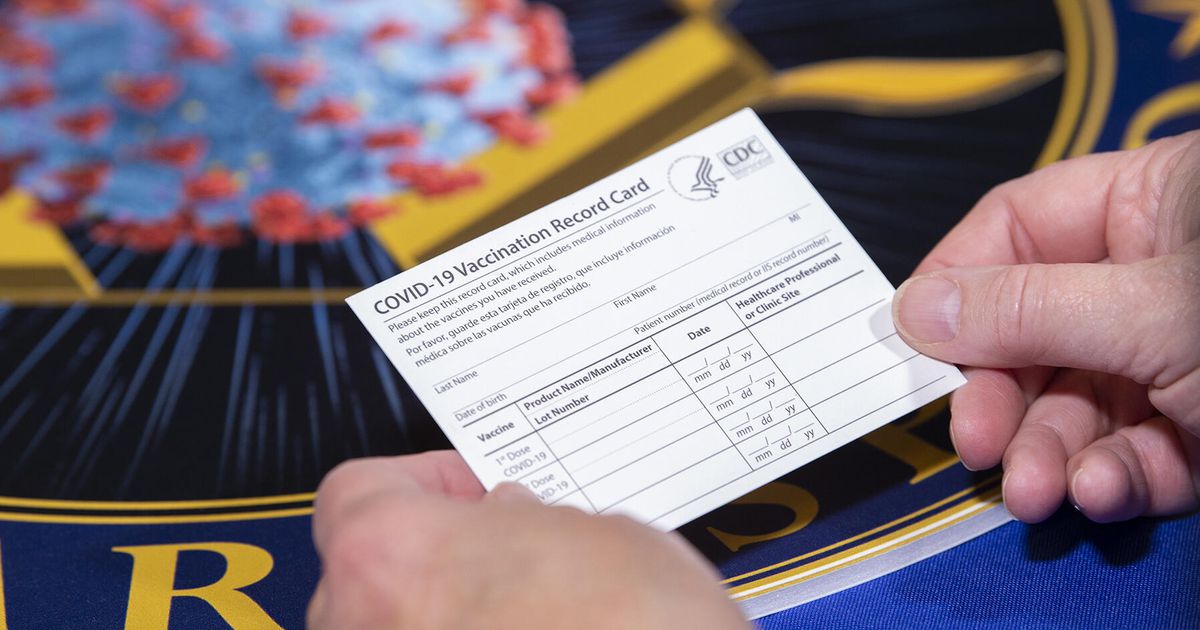
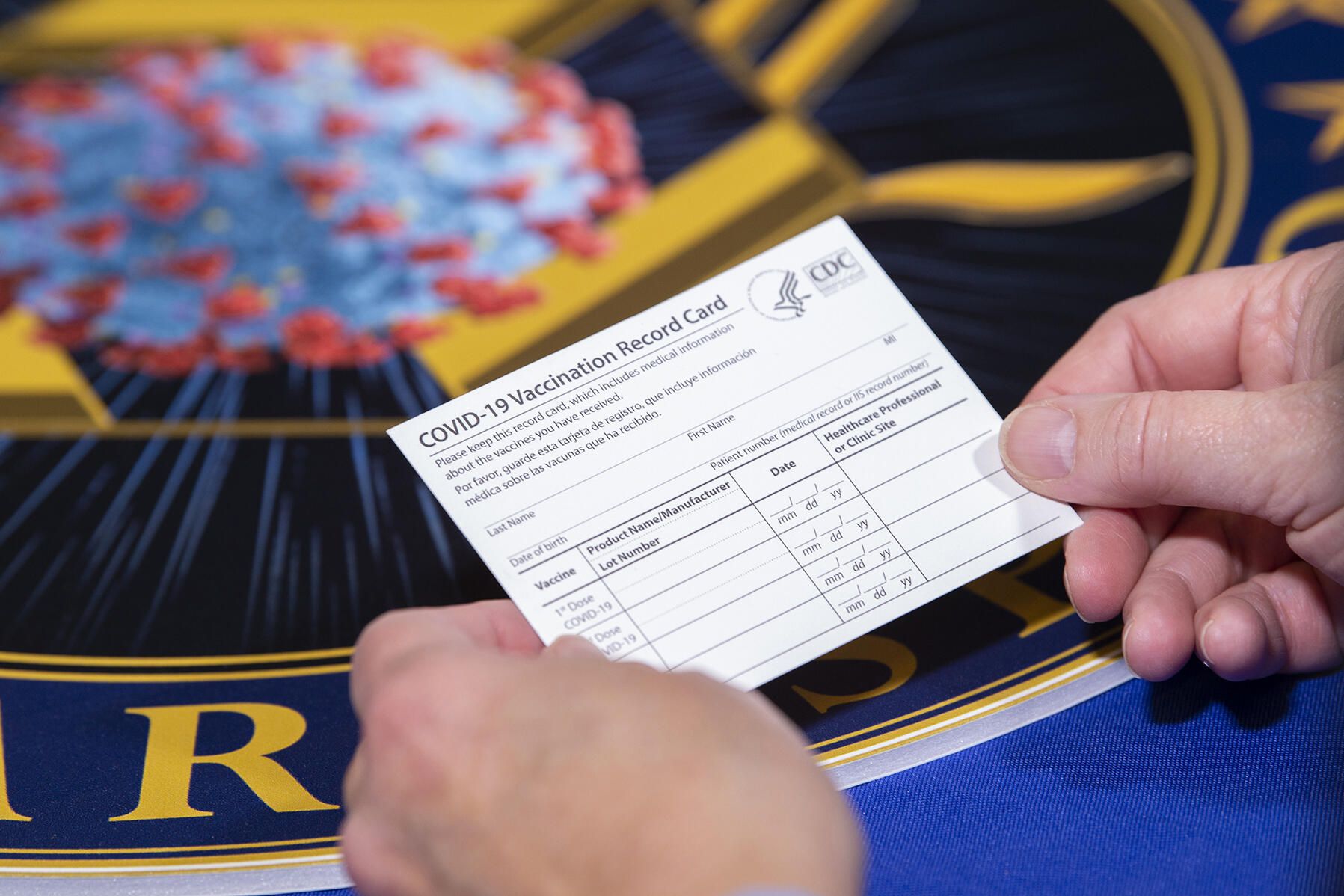
Your vaccination card is important, but it’s also easy to lose or damage.
US Department of Defense
For the most up-to-date news and information about the coronavirus pandemic, visit the WHO and CDC websites.
As the delta plus variant continues to spread, cities and businesses are doubling down on COVID-19 safety protocols. New York is requiring proof of vaccination, and so is San Francisco. While most companies are incentivizing getting the shot, many establishments like gyms, restaurants, bars and indoor event venues are making it a requirement. For example, in Colorado, where I live, a handful of large concert venues owned by AEG Presents recently announced they’ll require vaccination for anyone who wishes to attend a show. It’s simple — no proof, no entry.
That small paper card you received when you were vaccinated will suffice to prove that you’re vaccinated. But what if it’s lost, damaged or stolen? As of now, the CDC is not storing your vaccination status. Across the US and the rest of the world, companies, apps and municipalities are making it easier to digitally store and display your COVID-19 vaccination card. Now Samsung is joining in.
Instead of carrying around the card — or laminating it, which prevents your health care provider from updating it with future booster shots — take a few minutes to add a digital copy of your vaccination card to your phone. Here are a few options I’ve found while researching how to safely store mine.

Watch this:
What to do if you lose your vaccination card, and how…
3:00
There’s not a standard way to show proof of your vaccination card
Keep in mind that right now there isn’t a single national system or app to present proof of vaccination on your phone. Requirements vary, based on locale and company. While some places may accept a picture of your vaccination card, others may require you to use an app that’s been implemented at the state level.
It’s a confusing mess, to put it mildly. I strongly urge you to take a few minutes to research what your local city or state will accept as proof as it can vary.
For example, AEG Presents will accept a “physical copy of a COVID-19 Vaccination Record Card, a digital copy of such card or such other proof as is permitted locally.”
Seattle University, meanwhile, requires students to be vaccinated to attend in-person classes via an online form that uploads photos of the front and back of the vaccination card. (Many other colleges are requiring students and employees to be vaccinated.)
Again, every venue, business, city and state is going to approach this differently until there is a unified standard — assuming there ever is one.
When in doubt, look for information on the business’s website, or call the local health department and ask for clarification. This is bound to save you time, headaches and being turned away at the bar.
Take a clear photo with your phone
Snapping a picture of your vaccination card and keeping it on your phone is the quickest and easiest way to, at a minimum, have a backup copy of your card and all of the information surrounding your vaccination. The Centers for Disease Control and Prevention even recommend keeping a picture of your card as a backup copy.
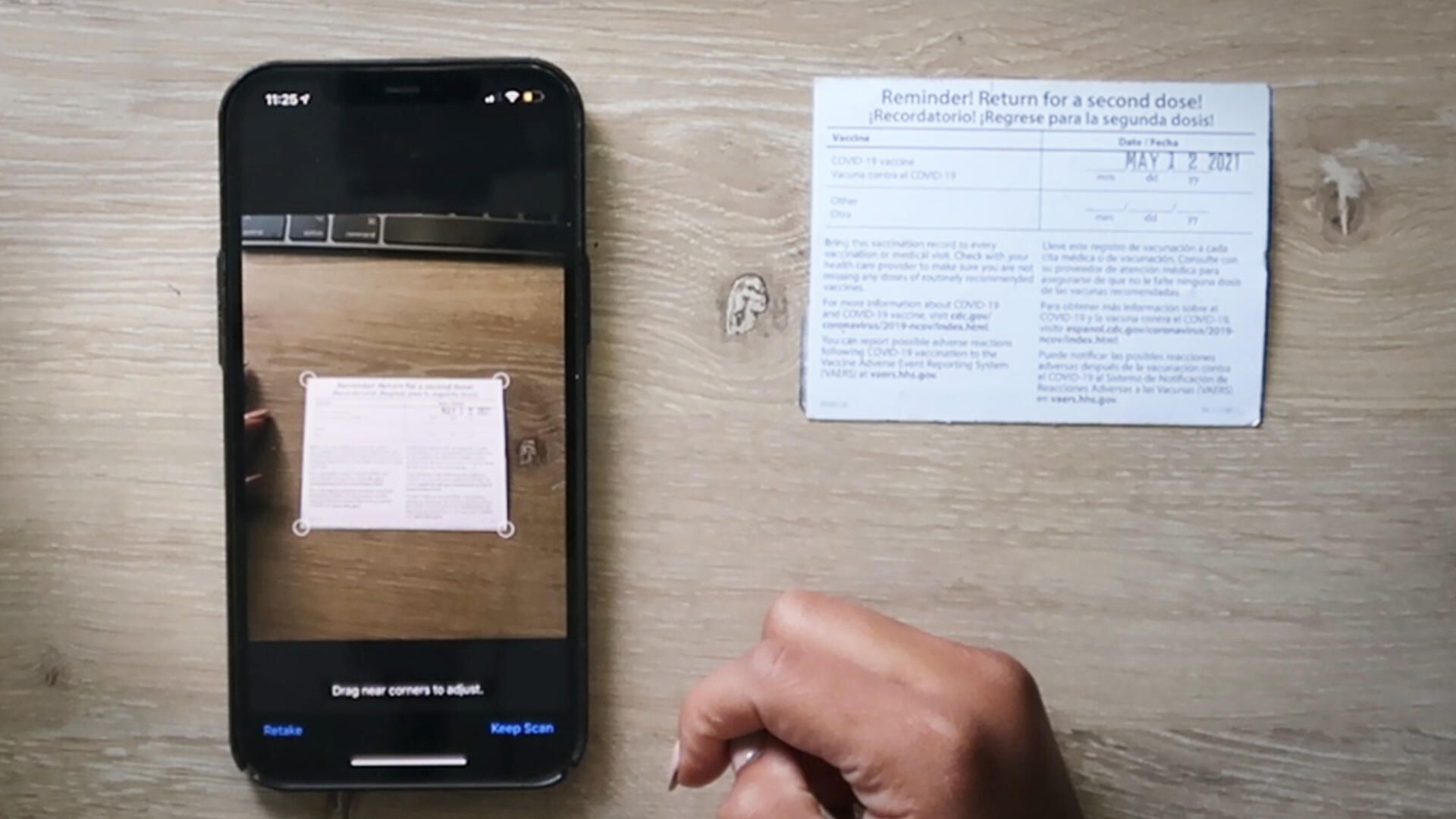
Taking a photo of your card — front and back — is the quickest and easiest way to store it on your phone.
Sean Booker/CNET
Simply use the camera app on your phone to take the photo. We suggest storing this in a notes app, a folder or somewhere that’s easy to remember so you don’t have to endlessly scroll your camera roll to find it. Make sure you’re in a well-lit area and get close enough to the card that its dates and details are legible. I also suggest putting the card on a dark surface, while remaining conscious of shadows of your arms or the phone on the card itself.
Here’s an example of one way to save your vaccination card as a new photo album. On an iPhone, open the Photos app, select the Albums tab and then tap the + sign in the top left corner followed by New Album. Give the album a name and then tap Save. Next, select the photos of your card to add it to the album.
On an Android phone, it depends on which app you’re using, but the process should generally be the same. If you’re using the Google Photos app, open the app and then select the picture of your vaccination card. Tap the three-dot menu button in the top-right corner, followed by the Add to Album button. Select +New album and give it a name such as “Vaccination Card” and tap the checkmark button when you’re done.
Have a Samsung phone? There’s an app just for you
Samsung now gives Galaxy phone owners the option to add proof of vaccination to Samsung Pay, its wallet app. By having direct access to your vaccination record, you won’t have to fiddle around with creating photo albums and tapping through multiple screens before you’re able to show it to a bouncer at your local watering hole.
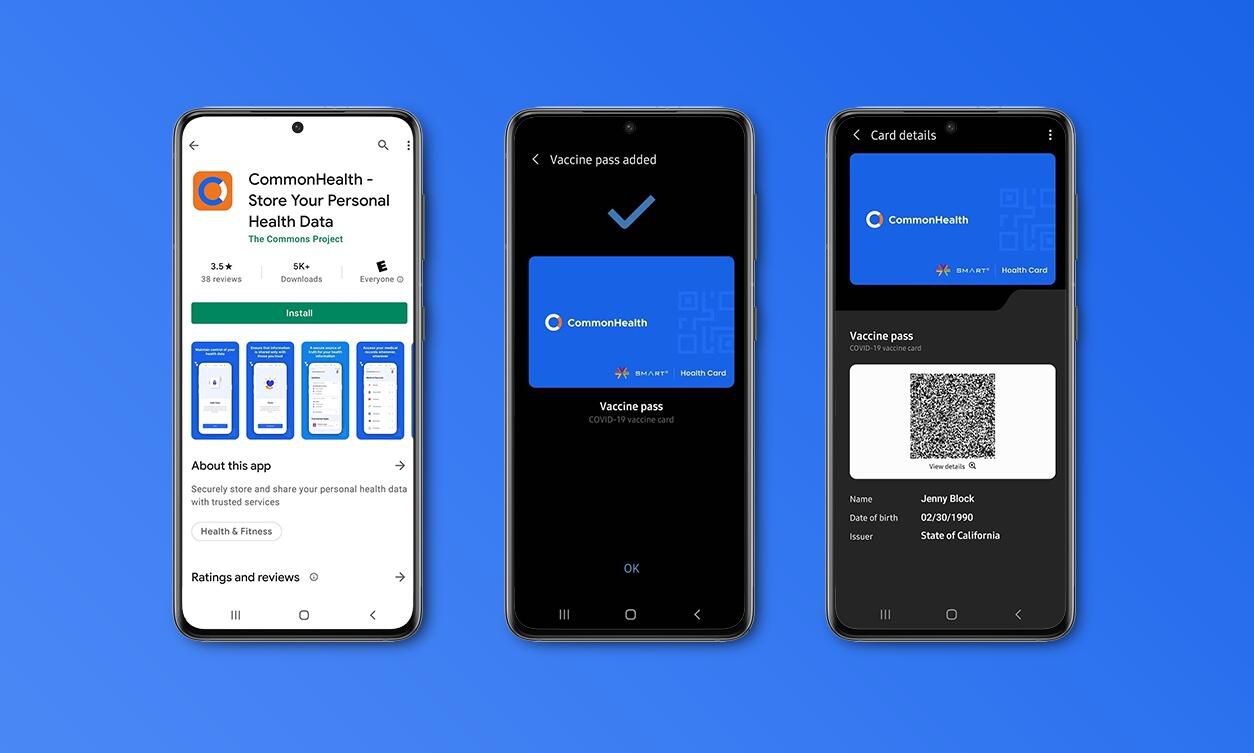
Samsung Galaxy device users can store proof of vaccination in Samsung Pay by downloading the CommonHealth app.
Samsung
To add your card to Samsung Pay, you’ll need to download the CommonHealth app (Samsung’s partner) from the Google Play Store. Follow the prompts in the app to verify your vaccination status. Once the app confirms you’ve indeed gotten the shots, you’ll be prompted to download a Smart Health Card to Samsung Pay.
That card is what you’ll then show to anyone requesting you show proof of vaccination.
Excelsior and more: Look for apps based on where you live
Some states — including New York, Colorado and California — offer some form of digital vaccination card. The myColorado app requires you to create an account, verify your identity and then add your digital driver’s license to your phone. After you’ve done that, you can then add your myVaccine record to the app.
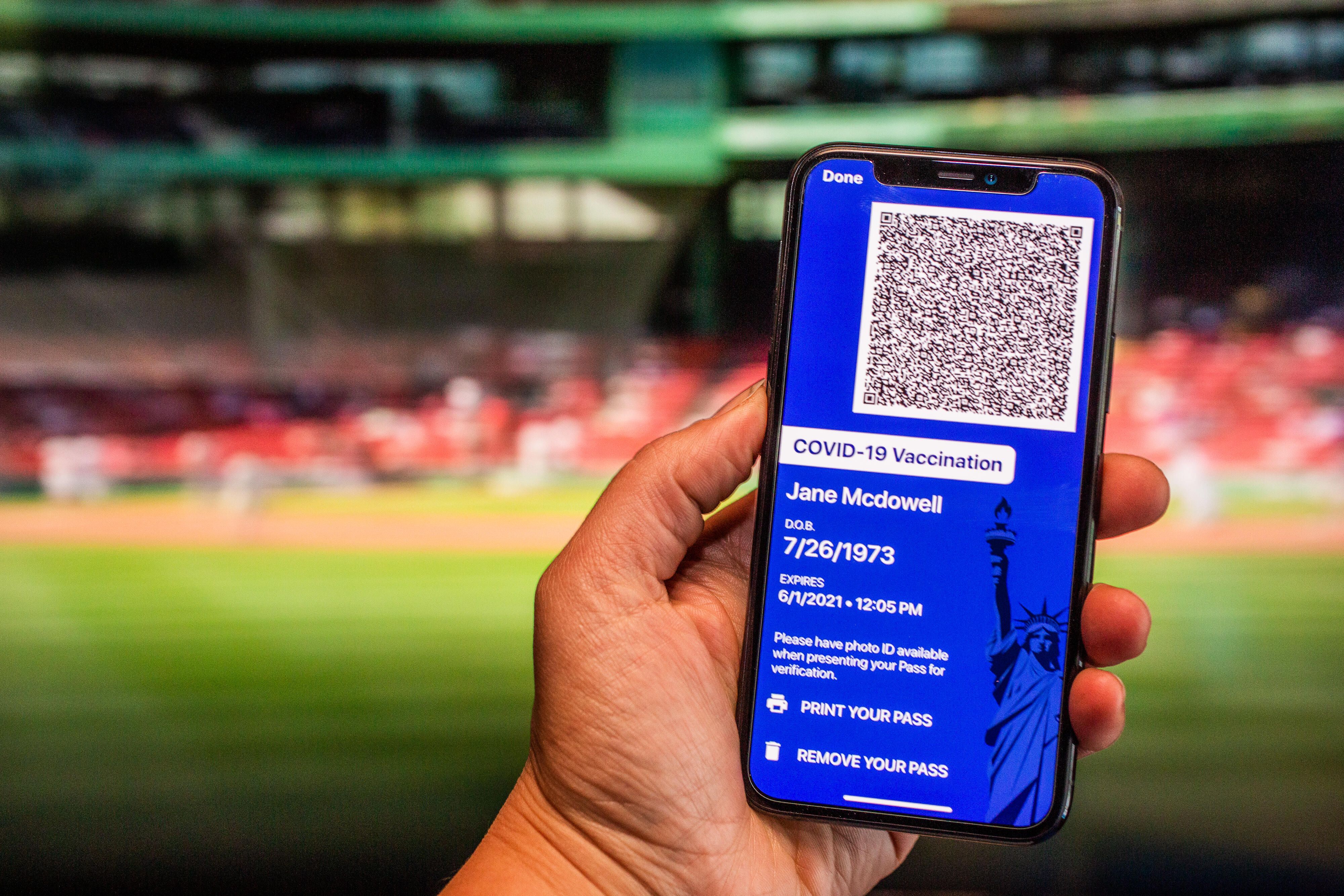
Sarah Tew/CNET
Louisiana’s LA Wallet app takes a similar approach to Colorado’s, allowing you to add your driver’s license and proof of vaccination to your phone.
California’s implementation requires you to fill out a form to verify your identity, after which you’ll receive a text message or email with a link to a QR code you can save to your phone. When scanned, the code will offer proof of vaccination. The link will also include a digital copy of your vaccination record.
MyIR Mobile is another app used by several state health departments to provide a digital copy of your vaccination card. Currently, if you live in Louisiana, Maryland, Mississippi, North Dakota, Tennessee, Washington, West Virginia or Washington, DC, this is the app you’ll use.
We’ll update this story as the national vaccine conversation continues. For more information about the forthcoming booster shots, make sure to read this. We have up-to-date details about the delta variant, as well as delta plus and the lambda variant.