Minecraft Live 2021 GameSpotView Full Coverage on Google News
TechNews
Steam Bans Blockchain Games That Issue NFTs or Cryptocurrency, But Epic Games Is Okay With Them
Update 10/15: Epic Games has come out in support of blockchain technology so along as “they follow the relevant laws,” according to CEO and founder Tim Sweeney.
Hours after it was reported Steam would ban blockchain-backed games that offer NFT and cryptocurrency, Epic Games has taken the opposite stance and said they are open to blockchain-based games.
In a tweet, Sweeney says, “Epic Games Store will welcome games that make use of blockchain tech provided they follow the relevant laws, disclose their terms, and are age-rated by an appropriate group.”
Sweeney says that Epic will not be using crypto in its own games, but welcomes “innovation in the areas of technology and finance.”
Epic Games Store will welcome games that make use of blockchain tech provided they follow the relevant laws, disclose their terms, and are age-rated by an appropriate group. Though Epic’s not using crypto in our games, we welcome innovation in the areas of technology and finance. https://t.co/6W7hb8zJBw
— Tim Sweeney (@TimSweeneyEpic) October 15, 2021
Sweeney did Tweet in September that Epic won’t touch NFTs “as the whole field is currently tangled up with an intractable mix of scams, interesting decentralized tech foundations, and scams.”
Replied:
We aren’t touching NFTs as the whole field is currently tangled up with an intractable mix of scams, interesting decentralized tech foundations, and scams.
— Tim Sweeney (@TimSweeneyEpic) September 27, 2021
Still, Sweeney seems to maintain that Epic itself will not be incorporating crypto into its own games and reaffirmed that the technology itself is a “utility whether or not a particular use of it succeeds or fails.”
Original Story: Games that feature blockchain technology that allows for the exchange of NFTs or cryptocurrency will no longer be allowed on Steam.
According to a new rule on Steam’s partner onboarding page, Valve says distributors shouldn’t publish, “applications built on blockchain technology that issue or allow exchange of cryptocurrencies or NFTs.”
Age of Rust, a game that involves players collecting in-game NFTs, says Steam informed them that they’re kicking “all blockchain games off the platform, including Age of Rust, because NFTs have value.”
Community: A few minutes ago, we were notified that @Steam will be kicking *all blockchain games* off the platform, including Age of Rust, because NFTs have value. Behind the scenes, we’ve had good communication and have been upfront with Steam. #blockchaingames #NFT
1/4 pic.twitter.com/W4pR3Xl63q— Age of Rust (@SpacePirate_io) October 14, 2021
NFT stands for “non-fungible token,” and they are digital assets that are sold and bought online. NFTs can take many forms, but they have become increasingly popular as digital art. Artists can create a piece of digital artwork, register it as an NFT, and sell a limited number of them.
You can think of it as building a collection of paintings, trading cards, or other collectibles, only in the digital space. In video games, NFTs could take the form of in-game collectibles, skins, and more.
According to Age of Rust, Steam doesn’t want to allow items on the platform that can have real-world value. IGN has reached out to Valve for comment, and we will update this article when we hear back.
For more on Valve, check out our impressions of the Steam Deck, Valve’s handheld gaming PC.
Logan Plant is a freelance writer for IGN. You can find him on Twitter @LoganJPlant.
Dbrand pulls its PS5 Darkplates from sale after Sony threatens legal action
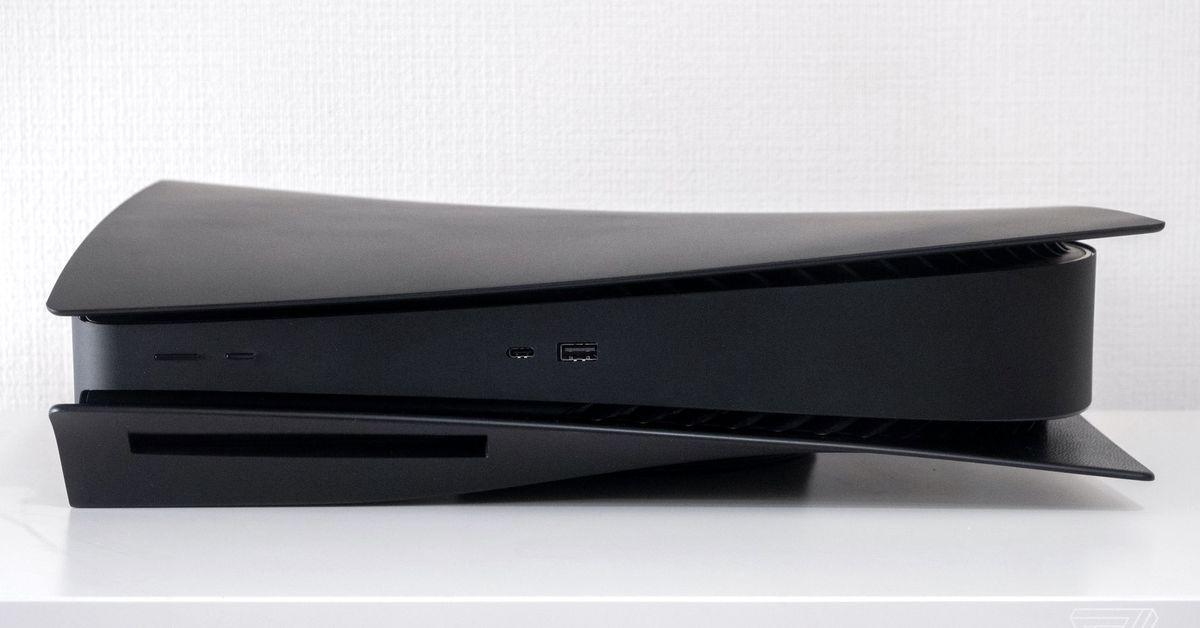
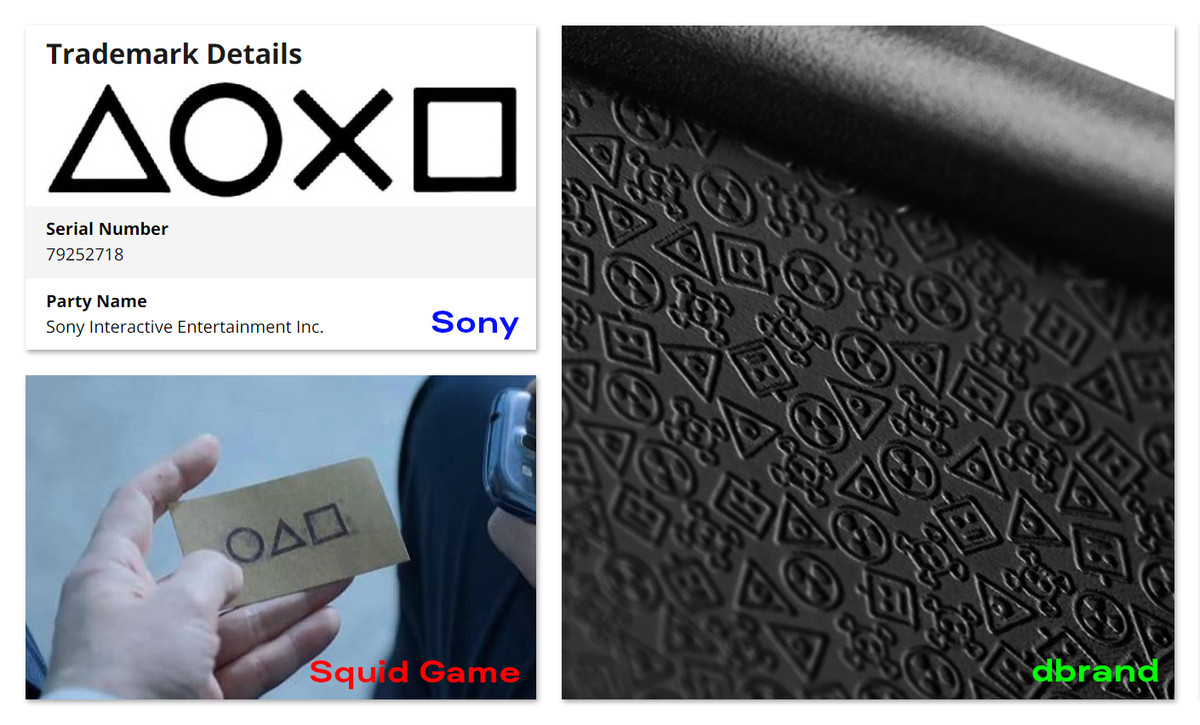
Earlier this year, Dbrand started selling matte black PS5 side plates that it called Darkplates, and when it did, it baited Sony right on the product’s info page to “Go ahead, sue us.” We got our hands on some, and they look exactly like you expect, making the sides of your PS5 black instead of white. They even have their own tongue-in-cheek take on the PlayStation icon microtexture.
As of Saturday, though, you can’t buy Darkplates anymore, as Dbrand has removed them from sale after (perhaps unsurprisingly) receiving a cease and desist letter from Sony. (If you visit the Darkplates site right now, it just shows a list of news articles, including ones from The Verge).
Dbrand shared the letter with The Verge, which we’ve included at the bottom of the article. Sony raises a few grievances in the letter, including taking issue with how the faceplates “replicate SIE’s [Sony Interactive Entertainment] protected product design” and with Dbrand’s versions of the PlayStation icons. Dbrand says the letter was issued earlier this year but didn’t provide an exact timeline as to when.
As part of the letter, Sony asked that Dbrand “promptly and permanently cease and take down all marketing and promotion for and cease all sales worldwide of faceplates featuring the product configuration of SIE’s PS5 faceplates or any similar product configuration, including without limitation all faceplates currently for sale at dbrand.com.”
Dbrand does not appear to be agreeing to comply with a permanent cease and desist, though. It says it will comply for now.
Or more specifically: “We’ve elected to submit to the terrorists’ demands… for now,” Dbrand writes in this 1,666-word post on the company’s subreddit, one packed with harsh words for Sony and even a few F-bombs. The company signs off with “talk soon,” suggesting it has already has other plans.
This isn’t the first time Sony has threatened legal action over PS5 side plates. One company that started life as PlateStation5 changed its name to CustomizeMyPlates and then canceled and refunded orders, allegedly after Sony threatened legal action, VGC reported in November. That company returned in January and is selling its custom plates again.
Part of the reason that there is a market for side plates is likely because it’s not too hard to take them off a PS5. In fact, Sony shows exactly how you can do it in its official teardown of the console.
The ease with which you can take the PS5’s plates off not only makes it easy to get to the inner workings of the console but could also hint that it plans to release other versions of the side plates in the future. You can now buy red and black DualSense controllers and a black Pulse 3D Audio headset is on the way, suggesting that Sony is at least experimenting with other color combinations for its accessories, so an official set of black side plates doesn’t feel out of the realm of possibility.
If you don’t want to wait for Sony, though, you have one less option of third-party side plates to pick from while Dbrand’s are off the market.
Update October 16th, 12:54AM ET: Added information from a Dbrand post on Reddit.
A year later, Apple’s MagSafe continues to underwhelm
One year ago yesterday, I wrote how MagSafe could be the biggest reason to buy an iPhone 12. I believed it, too. It looked like Apple had cracked the code to effortlessly accessorize the iPhone and even add modular new capabilities. The company showed its pricey new MagSafe cases and wallets seemingly snapping into place, plus faster wireless charging. The future looked bright.
But if you became an early adopter like me, you might have wound up disappointed. As Bloomberg’s Mark Gurman points out, two of Apple’s first overpriced MagSafe accessories are already out of date. First, we just learned Friday that Apple’s $129 MagSafe Duo Charger can’t fast-charge an Apple Watch Series 7. Second, Apple has already replaced the $59 MagSafe Leather Wallet with a better version that you supports Find My so your phone can remember where it was when it got removed.
I think Gurman might actually be undercounting, though. The new Leather Wallet with MagSafe also doesn’t support Apple’s $49 Clear Case with MagSafe, so hope you didn’t buy one of those thinking it’d be futureproof — apparently, it blocks the NFC tags that MagSafe accessories like the Wallet use to passively ID themselves to the phone.
And while we’re on the subject of cases, every official iPhone 12 case (and likely the vast majority of third-party ones) are incompatible with the iPhone 13 lineup, because the camera bump got wider this time around. I took advantage of those “free” iPhone offers to upgrade to an iPhone 13 Mini (loving the improved battery life, by the way), and now I have an expensive but useless Clear Case with MagSafe that I’m not sure what to do with.
Image: Apple
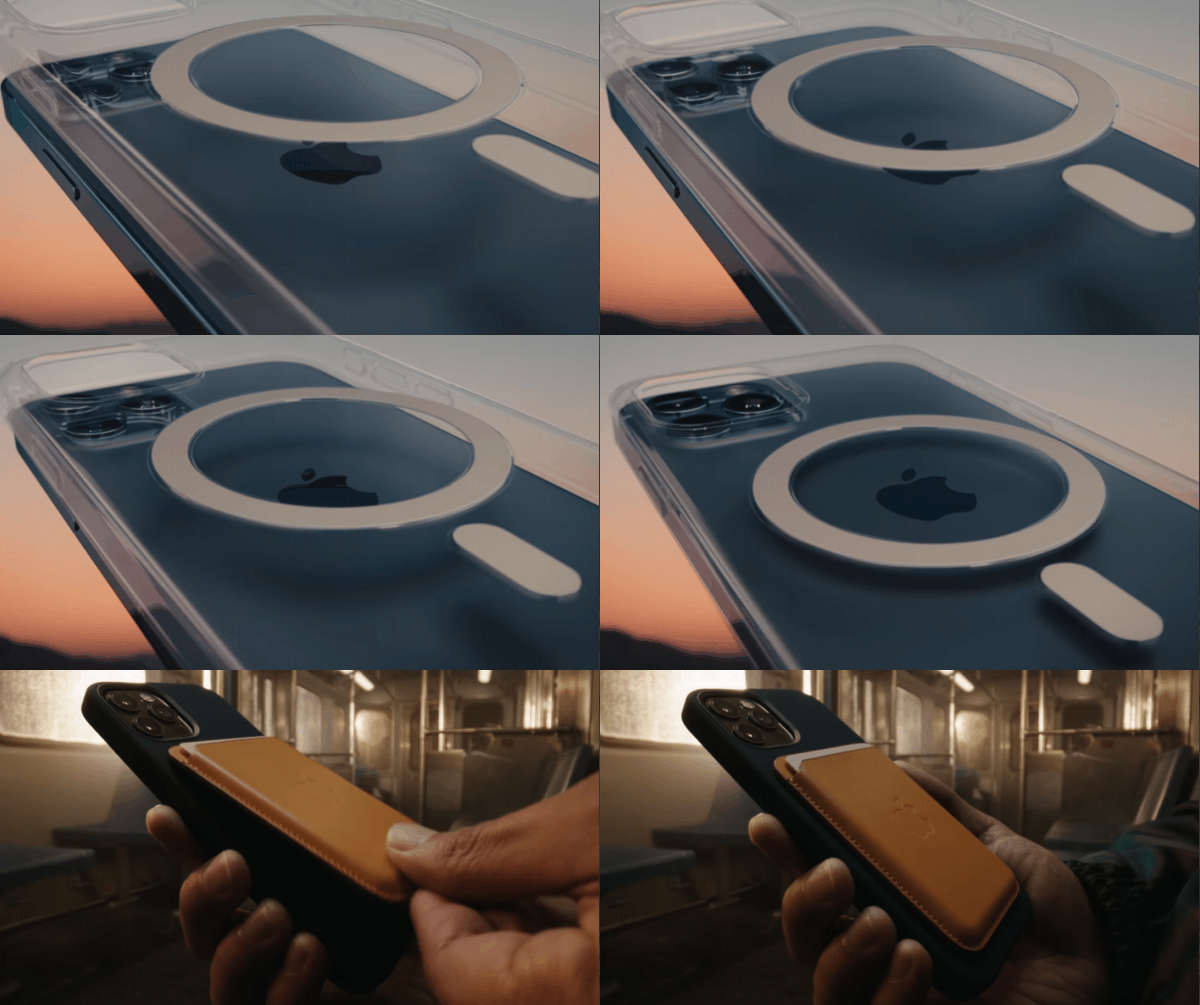
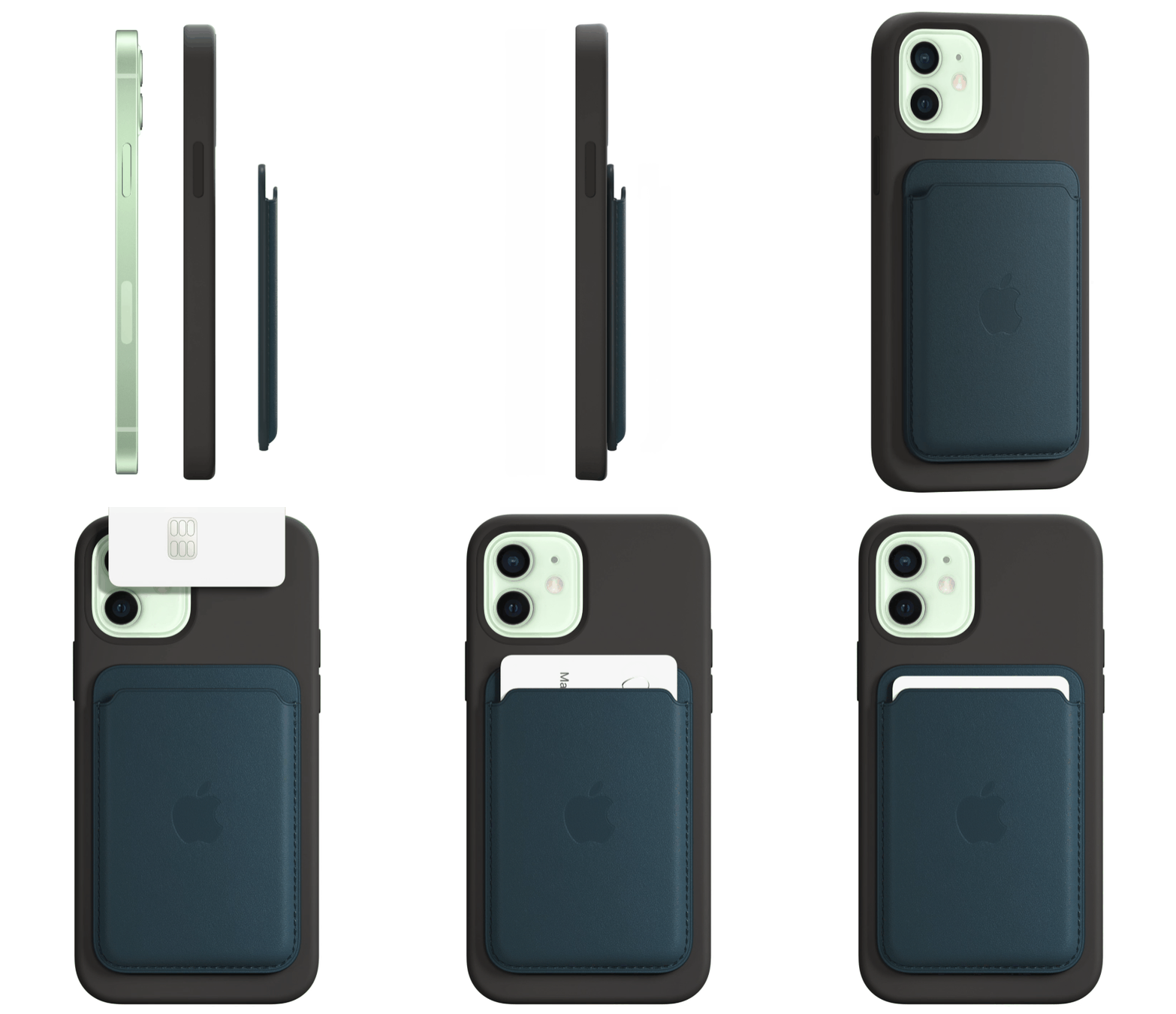
Those are just the latest disappointments, though. It didn’t take long before iPhone 12 buyers like me discovered that no, Apple’s new cases don’t actually snap into place like they do in the Apple’s animations I showed you last year (see above and below). They still rely on a rim that grasps the edges of your phone and requires pressure to insert and remove.
Image: Apple
Several Verge editors have also complained that the $39 MagSafe charging cable doesn’t have a long enough cord to use on the couch or in bed where its quick-detach feature might actually help — but Apple’s still selling the same 1-meter cable a year later. My MagSafe pad now sits unused on a shelf, while I begrudgingly plug in a Lightning cable instead. Meanwhile, both it and the $129 MagSafe Duo still don’t come with charging bricks, even though the previous Apple USB-C chargers you might own (18W and 29W) aren’t good enough to drive them at full speed. They require 20W and 30W chargers, respectively, which Apple sells for $19 or $49 each.
And though it took most of a year for Apple to release its own MagSafe Battery Pack, we were underwhelmed by its capacity in our review. I bought and returned one myself, though not for any of the reasons Dieter laid out. I just couldn’t stand how weak the vertical magnet was even with Apple’s own Clear Case, the pack always twisting in my hand. (Without the case, it made my iPhone 12 Mini uncomfortably warm to hold.)
Every one of these examples speaks to a lack of foresight around MagSafe, and that’s unusual. Foresight is generally one of Apple’s strengths, bringing out new products and technologies only when their time has come. But to me, the real tragedy of MagSafe’s first year is the lack of a larger ecosystem. The entire time we’ve been waiting for Apple to show us what MagSafe is truly capable of, it’s been keeping the rest of the world from getting out ahead — using its MFi program and artificial charging restrictions built into the iPhone.
Combining the Qi wireless charging standard with non-patentable magnets, MagSafe should have been a lightning rod to customization and modularity. So far, Apple has insulated itself — and us — from the possibilities.
Epic says it’s ‘open’ to blockchain games after Steam bans them
Epic tells The Verge that it’s “open to games that support cryptocurrency or blockchain-based assets” on its game store, unlike its competitor Valve which has banned games that feature blockchain technology or NFTs from Steam. When we asked about allowing games that featured NFTs, Epic told us there’d be some limitations, but that it’s willing to work with “early developers” in the “new field.”
Epic says that the games would have to comply with financial laws, make it clear how the blockchain is used, and have appropriate age ratings. It also says that developers won’t be able to use Epic’s payment service to accept crypto; they would have to use their own payment systems instead.
Epic’s CEO Tim Sweeney has said that the company isn’t interested in touching NFTs, but that statement now appears to only apply to its own games. Epic tells The Verge that it will clarify the rules as it works with developers to understand how they plan to use blockchain tech in their games.
This doesn’t mean that developers spurned by Steam can rush out and throw their game up on the Epic Game Store. Currently, Epic’s self-publishing program is in closed beta, and Epic’s FAQ says it chooses who can join on a “case-by-case basis.” Epic, however, has shown itself to be a fairly permissive platform owner — something that became a point of contention in its trial with Apple when lawyers brought up the “offensive and sexualized” games that were available on Itch.io, a game store accessible on Epic’s game store.
Allowing games that Steam bans is another way that Epic could compete with Valve. Epic has already shown that it’s willing to make big bets trying to make its store a major player in the PC gaming space, and this could be another play to get some gamers or developers on its side. Some NFT fans immediately looked to Epic after the news about Steam broke. Enjin, a company that helps developers integrate NFTs into their products (including SpacePirate, who tweeted about their game being taken off of Steam) retweeted our Steam article, and tagged Epic CEO Tim Sweeney, asking to talk. It seems now they have at least one question answered.
Crysis Remastered Trilogy – Official PC, PlayStation 4, and Xbox One Launch Trailer – IGN
- Crysis Remastered Trilogy – Official PC, PlayStation 4, and Xbox One Launch Trailer IGN
- Crysis Remastered Trilogy Review (PS4) Push Square
- Crysis Remastered Trilogy review – defying time VG247
- Crysis Trilogy Remastered review – Getting better with age Dexerto
- Crysis Remastered Trilogy – Official Nintendo Switch Launch Trailer IGN
- View Full Coverage on Google News
Xbox Series X Mini Fridge Finally Gets a Release Date
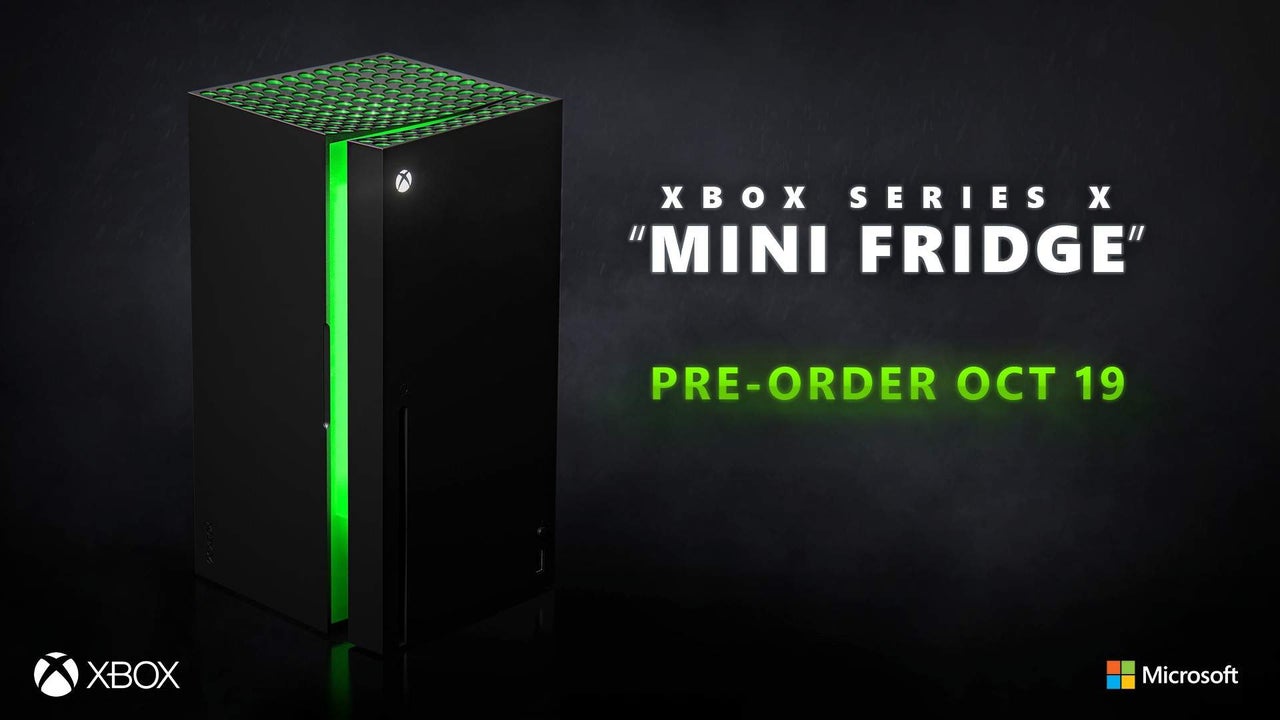
After months of waiting, Microsoft has finally unveiled new information on its highly anticipated Xbox Series X mini fridge, which will launch in December 2021.
As noted in the latest Xbox Wire blog post, Microsoft will be releasing the first wave of Series X-shaped mini fridge will retail for $99.99/£89.99. The blog post also notes that preorders will begin on October 19 with multiple retailers selling the product globally in December. For US users, the Xbox Series X mini fridge will be sold exclusively at Target to ensure as many fans as possible can purchase the mini fridge. Microsoft also promised to expand regional availability in 2022.
The moment you’ve all been waiting for.
Pre order begins for the Xbox Series X ‘Mini Fridge’ on October 19: https://t.co/XcjfXqYnpy #XboxandChill ❄️ pic.twitter.com/gOl2Qf0ZSi
— Xbox (@Xbox) October 15, 2021
In the UK, preorders are also going up on October 19, and will be available from GAME, costing £89.99 and also shipping in December 2021.
The Xbox Series X mini fridge has been an ongoing meme that Microsoft has played along with since the Xbox Series X console was first announced in 2019, where people compared the box-shaped design to that of a refrigerator. Last November, the company gave away a full-sized Xbox Series X-shaped fridge.
Last April, Xbox’s Aaron Greenberg announced that it would indeed be making a Series X mini fridge after the company won a #BestOfTweets Branch Bracket Championship. While news on the mini fridge itself has been slim, at the end of Microsoft’s E3 2021 showcase, the company confirmed that the Series X mini fridge would release sometime during the 2021 holiday season.
Taylor is the Associate Tech Editor at IGN. You can follow her on Twitter @TayNixster.
Windows 11’s new emoji isn’t as 3D as Microsoft promised
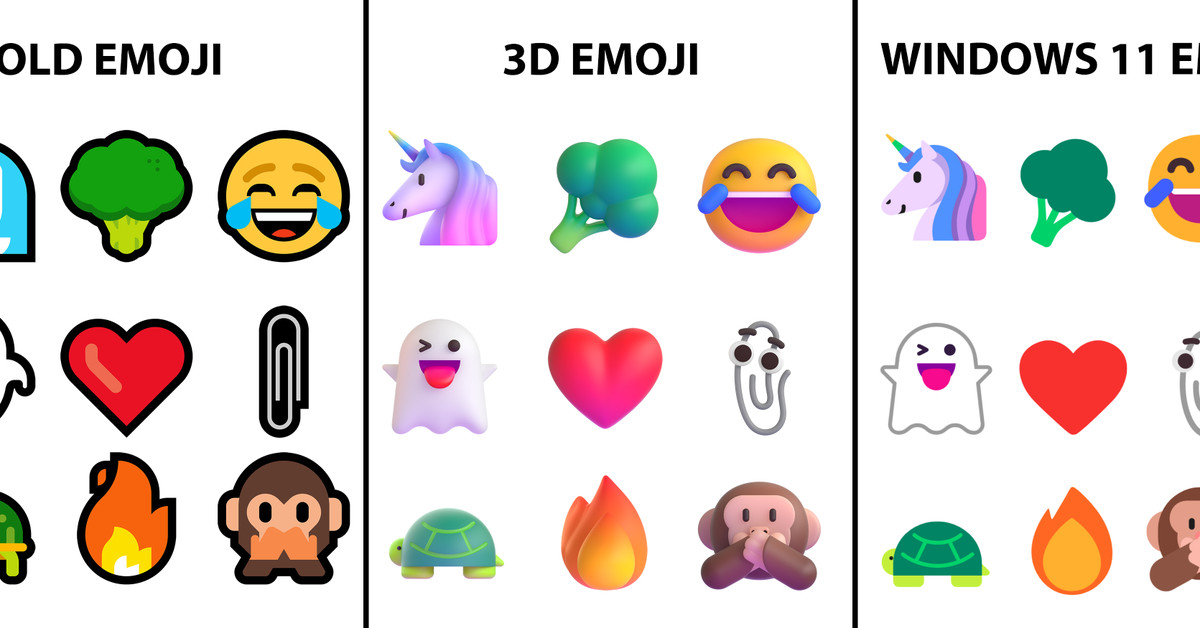
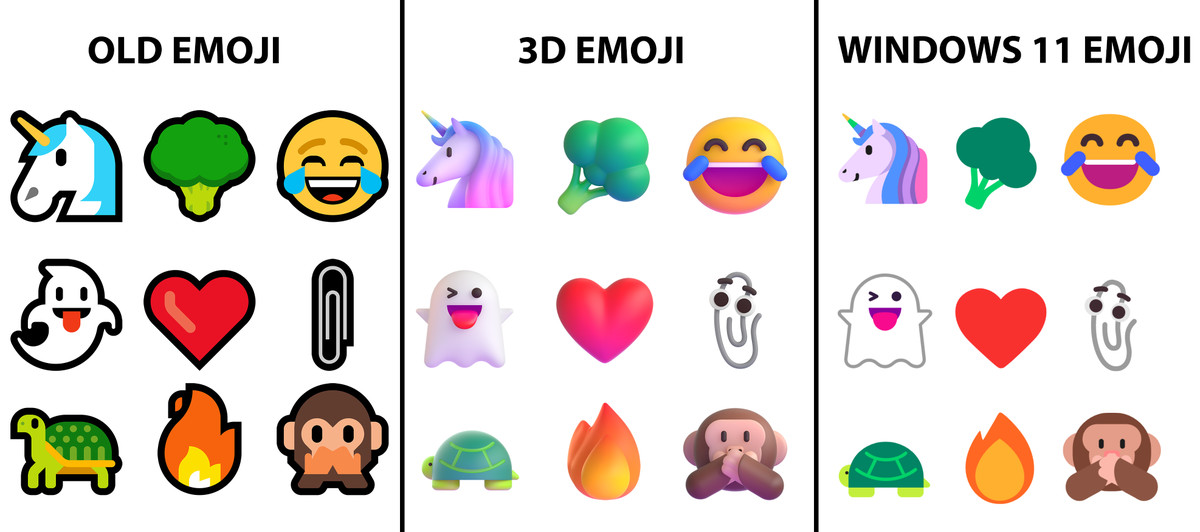
Microsoft originally promised new 3D emoji for Windows 11 and various other products earlier this year. Now the company has gone for a 2D flat look instead, with the new emoji debuting in Dev Channel builds of Windows 11 this week.
The style is a lot different to the 3D emoji that Microsoft promised in July, and even in recent tweets from the official Windows Twitter accounts. Microsoft appears to have changed its mind on going 3D inside Windows 11. “For Windows 11 we’re using the 2D versions,” says Brandon LeBlanc, a senior program manager on the Windows Insider team. LeBlanc also says Microsoft “used the wrong graphics” in recent tweets.
It’s not clear why Microsoft hasn’t adopted its 3D designs in Windows 11, despite promises to do so, but it’s likely because a flatter 2D design works better across multiple applications. 3D designs also look different across a variety of screens and resolutions, so Microsoft has likely settled on a 2D design for a more consistent representation of its emoji for all Windows 11 users.
We’re still expecting to see the 3D style appear elsewhere in Microsoft products though, particularly in Microsoft Teams where animated emoji exists. The new emoji in Windows 11 also includes the return of Clippy, as Microsoft has removed the standard paperclip emoji with its Clippy character. Microsoft is testing this emoji in recent Dev Channel builds of Windows 11, but it’s expected to rollout to all users soon.
Alienware celebrates its 25th birthday with a redesigned flagship gaming desktop
Alienware began operations 25 years ago in a garage near Miami, and the Dell-owned brand is celebrating the milestone anniversary with a stylish gaming PC. The latest Aurora system has a redesigned chassis that has extra internal space and more efficient airflow, and it should run more quietly.
The open-air Legend 2.0 chassis increases the internal volume by 50 percent compared with Aurora R12 or R10 without major changes to the overall size of the machine, Alienware says. You won’t need any tools to open up the shell, so you’ll have easier access to the components. There’s an optional transparent side panel, so you can look inside and see a motherboard lit up with up to eight zones of AlienFX lighting. In addition, Alienware is also offering an optional magnetic cable cover to keep the back of the system in order.

Alienware
As part of the redesign, Alienware focused on improving the airflow. Every system has two 120mm fans, an intake and an exhaust. Depending on the configuration, Alienware may include one or two more fans: first, a second intake and then, if needed, a top exhaust. Since this is an Aurora system, there are of course liquid cooling options too.
Along with keeping your system cool while you’re running games at max settings, Alienware says the fans can make the PC quieter. Compared with the previous generation system, the brand claims the new Aurora is up to 16 percent quieter when idle and up to nine percent less noisy during CPU-intensive tasks. While you’re overclocking, the PC can make up to 15 percent less noise. In addition, Alienware says the PC can offer a five percent increase in graphics performance compared with the Aurora R12.
There are two color options for the Aurora: Lunar Light and Dark Side of the Moon. In other words, white and black. Alienware will reveal more details about the specs, pricing and availability later this fall.
All products recommended by Engadget are selected by our editorial team, independent of our parent company. Some of our stories include affiliate links. If you buy something through one of these links, we may earn an affiliate commission.
Clubhouse has a new Music Mode that could make it the place to play
Clubhouse has a tremendous amount of competition from big companies that want to own the live audio space, but it may be getting out ahead in one specific way. The company’s launching a new Music Mode that could make it a better place to play — and listen — to live music, ahead of Amazon’s reported entry into that space, and as Twitter has begun rolling out “ticketed spaces” where musicians could host shows as well. Spotify has its own live audio app, too.
If you’re a musician on Clubhouse, or you love listening to live music on the app, the new Music Mode “optimizes Clubhouse to broadcast your music with high quality and great stereo sound,” according to the company’s blog post. Clubhouse doesn’t say what it means by high quality, but it does also mention that you can now hook up professional equipment, like a USB mic or mixing board, and use it during your broadcast. Clubhouse already added spatial audio in late August, which makes conversations sound more like a room full of people than a flat audio call.
GIF by Clubhouse
You can easily turn on Music Mode by tapping the three dots in the top right corner of a room, selecting Audio Quality, and then choosing Music. If you just want to listen to the performance, however, you won’t have to do any of this — just sit back and enjoy stereo audio from your headphones, speakers, or your phone itself.
Clubhouse also noted that its recently introduced Clips feature — which lets you capture a 30-second recording — will support stereo sound as well, so if you decide to save a snippet of a performance in Music Mode, the audio quality will stay the same. Music Mode will initially only be available on iOS, but Clubhouse says that the rollout to Android will follow shortly behind.
Aside from Music Mode, Clubhouse has also updated its search feature. The platform will now display the search bar in a more convenient location at the top of your hallway. And as an added plus, you’ll also be able to Wave to friends right from the search bar, a feature that lets you quickly invite friends to a live audio room.
Amazon is far from Clubhouse’s only competition for live audio. Clubhouse likely learned its lesson this past year, when Twitter, Facebook, LinkedIn, and even Spotify made their own versions of audio-only chatrooms. All of this came at a time when Clubhouse was still in an invite-only state, making it harder for the app to grow. But now that the app is thriving, Clubhouse wants keep as many advantages as possible.