- Baldur’s Gate 3: Forging the Arcane – Official Trailer IGN
- I’m loving the chaotic potential of Baldur’s Gate 3’s new sorcerer class PC Gamer
- Baldur’s Gate 3: Forging the Arcane – Grymforge Larian Studios
- Baldur’s Gate 3: Patch 6 impressions and a big interview with Larian Eurogamer.net
- Baldur’s Gate 3 has added a Sorcerer class and new region in latest patch Rock Paper Shotgun
- View Full Coverage on Google News
TechNews
Google is making it easier to doomscroll through search results
Google is making it easier to doomscroll through search results by automatically loading newer results as you get to the end of the page. Previously, when you got to the end of a page of Google search results, there was a big “See more” button at the bottom you could tap to, well, see more results. With continuously loaded results, you’ll be able to just keep on scrolling to see more.
Continuous scrolling does have some advantages; it’s a lot easier to see more results quickly if you don’t have to consciously make a choice to tap the “See more” button. I can’t say I’m looking forward to this change, though, since reaching the end of a Google search page was often a natural place for me to consider if I had learned enough or if I wanted to seek out more information. With continuous scrolling, it might be harder for me to pull myself away from the page, which is something I already struggle with while using social networks with endlessly loading feeds.
Continuous scrolling is starting to “gradually” roll out Thursday for “most English searches on mobile in the US,” according to a Google blog post.
The $499 HTC Vive Flow is VR for people who don’t like VR
After years of focusing on business-oriented virtual reality, HTC is launching a $499 entertainment-focused headset called the Vive Flow in November, with preorders starting globally today.
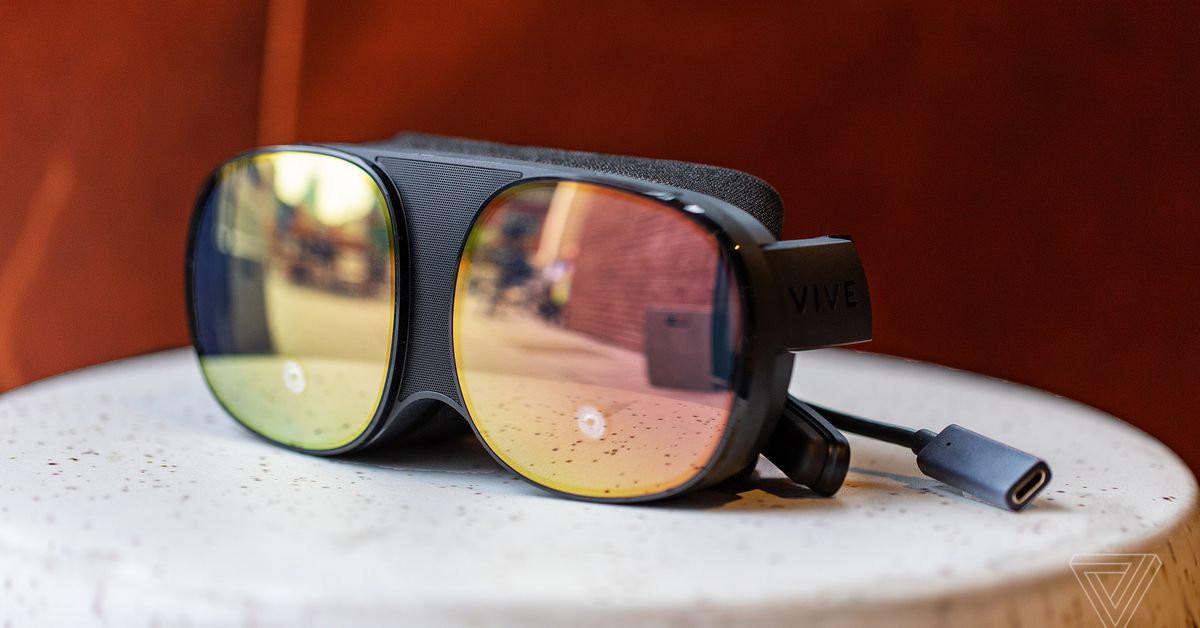
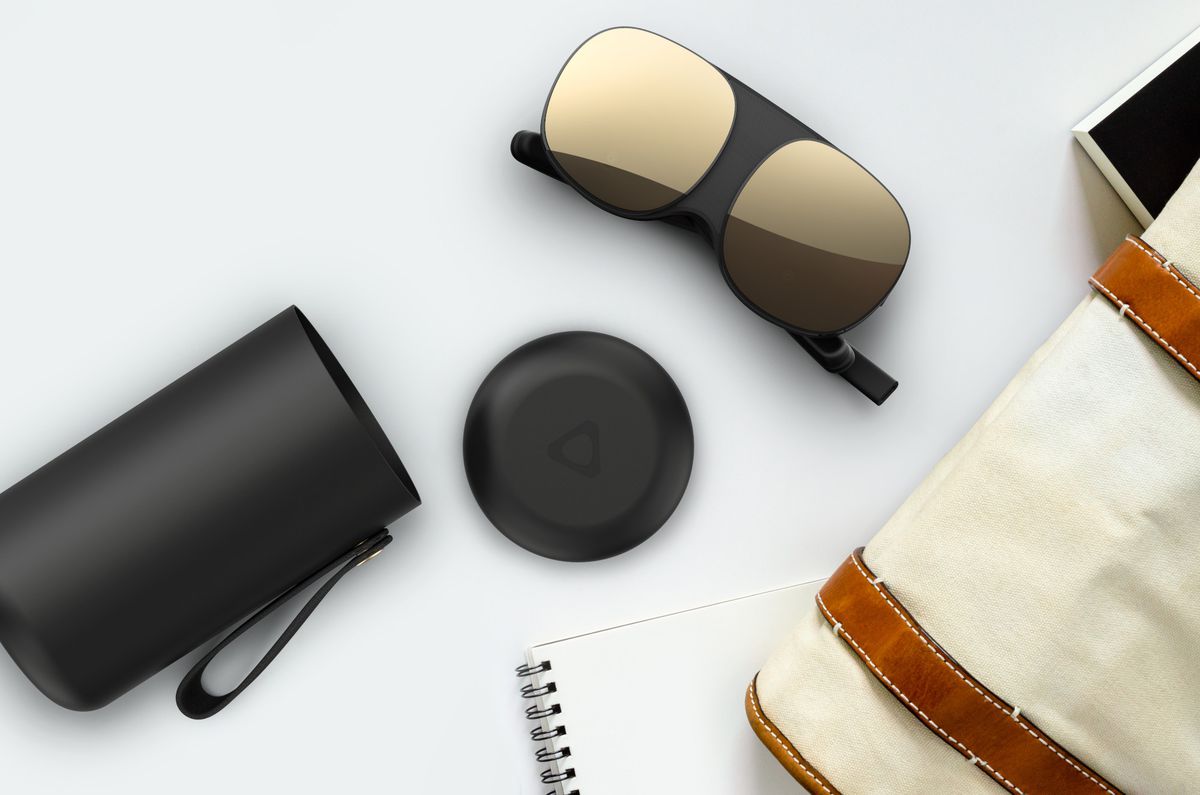
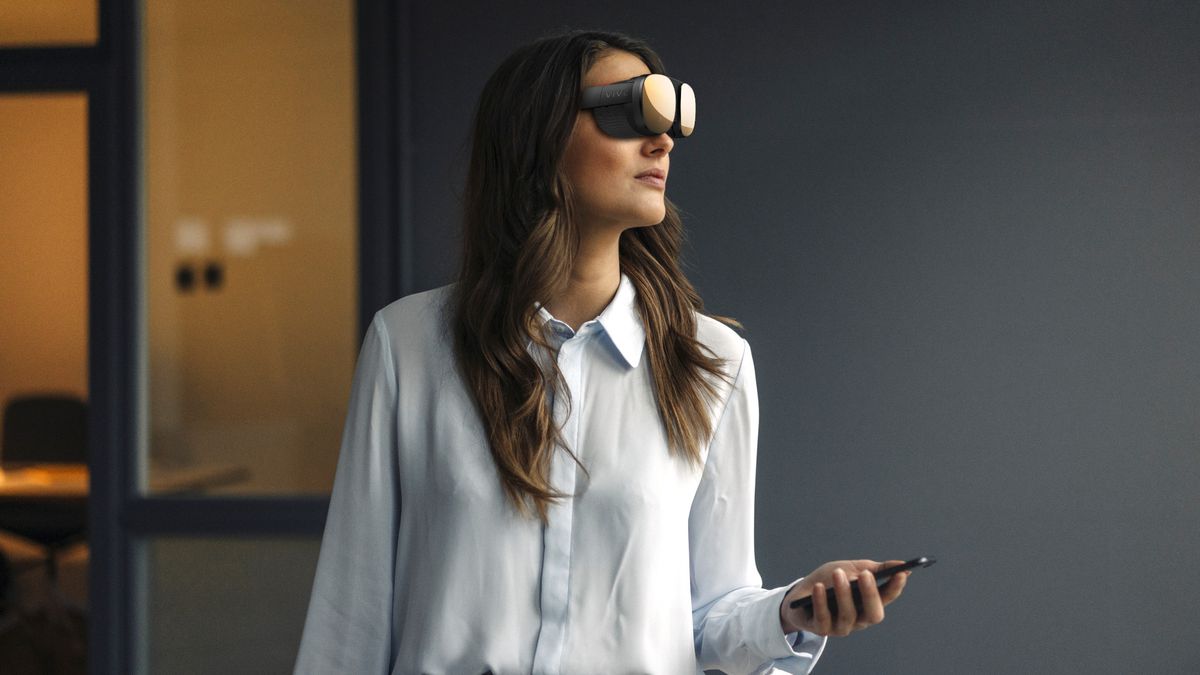
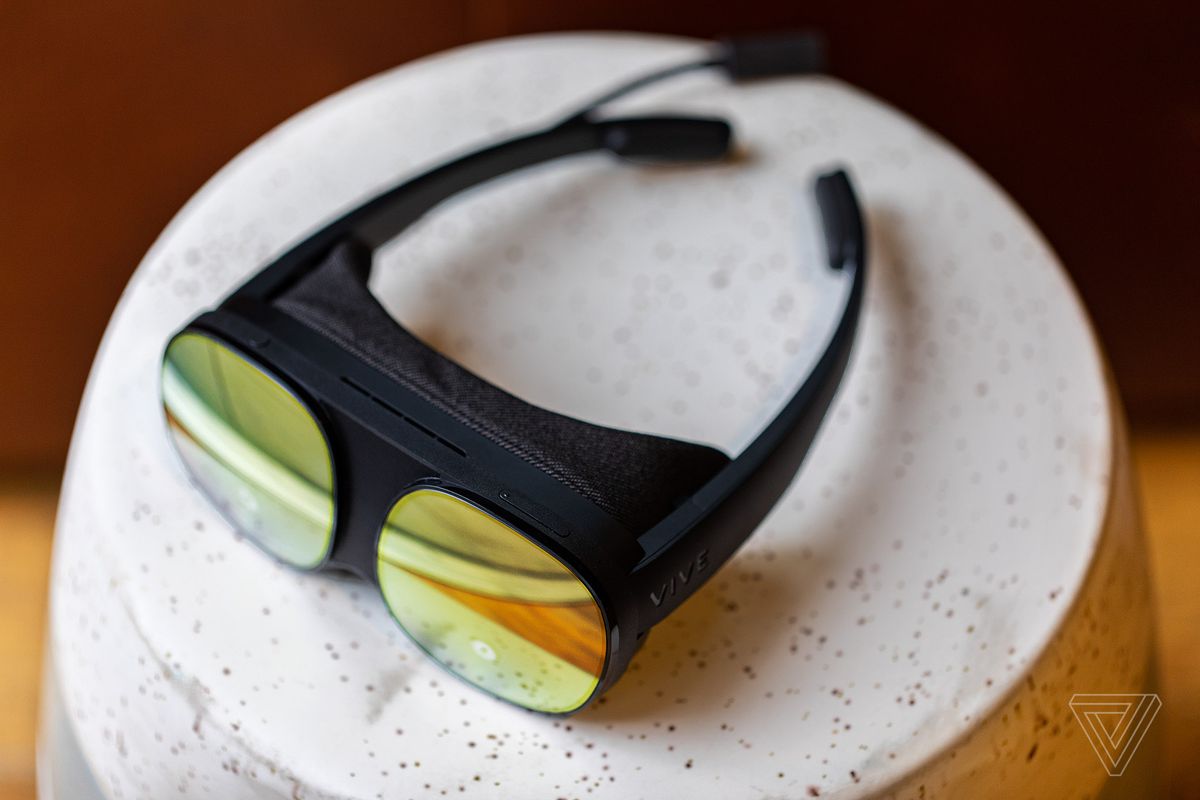
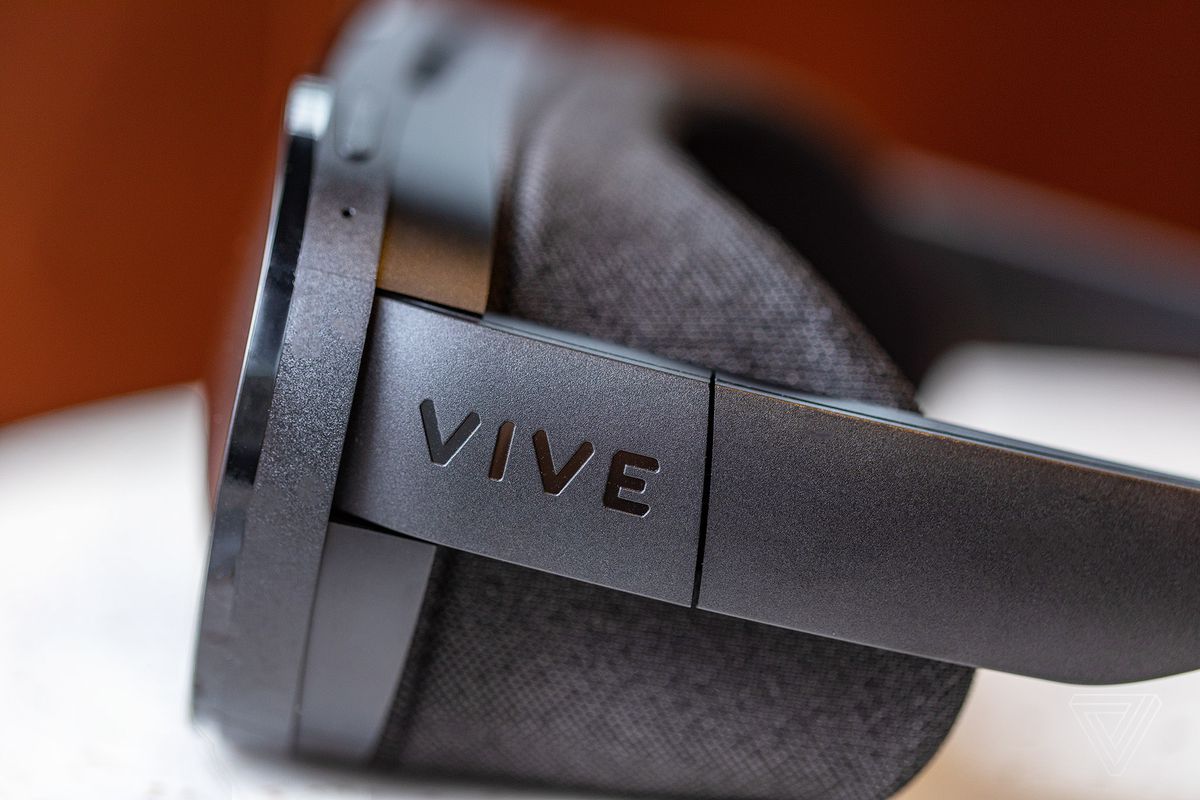
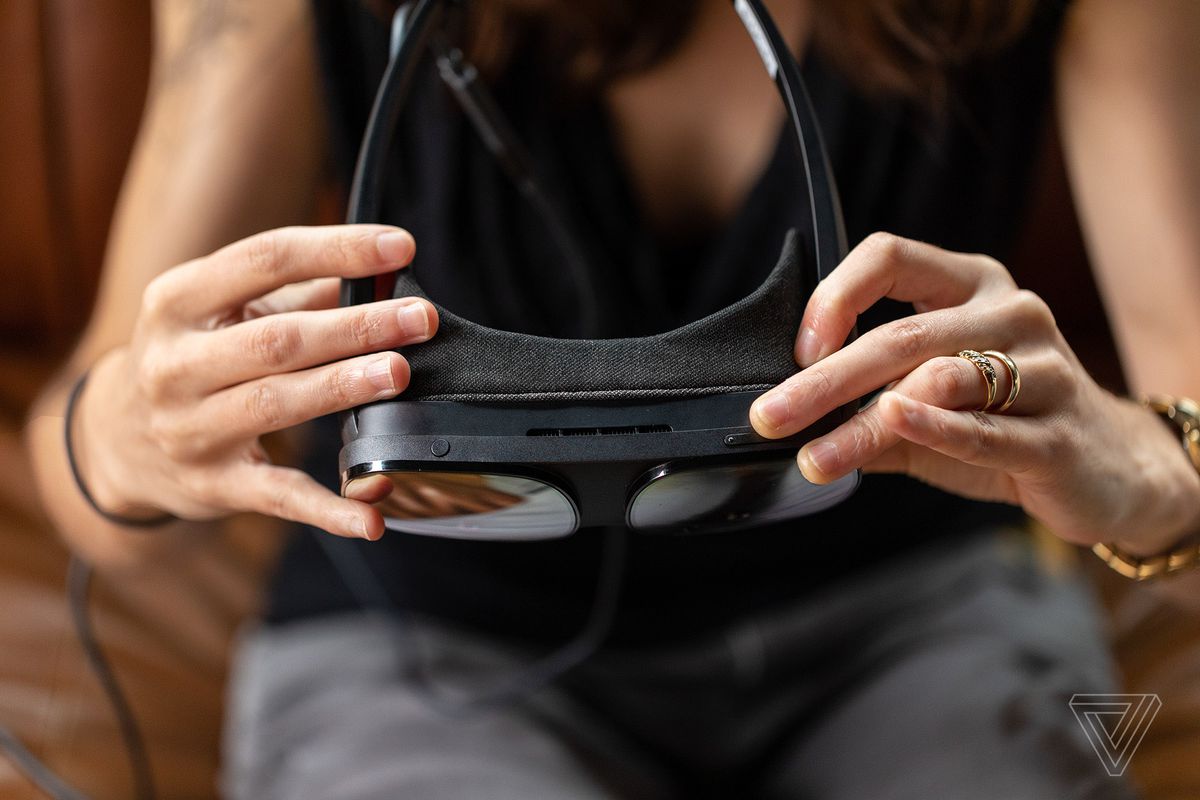
The new Vive Flow looks radically different from most HTC Vive devices. It’s a standalone piece of hardware modeled after a pair of sunglasses, and at first glance it could pass for an augmented reality headset, not just a VR one. But behind those slightly bug-eyed mirror shades, you’ll find a lighter version of earlier Vive headsets — minus some major features.
The Vive Flow, which was leaked heavily before HTC’s reveal today, is a compromise between capability and approachability. The device has a 1.6K-per-eye display (HTC didn’t provide the exact resolution) with a 100-degree field of view at a 75Hz refresh rate. That’s a little more limited than the 120 degrees and 90Hz rate that you’ll find on the more costly Vive Focus 3 and roughly the same refresh rate but a lower field of view than the original Quest. It’s also slightly comparable to the Oculus Quest’s refresh rate before a recent upgrade and a little more cramped than its 110-degree field of view.
Two front-facing cameras handle inside-out motion tracking, and HTC plans to support hand tracking as well, although the feature wasn’t available during a pre-launch demo and didn’t give an exact timeline for its rollout. It’s using the last-generation Qualcomm XR1 chipset (as opposed to the Quest 2’s XR2), and it’s got a respectable 64GB of storage space but — unlike the Focus 3 — no slot for an expansion card.
Lightweight hardware is a big selling point for HTC. “We wanted to get to something lighter, more wearable, easier to travel with,” says Dan O’Brien, HTC’s head of VR. The Flow weighs 189 grams, compared to around 500 grams for the Oculus Quest 2, and has a hinged design that folds up to fit in a $49 carrying case.
Unlike earlier Vive headsets, the Vive Flow won’t come with a controller. Instead, you connect the headset wirelessly to an Android smartphone and use the phone as a combination remote / touchpad. Similar to the mobile Google Daydream or Samsung Gear VR remotes, it’s basically a virtual laser pointer with buttons for selecting items and calling up the homescreen.
Leaked photos showed the Flow plugged into a black box, which some people speculated might be an external computing device. It’s actually a $79 battery pack that should let you use the headset for four to five hours. The Flow technically has its own battery, but HTC says it only lasts a few minutes — it’s designed to let you swap power sources without turning off the headset. So you’ll need either the HTC battery, which is sold separately from the headset, or (according to HTC) any 10,000mAh power bank and a USB-C cable.
In addition to controlling the device, the phone connection lets you mirror Android apps, calling up a virtual copy of your phone’s homescreen and letting you launch apps like streaming video services in a floating window. The headset doesn’t pair with iPhones, and while HTC hasn’t ruled out future support, it indicated there were serious barriers to making iOS play well with the Flow.
HTC wants people to use the Vive Flow for visually immersive but mostly stationary experiences. So you can watch a 360-degree video or sit in a virtual environment, but you can’t use apps that require full-fledged virtual hands. (This rules out most well-known VR games.) The camera tracking gives you a more natural experience than a headset that can only detect the angle of your head, but the app catalog and the somewhat loose-fitting glasses-style design mean you probably won’t be walking around.
HTC says the Flow will launch with 100 apps and support 150 by the end of the year. In addition to uses like streaming video, its release announcement promotes the Tripp meditation app and the VR therapeutic service MyndVR, which is tailored for older adults. You can also engage with VR social spaces like Vive Sync and watch streaming video, something that’s proven popular on AR glasses. The Flow will support a limited subset of the apps on HTC’s Viveport store, and users can subscribe to a discounted, Flow-focused $5.99-per-month version of Viveport’s app subscription service.
Image: HTC
Image: HTC
Image: HTC
The Vive Flow seems basically pitched as a VR headset for people who find current VR headsets overcomplicated or intimidating. O’Brien describes the device as something that’s easy to put in a bag while traveling without worrying about extra pieces like controllers. “We wanted to make something that was super easy and flexible,” he says. Instead of directly competing with gaming-oriented headsets, HTC is trying to carve out a new category of its own.
HTC’s focus on older users (“the huge Boomer population,” as a MyndVR representative put it) is part of this strategy. So is the push for a glasses-like design instead of the straps you’ll find on most headsets. “There’s the user that really just wants this thing to be un-intimidating and easy to pop on and off,” O’Brien says — and that’s who the Flow is made for. The result has a lot in common with the now-discontinued Oculus Go, but with a svelter look and upgrades like the inside-out camera tracking.
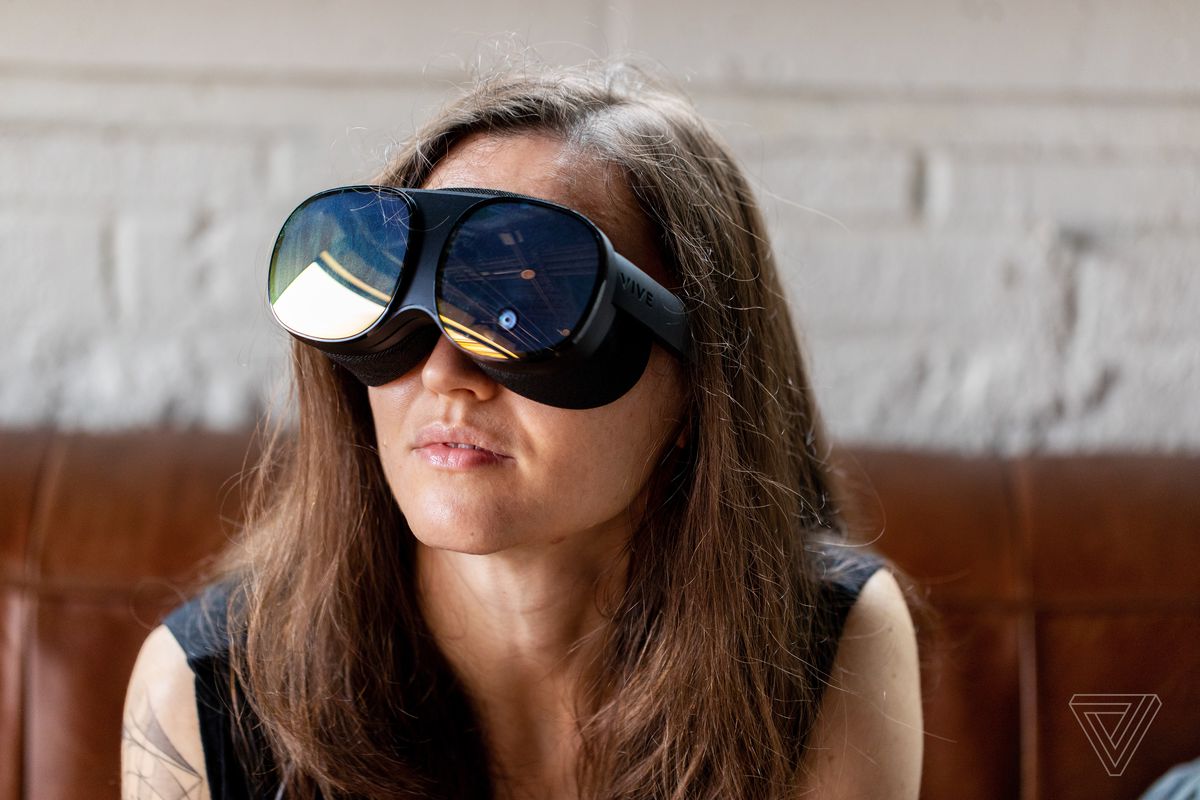
My brief experience with the Vive Flow was a mixed bag. The Flow is, in fact, remarkably light — presumably in part because HTC offloaded its battery. But without a strap system to keep the headset in place, the screen kept slipping down my face and blurring the top half of my VR experience. HTC plans to offer alternate swappable face gaskets for different fits, and one of them worked better than the original. But I still had to be careful while turning my head, and the feeling of carefully balancing the headset wasn’t exactly relaxing.
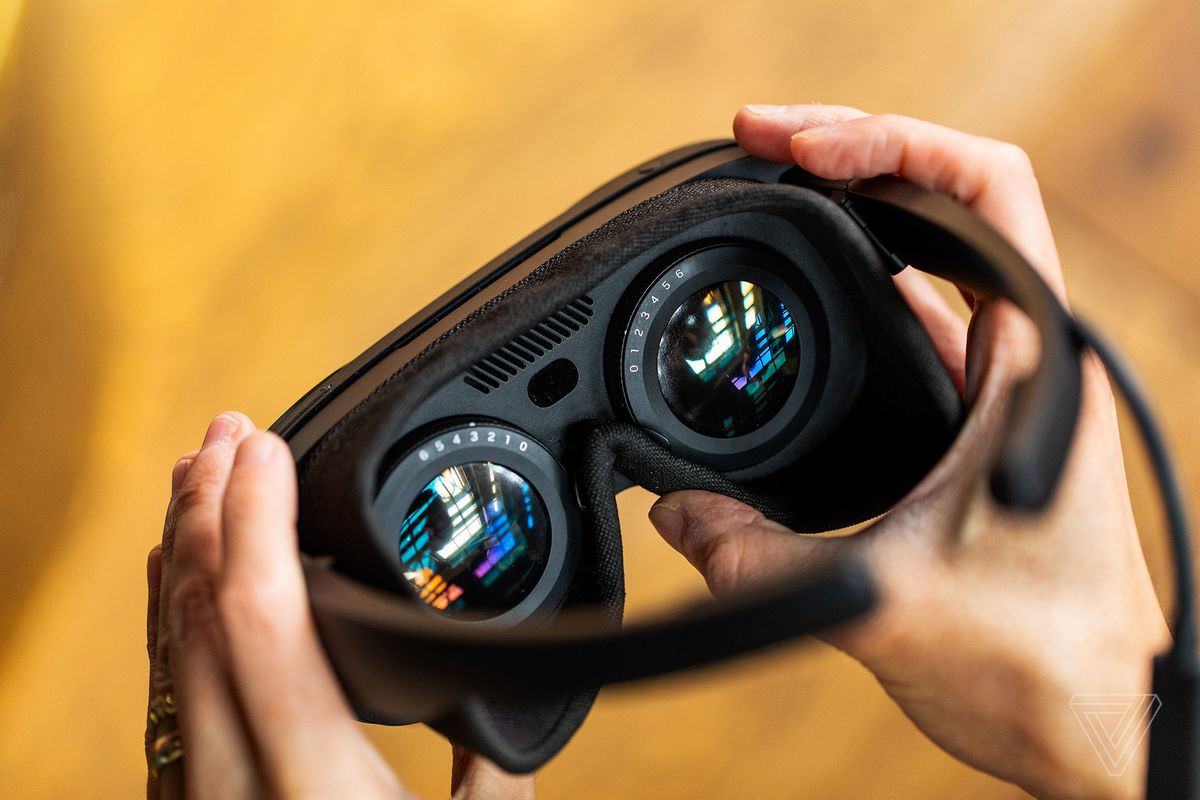
The Flow was exponentially more bearable than earlier “glasses-style” VR headsets I’ve tried. It’s just still a lot more unsteady-feeling than the Focus 3, Quest, or practically any other major headset, and there’s no alternate strap option for people who want a more secure fit. There’s a diopter adjustment dial so you can change the focus on each eye individually, but like the Quest 2, you inconveniently can’t change the focus while you’re actually looking at an image — you have to take the headset off, twist the wheels a notch, and then put it back on again.
The smartphone-based controller, the Vive Flow’s biggest departure from standard VR design, is theoretically reasonable but practically awkward. I used an HTC-provided Android device that worked fine as a VR laser pointer. But thanks to the long-running trend of ever-bigger phones, I could barely fit my hand around HTC’s phone to tap virtual buttons on the screen. It’s also a strange choice for any headset aimed at older users, who are dramatically less likely to own smartphones.
Hand tracking could partly solve the interaction issue. But gesture interfaces remain frustratingly hit-or-miss and typically require holding your fingers up to perform fine motions, which also seems like a bad option if your hands have limited mobility, and I didn’t get to try HTC’s version in my demo. O’Brien says HTC is still toying with options for other control systems — its plan is to release the headset and then tweak its design based on how people use it.
More generally, it’s not clear HTC’s emphasis on portability is the key to winning over VR doubters. Companies have been pitching “VR you can throw in your bag” for years now, and outside of people whose jobs involve headsets, I haven’t seen a single human being cite that as a selling point — while I’ve heard even skeptics praise bulkier headsets for being comfortable. HTC also says people will feel less awkward wearing this glasses-like design in public settings like airplanes. As someone who actually has worn a VR headset on an airplane, I’m not sure that’s enough to erase its fundamental weirdness.
There isn’t really a clear audience for the Flow in the US market. It’s far more expensive and less feature-rich than the Facebook-subsidized Oculus Quest 2 but without specialized features that might make it appealing for businesses or other organizations. (Film festivals and schools could use a no-frills VR headset for 360-degree video, for instance… but the Flow isn’t it.) HTC has designed social apps like Sync that could have relatively broad appeal. But outside its meditation and video options, my Flow demo didn’t offer a great sense of its day-to-day value. I found mostly small games that I might play occasionally, not tools I’d spend $499 to access.
But HTC has built a strong base of VR business hardware, and for now, it seems content to release the Flow as an experiment. At the very least, you won’t find another major headset like it — even if it does make you sort of look like a bug.
Modular Framework laptop gets a marketplace for all those modules
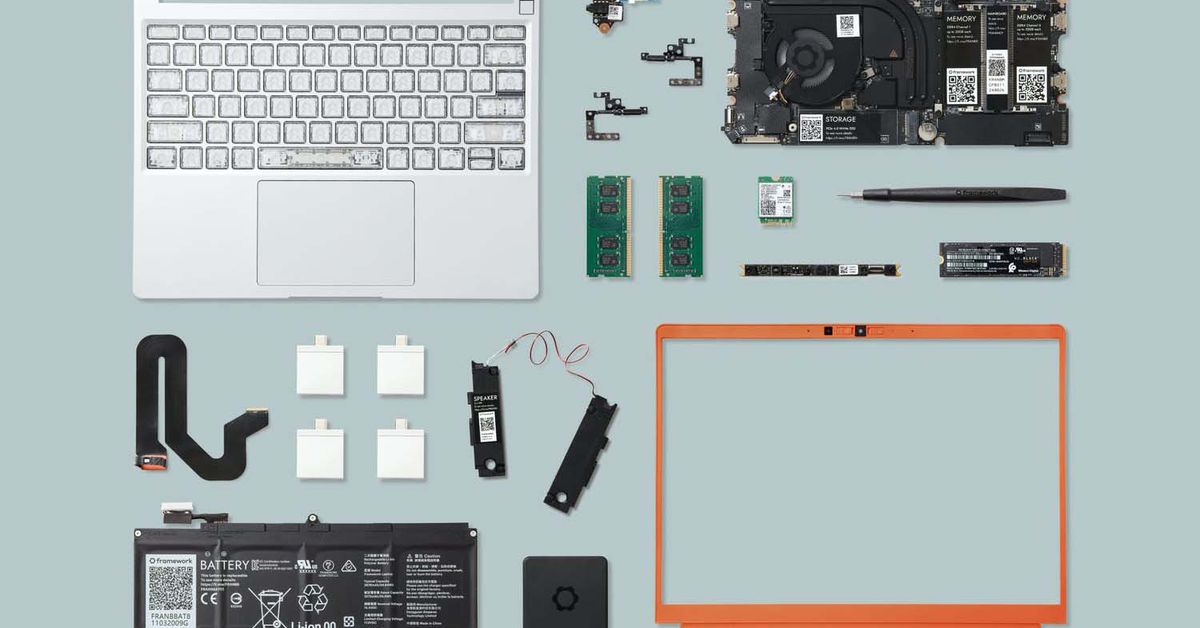
Framework, makers of the modular 13.5-inch Framework laptop that’s designed to be easily repaired and upgraded, has launched a dedicated marketplace filled with replacement parts and upgrades for its portable computer. Writing in a blog post, the company said the marketplace is currently focused on replacement parts and expansion cards, but that it hopes to add more customization modules like additional language keyboards later this year, as well as third-party and community developed modules in 2022.
It’s an important step for the modular laptop, which has been shipping for a little over two months. After all, the laptop’s 10/10 iFixit score for repairability doesn’t matter much if you can’t get a spare part when a component fails. And who cares if a laptop is upgradeable if there aren’t any interesting modules that are actually available to upgrade it with.
The marketplace already includes a range of expansion cards for the laptop, which are designed to slot into its four modular compartments to add everything from extra storage to features like MicroSD card slots or more USB ports. There’s also user upgradeable RAM and storage for sale. But the store is clearly a work in progress, and lists a host of other items like replacement CPU-equipped mainboards, keyboards, and spare parts like batteries and displays as “coming soon.”
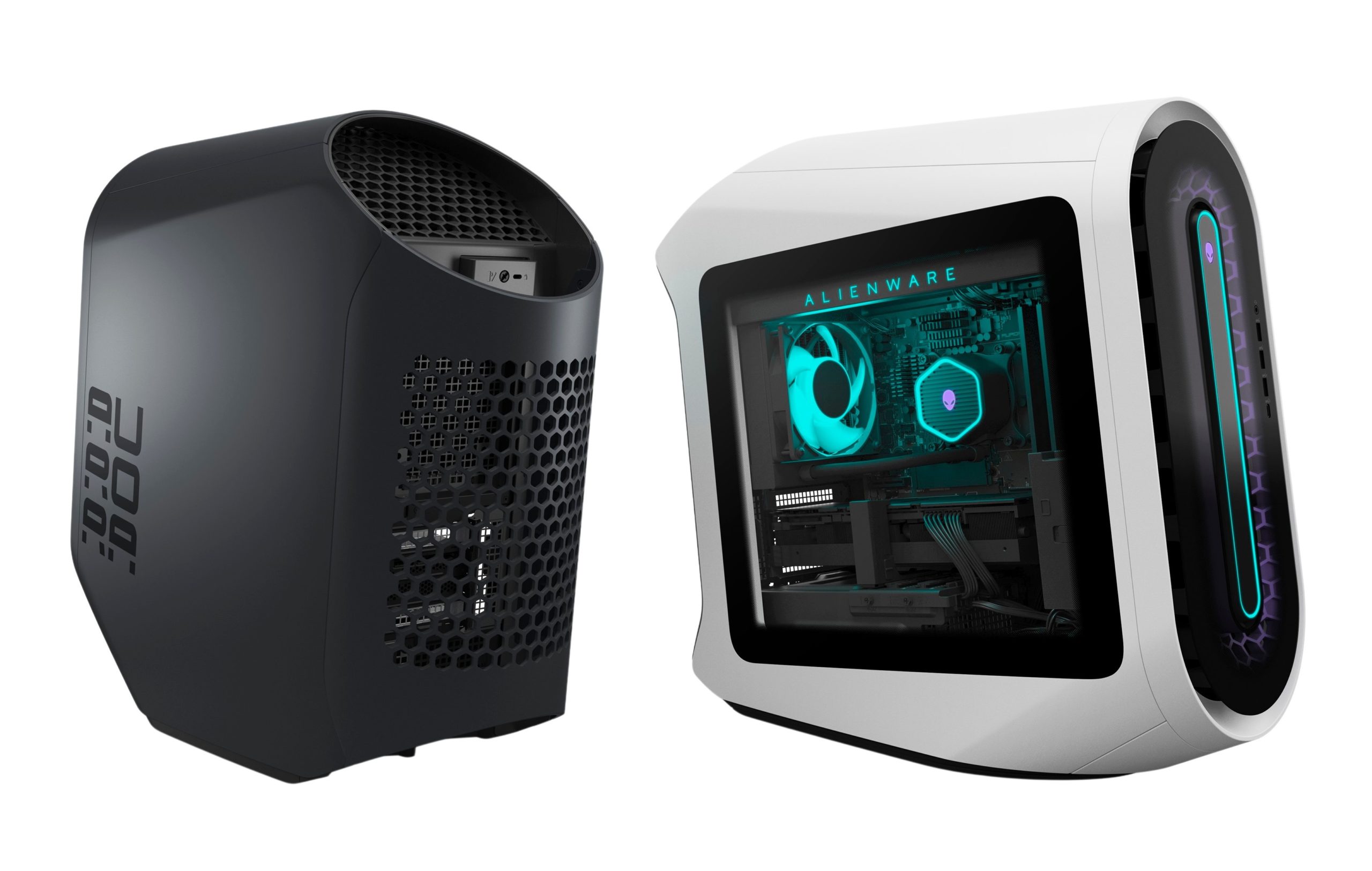
Framework has made a solid start at making sure its laptops can be easily repaired when they break, but it’ll be a while longer before we know if it’s truly delivered on its promise of a laptop that can be upgraded over time. It’s a promise that’s been made many times over the years. Just last year, Dells’ attempt at an upgradeable laptop with the Alienware Area-51m, unravelled just one model later.
There have been similar high profile attempts to bring modular designs to smartphones. But over the years, attempts from companies like LG, Google, and Motorola have failed to make much of an impact. Sustainable smartphone manufacturer Fairphone has seen more success, and recently announced its new Fairphone 4 smartphone. But Fairphone’s focus has always been more on easy repairs for longevity, rather than offering upgraded components over time.
If you’re interested in picking up a Framework laptop for yourself, the prices start at $999 for an assembled model with an Intel i5-1135G7 CPU, 8GB of RAM, and 256GB of storage. There’s also a model with a more affordable $749 starting price if you’re happy to do some assembly, or more expensive pre-assembled versions with faster Intel i7 CPUs, and more RAM and storage. All versions come with a 13.5-inch 3:2 2256 x 1504 display, a 1080p webcam, and 55Wh battery. As of this writing, Framework’s website says new orders are due to ship next month.
Heidern announced for The King of Fighters 15 with new trailer
Announcements for The King of Fighters 15 aren’t coming as frequent as they once were, but tonight’s addition to the roster certainly packs a punch.
SNK revealed Heidern to be the next playable character in KOF15 via a brand new gameplay trailer, which you can check out below.
Although the Ikari Warriors commander is looking a good bit snazzier with his updated model and visual effects, his attacks themselves appear much the same as they did in The King of Fighters 14.
It’s kinda scary to think about Heidern having access to EX finger guns and Slashing Hands at all times now with a bit of meter, but some of the attacks look like they may be a tad slower this time around.
We don’t know what team he’s going to appear on in KOF15 considering Team Ikari Warriors is already full, but perhaps he’ll be joining up fully with K’ now or maybe even Team Masters.
You can check out Heidern’s full gameplay debut trailer below.
Click images for larger versions
Exp. Share Can’t Be Turned Off In The Pokémon Diamond And Pearl Remakes

If you’re a player who likes to take a more hands-on approach when training your Pokémon, you might want to read on. The upcoming remakes Pokémon Brilliant Diamond and Shining Pearl won’t allow players to deactivate Exp. Share. This detail was reportedly confirmed in the latest round of previews.
In case you need a refresher, Exp. Share gives Pokémon in battle experience, as well as the Pokémon in your party. While this is no different to how Exp. Share functioned in Pokémon Sword and Shield, it seems to have raised some concerns about the remakes.
Some trainers on social media are worried it will make the game too easy and that they won’t have as much control over levelling when it comes to competitive play and EV training.
One other adjustment that’s been flagged in the latest round of previews is the return of single-use TMs. While it’s not the end of the world, some fans don’t seem very happy about it:
“People talking about the exp share but honestly the return of single use TMs is way worse for me… That’s such an unnecessary pull back, they’ve been unlimited since BW1”
On another note, auto-saves will also return and can be disabled. What are your own thoughts about all of this? Leave a comment down below.
Pokémon Players Concerned Over DS Remakes’ Exp. Share Feature
Not every Pokémon player is happy about the new gameplay details that are emerging for Brilliant Diamond and Shining Pearl, the Switch remakes of Nintendo DS’ Pokémon Diamond and Pearl. In fact, a significant portion of the playerbase is currently upset because Exp. Share (a feature in which experience points are distributed among all members of a Pokémon party) is going to be permanently on.
The latest round of previews for the Pokémon Sinnoh-region remake games revealed that permanent Exp. Share will return and cannot be toggled off, which has prompted a lot of mixed reactions from the playerbase. Some welcomed the inclusion of a mechanic that would make it easier to raise Pokémon. Other players thought that spreading experience points across the entire party was a step backward for the remakes.
You might be wondering why this is causing a stir at all, since permanent Exp. Share was also a feature in Pokémon Sword and Shield. However, the difference is that those games were new titles in the series, while Pokémon Brilliant Diamond and Shining Pearl are remakes of much-beloved Nintendo DS adventures. And if it’s always on, it also has gameplay implications.
In most prior games, battle experience was only distributed among the Pokemon who actually participate in a battle, which gave players more control over how their Pokémon were trained. And even when a game had Exp. Share, it was an item that would only grant non-participant experience points to the Pokémon who were holding one. So some players are worried that the developers are taking control away from them.
Another contributor to the outrage is the ongoing controversy over the main Pokémon games becoming “too easy.” Several commenters on the Serebii.net’s tweet about the news seemed aghast that the Sinnoh remakes would supposedly be capitulating to more casual Pokémon players (many of whom will be literal children). As ever, the community has no shortage of gatekeeping sentiments concerning whether or not players who haven’t experienced the older games can be “true” Pokémon fans.
Other players were more pragmatic about their complaints. Some were concerned that a permanent Exp. Share would interfere with “effort values” training. EV are hidden stat points that are distributed to Pokémon after each battle, and they vary by the Pokémon species. For example, defeating a Pikachu usually gives a Pokémon EV points for speed, while a Snorlax gives them points for health. Exp. Share in prior games distributed EV points across the entire team, and there’s a ceiling to how many points each Pokémon can obtain. Competitive players will closely micromanage EV gains to avoid ending up with awkward stat spreads, so some players are nervous that a permanent Exp. Share will make training competitive Pokémon even more annoying than before.
G/O Media may get a commission
Some people have pointed out that Pokémon can simply be placed in a box, where they would not gain any experience or EV points. Others pointed out that the far more annoying change was bringing back single-use technical machines (TMs), items that can teach special attacks to Pokémon. Personally, I just think we should stop arguing about a feature that’s been un-togglable for a whole mainline Pokémon game.
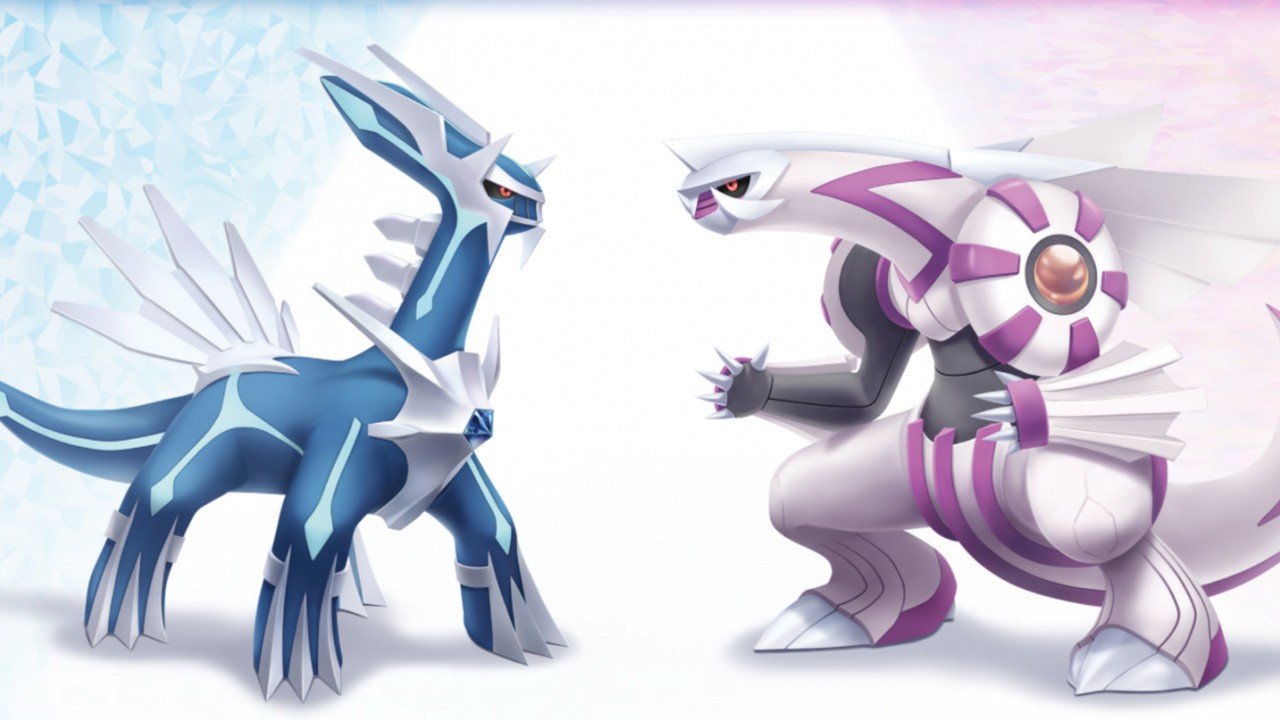
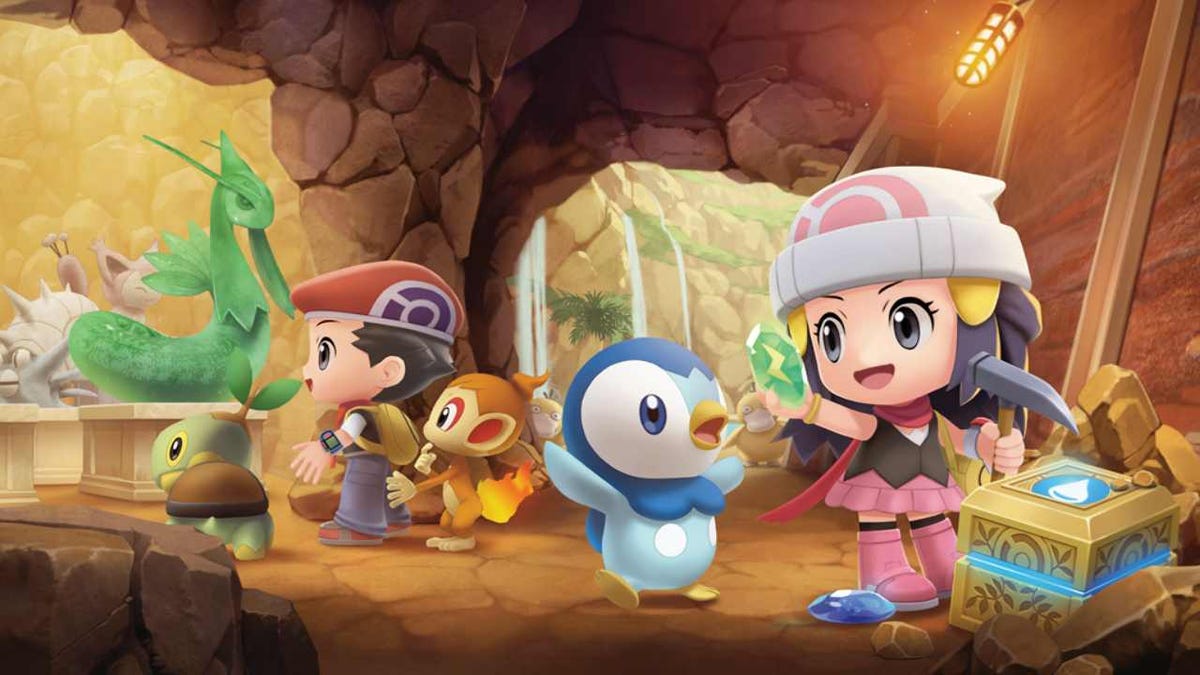
Pokémon Brilliant Diamond and Shining Pearl will come out on November 19 for the Nintendo Switch.
Minecraft Live 2021: Where To Watch, What To Expect, And Everything You Need To Know
Minecraft Live 2021 is almost upon us, and this Saturday 16th October we’ll get to find out what’s in store for everyone’s favourite block-mining video game.
Over the course of the week, Jens Bergensten and Agnes Larsson, the Lead Designer and Game Director of Minecraft respectively, have been teasing some of the content ahead of the stream on the weekend. Here’s what we know so far — and we’ll update this as we find out more, of course.
Minecraft Live 2021
How To Watch Minecraft Live 2021
We’ll be running a live blog on Nintendo Life, so you can watch along with us there — obviously the very best place to be!
As you’d expect, Mojang will be hosting the video on their social media channels, too.
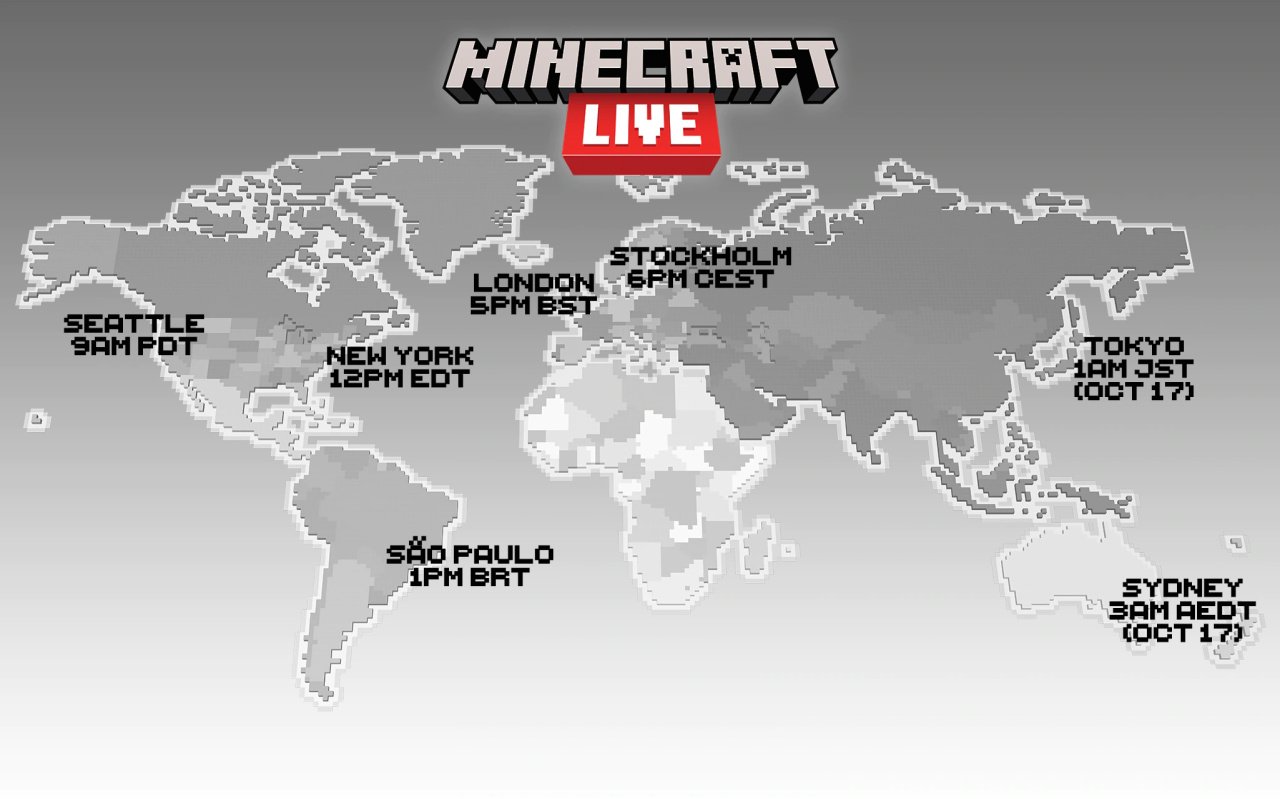
- When: Saturday October 16th, 2021, 5PM BST / 12PM EDT / 9AM PDT
- Where: YouTube, Twitch, Facebook, Minecraft Live website
- How: You can watch on any phones, tablets, PCs, and game consoles with internet connections
There will also be American Sign Language and Audio Description versions of the stream available on YouTube:
Check the image below to see more of the broadcast times in your time zone:

What To Expect from Minecraft Live 2021
A vote between three new mobs for the game is set to take place on October 16th. This mob vote is how we got the Glow Squid after the 2020 Minecraft Live stream, which beat out the Moobloom (a flower-themed cow) and the Iceologer, an illager who hurls flying ice clouds.
The new mobs to choose from are:
The Allay

The Allay is a friendly mob, who takes items and finds more of them — if you’re in need of sticks, bones, or emeralds, for example. He also dances, and flies. He’s adorable. If you have a Note Block in your world, that’s where he’ll drop off the items that he’s found.
The Glare

One of the major changes that will come to Minecraft in Caves & Cliffs Part Two is the way mobs spawn. Currently, if the light level is low, you’ll get Creepers, Zombies, Skeletons and more turning up, but soon, that will only happen in total darkness, which means your builds will no longer be plagued with torches. The Glare can help you in this regard: He will fly over to dark areas, and throw a tantrum, because he hates the dark. Thanks, Glare!
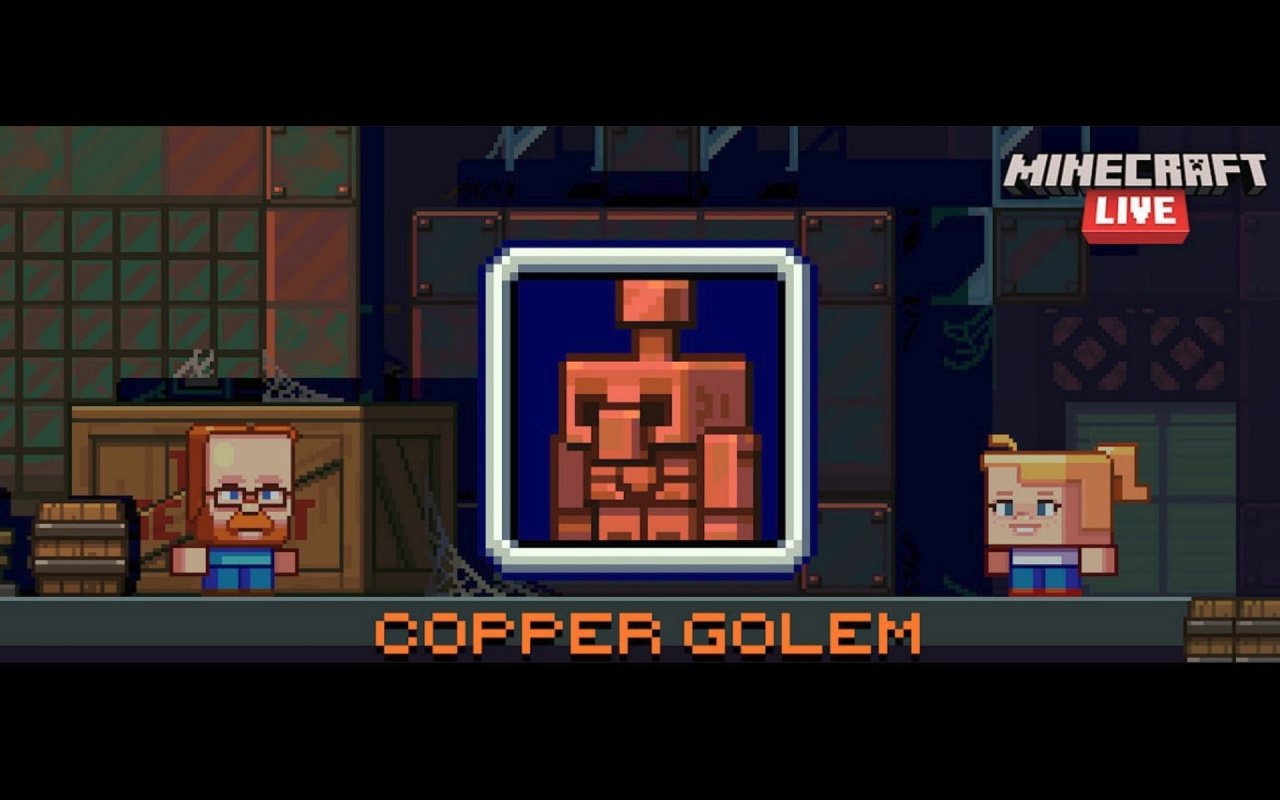
The Copper Golem

The Copper Golem, like his friend Iron Golem, is a big lad made from copper. The difference with this lad is that, over time, he will age and develop that lovely copper patina… and when he’s green, he’ll freeze into a statue. You can build it yourself (presumably with 4 Copper blocks in a T-shape, like how the Iron Golem is made), and it apparently “loves to randomly press Copper Buttons”. There’s probably a really cool Redstone application for that, but we’re not good enough at Redstone to know what it is. It’s worth noting that if the Copper Golem wins, then Copper Buttons will also be added to the game!
Info on Minecraft Dungeons
Minecraft Dungeons has received a lot of attention over the last year, with a ton of DLC and cross-play, so it’ll be interesting to find out where this RPG-style spin-off goes next.
The Next Update
Last year’s Minecraft Live introduced us to the Caves & Cliffs update, and Mojang did confirm earlier this year that the 1.19 update would hopefully be announced during Minecraft Live 2021.
Minecraft is built on its community creations, and it knows it — the website features them regularly, and so does Minecraft Live. We’ll likely see some fascinating, creative community builds and servers during the show.
Smash Bros and amiibo
Steve and Alex are getting amiibo, so we’ll probably get to see them on the stream this week — maybe scanning them will do something special in Minecraft?
Caves & Cliffs Part 2
Maybe we’ll get to see a little more of the second part of the update, including the biome generation, the new mobs, and how the Shulk Sensors work!
The Warden
We’d really like to see a little more of the terrifying, hard-to-kill new Warden mob, who lives in the new Deep Dark Biome, ready to wreck your sh*t.
Some Mild Speculation
It’s not a live event without a bunch of barely-founded rumours, right?
New Boss?
The original announcement trailer was… sort of nonsense, to be honest. In a good way, of course — but it promised three things: Quadromorphic Ender Vision. Pillager Raid-eo Sound, and the B.E.A.C.O.N. Broadcasting System.
But maybe all of that wasn’t quite as nonsense as we thought. Some people are speculating that the Ender Vision represents the Ender Dragon, the Pillager Raid-eo Sound represents… the Pillager Raids, obviously, and the B.E.A.C.O.N. is a hint towards the Wither, which you need to defeat to make a Beacon. These are the three boss fights of Minecraft… so could we be seeing more?
Of course, we already know about the Warden… Maybe it’s him?

Release Date?
We’ve all been waiting patiently for the Caves & Cliffs Update Part 2, which will add new world generation, new mechanics, the Deep Dark Biome, and new mobs to the game. All we know about it so far is that it’s due to release “later this year”… But Minecraft Live is a perfect time to tell us when, exactly.
The latest Minecraft Snapshot — a preview of upcoming updates — is 21w40a, which is an improvement on the first Caves & Cliffs Part 2 Snapshot, 21w37a. This Snapshot has changed the ore distribution, fixed world generation errors, and mob spawning rules, but it’s not clear how close to release it is yet.
Minecraft VR/AR?
Minecraft VR came out late last year on PSVR, but do you remember that incredible Alternate Reality Hololens demo at E3 2015? Yes, it’s VERY scripted, EXTREMELY misleading, and almost DEFINITELY not consumer-ready, but still, it would be nice to hear more about it. Not that it affects Switch players much.
Brand Partnerships?
Minecraft LEGO was massively successful, so we wouldn’t be surprised to see new sets, or other collabs with other companies. How about a Minecraft Colourpop palette? Animal Crossing got one, after all…
Bee Armour????

BEE ARMOUR??????????
Are there any Minecraft Live 2021 rumours you’ve heard? What would you like to see? Let us know in the comments below.
Snapchat is back up, after users couldn’t post or send messages for hours
For a couple of hours on Wednesday morning, Snap Streaks were at risk as many users reported they couldn’t successfully post story updates or send messages on the service. In a tweet, the Snapchat Support Twitter account confirmed the issues, telling people to “hang tight, we’re looking into it!”
The source of the issue was unclear, but this doesn’t seem to be a Facebook-level event. The app itself was still mostly functional for some of us, and if you weren’t trying to post, you may not have noticed anything wrong right away. It also wasn’t crashing constantly, which has been a problem for Snapchat.
At about 10:31AM ET the Snapchat Support Twitter account confirmed the issue is fixed, and everything is working again on our end.
We’re aware that some Snapchatters are having issues using the app right now – hang tight, we’re looking into it!
— Snapchat Support (@snapchatsupport) October 13, 2021
The issue has been fixed! If you’re still having trouble, please let us know. Happy Snapping!
— Snapchat Support (@snapchatsupport) October 13, 2021
Update October 13th, 11:17AM ET: Updated to reflect that Snapchat is back up.
Metroid Dread Sparks Improved Sales For Past Games In The Series

With Metroid Dread already looking like a mighty success, both in terms of its critical reception and early sales data, it perhaps comes as no surprise that the game’s popularity appears to have kickstarted a flurry of purchases across the entire series.
Metroid fever has been running high ever since Dread’s initial reveal, with plenty of fans revisiting their old favourite games in the run-up to Dread’s launch, and series newcomers wanting to check it out for the very first time. Indeed, when we published an article discussing the best Metroid games to play before Dread, a high level of engagement suggested that fans were feeling ready to devour the entire series.
With Dread now out in the wild, it seems fans are doing just that – where they can, at least. Not all Metroid games are available on modern systems, but those that are have been climbing the eShop charts. As spotted by Shinesparkers, four Metroid games are currently in the Wii U’s top ten, with Fusion being number one, and Metroid: Samus Returns has hit the 3DS’ top three.
Interest in the franchise is certainly at the highest point we’ve seen in a number of years, which hopefully bodes well for the upcoming release of Metroid Prime 4. Incidentally, the last time we heard anything about that game was during Dread’s reveal, where Nintendo’s Shinya Takahashi said “we’re working hard” on its development.