SuperPower 3 – Announcement Trailer IGNView Full Coverage on Google News
TechNews
Riot continues to expand beyond League of Legends with new PC launcher
Riot Games is perhaps best known for developing League of Legends, but in recent years, it’s added games like auto battler Teamfight Tactics and the hit shooter Valorant to its roster of titles. To make it easier to open all of Riot’s games on your PC, the company is releasing the Riot Client, a unified launcher that starts rolling out later this month.
“All desktop Riot games will be accessible from one client, with each game having its own dedicated product page with game-specific content including the latest news and events,” Riot’s Liz La Londe wrote in a blog post. “You’ll be able to clean up your desktop and only have one Riot Client launcher where all your favorite Riot games will live! However, if you prefer, you can maintain your existing game desktop shortcuts for a direct path to your favorite game.”
You can get an idea of what the new launcher will look like in this video from Riot:
Riot is taking a staggered approach to rolling out the Riot Client to ensure that it works well. The client will begin rolling out on September 20th, but the worldwide rollout won’t start until October 4th, and La Londe said that date is “subject to change if the team requires any updates or changes.”
The new client could be important for Riot as it continues to expand its game library. It has a number of titles in the works, including a League of Legends MMO, a single-player League of Legends spinoff, and a fighting game featuring League of Legends characters codenamed “Project L.”
Microsoft’s new photos app for Windows 11 is a welcome redesign
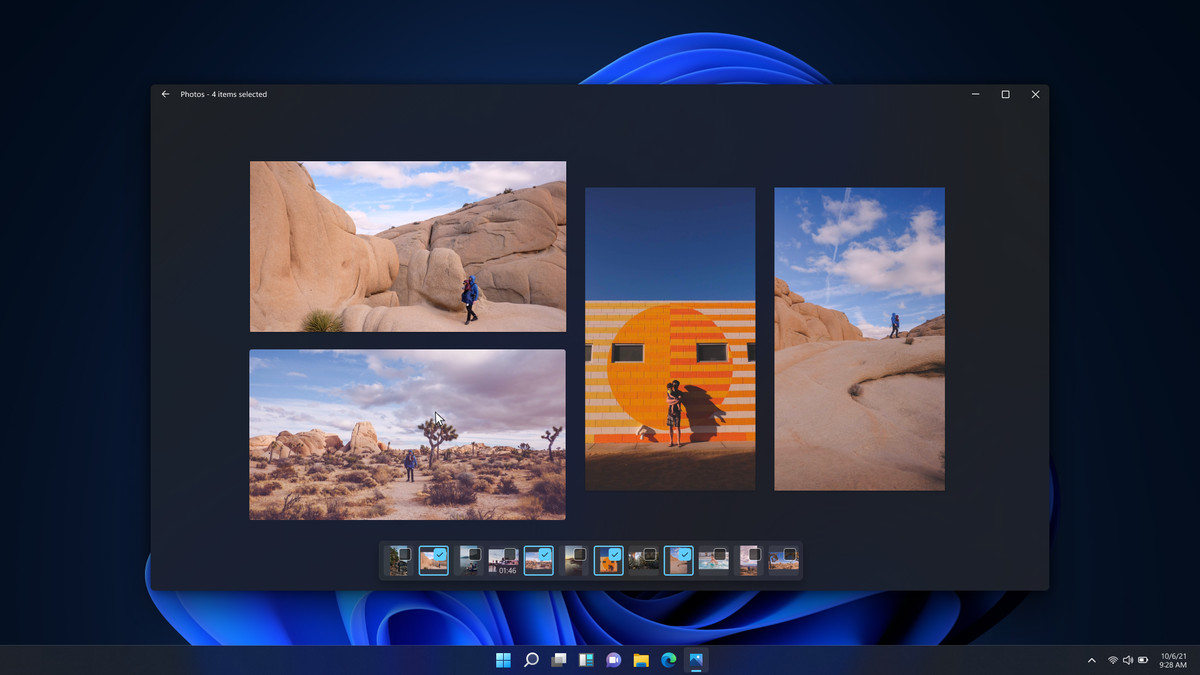
Microsoft has started testing a new photos app for Windows 11. Like many other parts of Windows, the photos app has been redesigned to match the new operating system, with subtle improvements that help when you’re flicking through a collection of photos or videos.
The biggest addition is a new filmstip at the bottom of the photo viewer that shows small thumbnails of all the photos in a particular folder, collection, or album. It makes it easier to jump between them, or select multiple photos to enter the new “multi-view” UI.
Multi-view is the best addition for me personally, as you can compare a bunch of photos in a single window. This is great if you’ve been out shooting all day and want to quickly select photos to keep or discard.
While the photos app in Windows 10 didn’t include a particularly cluttered UI, Microsoft has simplified it slightly in Windows 11. You can dismiss the new filmstrip or photo editing toolbars by clicking on photos, and swipe between images without any distracting UI elements.
The updated photo editing toolbar includes some interesting additions, too. Microsoft is adding quick access to third-party photo editors. This is enabled through extensions, with apps like Adobe Photoshop Elements, Corel PaintShip Pro, and Affinity Photo supporting this integration.
Unfortunately, Microsoft still hasn’t fixed the video trimming tool. If you have video that’s captured at 60fps, it will still switch to 30fps if you use the trim tool in the new Windows 11 photos app. This app is still in beta, so that could change by the time it’s fully available in Windows 11. Microsoft appears to be planning to roll this out to Windows 11 users after the October 5th launch, though.
If you’re a Windows 11 tester on the Dev Channel, the updated photos app is now available for testing.
ELEVEN NYC restaurants were tested and discovered not to be enforcing proof-of-vaccination mandate
During a recent investigation, it was discovered that 11 out of 15 New York City restaurants were not enforcing the city’s proof-of-vaccine mandate despite the city’s aggressive step to curb a surge in COVID-19 cases.
In a segment airing Thursday, INSIDE EDITION visited fifteen different restaurants at random to see if they’re enforcing the city mandate.
Of the fifteen restaurants they visited, 11 did not enforce proof of vaccination and a matching form of ID for restaurant indoor dining.
During a recent investigation, it was discovered that 11 out of 15 New York City restaurants were not enforcing the city’s proof-of-vaccine mandate despite the city’s aggressive step to curb a surge in COVID-19 cases
Of the fifteen restaurants INIDE EDITION producers visited, 11 did not enforce proof of vaccination and a matching form of ID for restaurant indoor dining
When producers visited an eatery on the Upper East Side, they were seated indoors right away – with no questions asked.
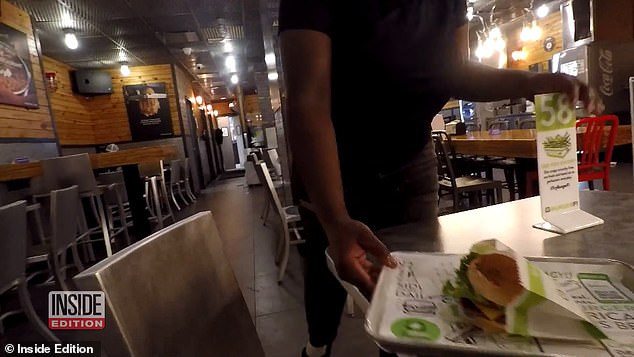
At another popular East Side restaurant called Burger-Fi, the restaurant allowed a producer to order and eat indoors without showing any proof of vaccination – despite the restaurant having signs which read ‘show me your vax.’
Producers returned the following day and spoke to a manager.
‘We did have a producer come by last night who was able to sit inside, and he said he wasn’t asked for proof of vaccine card or anything,’ said INSIDE EDITION’s Ann Mercogliano.
At another popular East Side restaurant called Burger-Fi, the restaurant allowed a producer to order and eat indoors without showing any proof of vaccination – despite the restaurant having signs which read ‘show me your vax.’
Despite signs that read ‘show us your vax,’ hosts at Burger Fi in the Upper East Side seated producers without asking to see proof of their vaccine
Producers were able to order and eat indoors at Burger Fi without showing proof of vaccine
‘I’m shocked. I’m really shocked right now, because I know that I’ve been asking everyone,’ the manager responded.
But not every restaurant violated New York City Mayor Bill de Blasio’s proof-of-vaccine mandate.
At SoHo’s Mercer Kitchen, staff members did everything by the book.
When a hostess asked the investigative producer for proof-of-vaccine at the door, he told the hostess he was vaccinated, but didn’t have his card on him.
‘Unfortunately,’ said the hostess. ‘If we don’t have proof, we can’t seat you inside. It’s New York law.’
Only four of the fifteen restaurants INSIDE EDITION visited prompted to see proof of vaccination and a matching ID.
Since August 17, New York City has required proof of vaccination for people attending indoor venues such as restaurants, gyms and shows, as the city tries to get back on its feet from the COVID-19 pandemic.
At SoHo’s Mercer Kitchen, staff members did everything by the book.
When a hostess asked the investigative producer for proof-of-vaccine at the door, he told the hostess he was vaccinated, but didn’t have his card on him. The hostess said she could not seat the producers without showing proof-of-vaccine
However, the vaccine mandates are fraught with complications as restaurant servers, bartenders and ticket agents at already understaffed businesses now must enforce the vaccination rules.
New York Mayor Bill de Blasio ordered businesses to begin implementing vaccine checkpoints or face $1,000 fines, but many bars and restaurants are already demanding proof of vaccination to enter.
‘If you want to participate in our society fully, you’ve got to get vaccinated. It’s time,’ de Blasio said.
As enforcement of New York City’s vaccine mandate loomed Thursday, Mayor Bill de Blasio said he was reluctant to fine businesses that do not follow vaccine checks for patrons
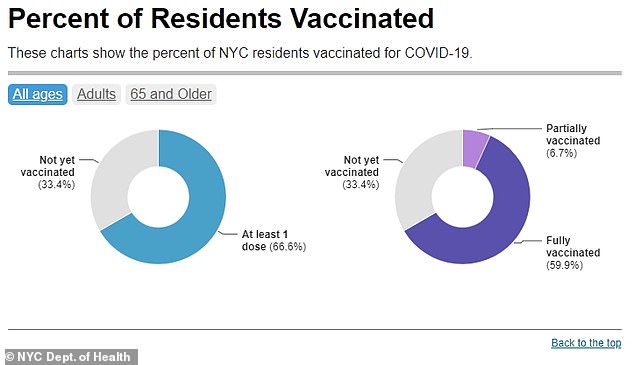
Enforcement of the policy comes as nearly 60 percent of city residents have been vaccinated
Businesses, unions and critics of the mandates were immediately angered, citing personal freedom arguments.
In parts of the city where majority of people are resisting the vaccine, business owners are worried the mandates will be a fatal blow after the virus prevented them from running at full capacity for months last year.
It will fall largely on businesses to enforce the policy and de Blasio claimed it wouldn’t be too different from a host guiding someone to a table or a box office clerk selling a ticket.
‘We do not want to go back to restrictions,’ de Blasio said at a virtual news conference in August. ‘The key to our progress is vaccination.’
In August, President Joe Biden announced the federal government’s aggressive new approach to fight the COVID-19 pandemic on Thursday, which included new vaccine rules that the White House says will affect two-third of the American workforce.
The strategy involves six steps all aimed at boosting the US vaccination rate, which fell over the summer as a new wave fueled by the Delta variant plunged health care systems in areas with largely unvaccinated populations back into disarray.
About 73.4 percent of Americans over the age of 12 have at least one vaccine dose, but less than 63 percent are fully vaccinated – far short of the threshold to reach herd immunity.
Apple Watch Series 7 and SE now come with USB-C cable
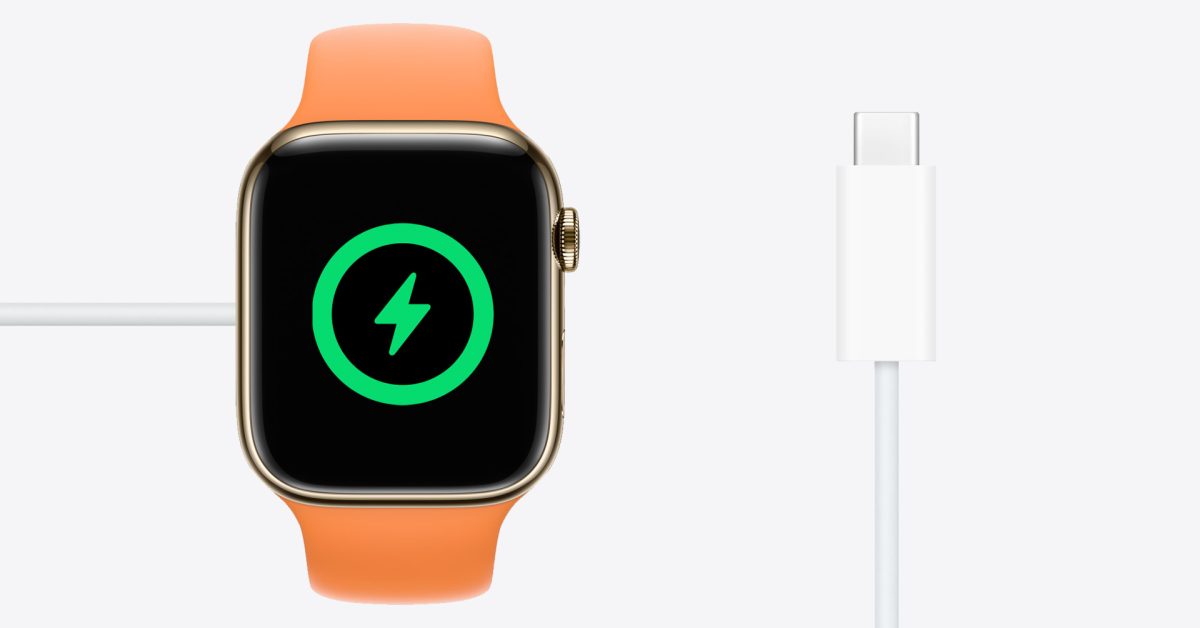
One of the few new features of the Apple Watch Series 7 is support for fast charging, which results in 33% faster charging time when compared to the Apple Watch Series 6. However, Apple says that fast charging requires a new USB-C cable (which now comes bundled in the box), but MagSafe Duo owners may not be able to take advantage of this feature.
According to Apple, the new Apple Watch Series 7 can go from 0 to 80% charge in about 45 minutes when using the new USB-C fast charging cable. The company also highlights on its website that 8 minutes of charging provides 8 hours of sleep monitoring, which is a great improvement since the Apple Watch battery still doesn’t last more than a full day.
Here’s what Apple says in its website:
Charges in no time. The entire charging system for Apple Watch Series 7 has been rethought to get you up and running faster than ever. With an updated charging architecture and fast-charging USB-C cable, it takes about 45 minutes to go from 0 to 80% charge.
Luckily for those planning to buy an Apple Watch Series 7, the new USB-C cable for fast charging is included in the box. As noted by my 9to5Mac colleague Zac Hall, the company also updated the Apple Watch SE box to include the new USB-C cable — although that model doesn’t support fast charging. Apple Watch Series 3 will keep regular USB-A cable.
MagSafe Duo compatibility
Future Apple Watch Series 7 owners should keep in mind that fast charging may not work with MagSafe Duo. Also noted by Zac Hall, Apple’s website emphasizes that the new Apple Watch Magnetic Fast Charger to USB-C cable is required for fast charging, while there’s no mention of MagSafe Duo charger compatibility.
It’s also important to note that Apple is emphasizing that faster charging is unlocked on Series 7 only when using the “fast-charging USB-C cable” that ships with the new Apple Watch. Our understanding is that Series 7 will not see these faster charging times when powered by Apple’s MagSafe Duo charger or other multi-charging docks. Actual testing when Series 7 is available will be required to present firm numbers.
Another related detail is that Apple previously offered a 0,3m USB-C cable for Apple Watch before the Series 7 announcement. However, the company says that the cable with fast charging support is a new 1-meter version, so it’s unclear whether or not the previous USB-C cable has support for this feature.
The new 1-meter Apple Watch Magnetic Fast Charger to USB-C cable is now being sold separately at Apple for $29. And just like Apple Watch Series 6, none of the Apple Watch models currently sold come with the power adapter included.
FTC: We use income earning auto affiliate links. More.

I want an iPhone with USB-C. It seems Apple might someday agree

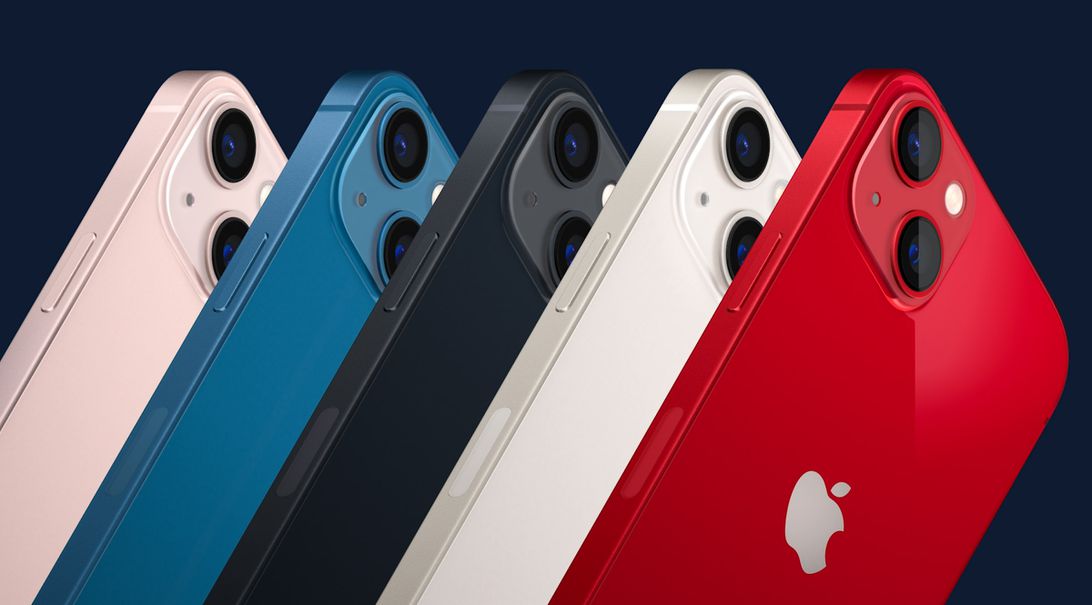
Apple’s iPhone 13
Apple; Screenshot by Stephen Shankland/CNET
This story is part of Apple Event, our full coverage of the latest news from Apple.
I like my iPhone, but I’d really like it if it came with a USB-C port. So I was cheered this week to see an indication that change might happen someday.
It wasn’t any surprise when Apple introduced the iPhone 13 on Tuesday with the same old Lightning port the company has used since 2012. Lightning is fine. But it isn’t USB-C.
Here’s what I like about USB-C. It’s versatile, an industry standard that spans more and more of the electronics world. It transfers data at up to 20 gigabits per second and is jumping to 40Gbps with the new USB 4 data transfer protocol just now arriving. It charges phones, tablets, PCs and anything else that needs up to 100 watts of power, with a 240W upgrade that’ll be great for gaming laptops. And there’s a growing ecosystem of USB-C accessories, including hubs, docking stations, keyboards, flash drives and memory card readers.
Apple has more or less stuck with Lightning, a proprietary product, for its mobile devices, though its top-end iPad Pro got USB-C in 2018 and the midrange iPad Air got the technology in 2020. (MacBooks debuted USB-C in 2015, a move that prompted some grumbling because it did away with the beloved MagSafe connector.)
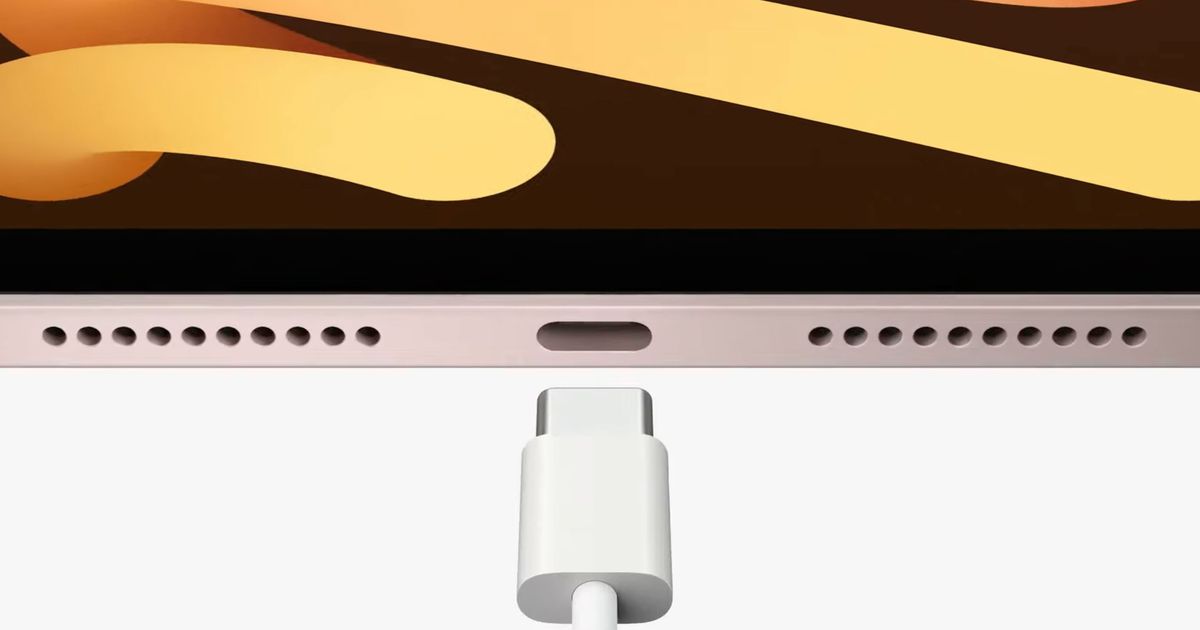
Now Apple is providing hints that USB-C could spread. At its event this week, the iPad Mini got a USB-C port, making the device more powerful and flexible. It’ll be harder to switch iPhones to USB-C because so many phones and Lightning chargers are already in use, but it increasingly looks like Apple is preparing its formidably large customer base and product ecosystem to make the leap.
Picking apart Apple product announcements is a bit like Cold War Kremlinology: spycraft that attempted to figure out what the Soviet Union was up to by assessing which Russian officials were in or out of favor. The introduction of USB-C to some new devices doesn’t necessarily mean Apple is softening the ground for a major change to its most important product line.
Still, I think USB-C is in the iPhone’s future. A wholesale transition, while no doubt a big pain, ultimately will be good for you, the iPhone and the planet. You’ll get less electronic junk, the iPhone will get more utility and landfills won’t be littered with as many cables that only work with a fraction of devices.
Apple didn’t comment for this story.
Apple, get with the program
Almost every other corner of the tech world has moved to USB-C for data and charging. Android phones settled on USB-C ports years ago, and it’s a fixture in Windows PCs. The price premium for USB-C accessories is easing, too.
I use USB-C for external drives, earbuds, headphones, flash card readers, two laptop docking stations, a Nintendo Switch and its Joy-Cons, iPads, Android phones, hardware security keys, the family’s Macs, a Microsoft Surface Laptop and a Google Pixel Slate. I have USB-C chargers in two cars and four rooms in my house. On the road, I use portable batteries with USB-C ports.
The pesky Lightning cable I need for my iPhone is increasingly out of place. Lightning was a fine replacement for the iPhone’s older and bulky 30-pin connector, but now USB-C is a much better alternative.
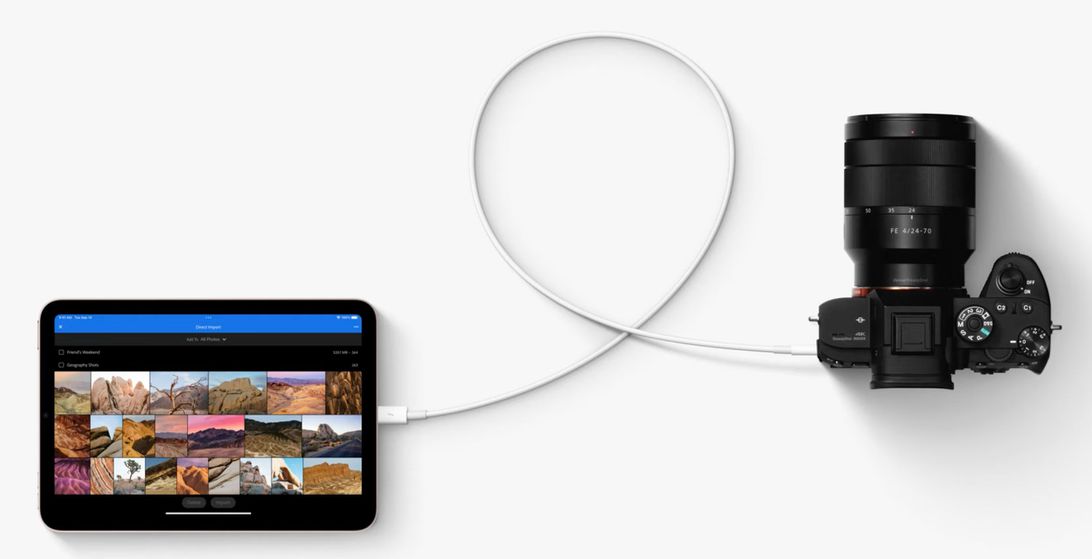
Apple sees the benefits, too. Katie MacDonald, an iPad product manager, said Tuesday that the iPad Mini’s USB-C connector is 10 times faster than Lightning and can “connect to a vast ecosystem of USB-C accessories.” That’s great for everyone from amateur photographers to medical personnel scanning patients with Butterfly portable ultrasound scanners.
If you’re filling your $1,599 iPhone 13 Pro Max‘s 1TB of storage with high-end ProRes video, you might appreciate a faster technology than Lightning to transfer your data. And if Apple signs up cinematographer Greig Fraser for another iPhone endorsement, he won’t have to use that awkward Lightning dongle on a USB-C iPhone.

An iPad Mini’s USB-C connection lets it connect directly to a camera.
Apple/Screenshot by Stephen Shankland/CNET
Why Apple isn’t racing to sell USB-C iPhones
With millions of iPhones in use, dumping Lightning connectors won’t be easy. Customers have invested in chargers and cables in homes, offices and cars. Lightning is also used in AirPods charging cases and wired Apple earbuds, too.
Moving to USB-C means that Lightning gear has to be replaced. I’m old enough to remember the howls of displeasure when Apple dumped its 30-pin connector, and Lightning today is vastly better established than the old connector was in 2012.
Lightning also has kept iPhones above the fray for some of USB-C’s growing pains. It can be hard to tell if a particular cable can handle USB’s full power and top data transfer speeds. Some of those issues remain, but USB’s advantages outweigh them.
A transition, should one come, would force iPhone loyalists to buy a lot of new cables, a prospect no one is likely to relish. In the long run, though, it’ll be worthwhile. Now or soon, you’ll likely use USB-C to charge other devices, so switching ultimately reduces your life’s electronic clutter. It will also reduce e-waste because you’d need fewer cables to cover most of your devices. You can always donate your old cables to those who still need them.
How about an iPhone with no ports at all?
iPhones could go straight from Lightning connectors to no connectors at all. Connectors pierce holes in a phone’s chassis that weaken it, expose it to the elements and increase manufacturing costs.
Wireless charging and data transfer techniques are getting better. With Apple’s iCloud, you don’t need to back up and sync your iPhone with a cable plugged into your laptop anymore. The best way to get music from your phone to better speakers is with Bluetooth, not a phone docking station.
Charging and data ports, however, will maintain their utility. Nothing beats a cheap copper cable when it comes to fast, private, reliable data transfer. When you have only a few minutes to spare in the airport or car, rapid charging will boost your battery better than any charging pad.
When it’s time to plug that cable into my phone, I vote for USB-C.
Ikea introduces a new line of furniture and gear for gamers
Getting all of your gamer gear is very important — a comfortable chair, a sturdy desk, and maybe some storage space. With that in mind, Swedish furniture company Ikea has rolled out a new gaming range with over 30 products, both big and small. There are six product families, all of which have delightful names: Uppspel, Lånespelare, Matchspel, Gruppspel, Utespelare and Hudvudspelare. The Uppspel products were designed in collaboration with Republic of Gamers.
The product line includes some obvious pieces, like gaming desks and chairs, and some smaller accessories like a ring light for streamers, or a neck pillow and mug holder to make sitting at the desk a little comfier.
The pieces in the line are offered at different price ranges to meet the needs of a variety of gamers. Furniture offerings include gaming desks, chairs, storage, and accessories include a mug holder, mouse bungee, neck pillow, ring light, and more.
For those who already use Ikea products, its worth checking to see if there are any handy add-ons to make things work for you, like the Lax Rax addition to the Kallax shelf. The Ikea gaming collection will arrive in stores in October 2021.
SkateBIRD – Launch Trailer – Nintendo Switch – Nintendo
Genshin Impact – Official Teyvat Adventures Commemorative Video – IGN
- Genshin Impact – Official Teyvat Adventures Commemorative Video IGN
- How many Primogems are required to get Kokomi in Genshin Impact? Pity, Soft-pity, and 50/50 conditions explained Sportskeeda
- Character Teaser – “Sangonomiya Kokomi: The Ocean’s Will” | Genshin Impact Genshin Impact
- Genshin Impact Trailer Teases Sangonomiya Kokomi, Abilities, and More GameRant
- Genshin Impact – Official Sangonomiya Kokomi Character Teaser Trailer IGN
- View Full Coverage on Google News
This is the Google Pixel 6 and Pixel 6 Pro, Google’s chief rivals to the iPhone 13
There hasn’t been a formal Google Pixel 6 and Pixel 6 Pro launch event yet, but both Android phones are on display in New York City, teasing Google’s forthcoming rivals to the newly announced iPhone 13 and iPhone 13 Pro series from Apple. Uncanny timing, right?
Naturally, we decided to snap plenty of photos for you from all angles – at least from all the angles possible for a phone situated behind glass – by traveling to the Google Store Chelsea in Manhattan. The new retailer store was closed, but anyone can take a peak at the backsides of the Google Pixel 6 and Pixel 6 Pro.
There’s still no formal Google Pixel 6 release date, but the window display does state that both phones are ‘Coming Fall 2021’. We usually see Google launch its flagship smartphones in October, though the Google Pixel 5 did launch in late September.
The standard Google Pixel 6 is on display in a two-tone orange color, one of three colors for the smaller phone. Each model has a two-tone color scheme: a darker hue on the top above the unique black camera band and a lighter color on the bottom.
The Google Pixel 6 Pro is on display in a yellow/gold color that spans the top and bottom halves. The top portion of the phone is noticeably larger on the Pro model. Other colors not on display: green for the Pixel 6 and silver for the Pixel 6 Pro. Both editions will come in black.
A close-up of that camera bar
Pull up a seat to the camera bar. We got a close-up of the odd-looking Google Pixel 6 camera module, which sports two lenses on the Pixel 6 and three on the Pixel 6 Pro. If you want some zoom, you’re going to have to pay for the Pro version.
The Pixel 6 camera specs, while unconfirmed, include a 50MP standard wide camera, 12MP ultrawide camera and the Pro-exclusive 48MP telephoto camera. Apple’s iPhone 13 Pro is relying on large sensors and individual pixels for its 12MP triple-lens rear cameras, so we’ll have to do some side-by-side testing when we get our hands on both.
The differences between the Google Pixel 6 Pro and regular Pixel 6 won’t stop at the extra rear camera lens. The Pro will also include a larger display, bigger battery, more RAM and better front-facing camera, according to the rumors specs.
But at the heart of both phones will be what Google will likely talk about the most: its own in-house chipset, the Tensor chip. Google has made great strides with AI-driven computation photography in the Pixel series since 2016, and it’s ditching Qualcomm for its own in-house SoC solution, we’re eager to see the results.
Sadly, while we almost got our hands on these two phones and saw the phones in person, the fact that they’re behind glass means we haven’t checked out the front. Given the ‘Fall 2021’ release window, it won’t be long before we can grab one for real.