
- 15 Best PlayStation Exclusives To Play Right Now GameSpot
- Sony Seems Ready To Start Leaving The PS4 Behind Kotaku
- Almost every PS5 game at the PlayStation Showcase 2021 was a sequel and that sucks Tom’s Guide
- You can now jump in the queue to buy a PS5 (update: sold out) The Verge
- Further testing shows new PS5’s smaller, lighter heatsink keeps console cooler Ars Technica
- View Full Coverage on Google News
TechNews
Platinum Would “Definitely” Port Star Fox Zero To Switch, If Given The Opportunity

The Nintendo Switch has seen a lot of games ported across from the Wii U generation, but one many fans are still waiting on is Star Fox Zero. PlatinumGames noted last August how it had no idea if Nintendo would bring the game to the hybrid system, and mentioned how a future port might not even be something it’s necessarily involved with.
Now, just over a year later, Platinum’s head Atsushi Inaba has told our friends over at VGC how the studio is “definitely” up for porting the Wii U Star Fox entry – if the chance came up. Part of the reason Inaba wants to do this is simply to make the game available to more people:
“It’s not cool that people aren’t able to play older games because they’re locked out of the platform, so of course if anything was possible we’d like to bring over any of those older titles to the newer platforms.
“It kind of depends on what’s in the realm of actual possibility, but yeah, if the chance came up it’s definitely something we’d like to think about.”
If something was to go ahead, Inaba says certain design decisions (in reference to a question about the Wii U game’s unique control scheme) would likely be up to Nintendo:
“The important thing to remember there is that because it’s Nintendo’s IP, the ideas are coming from Miyamoto-san himself…if the opportunity came up to bring Star Fox Zero to the Switch again it would be more of a question of what he would like to do in that opportunity, and of course we would respect that again.”
Would you like to see Platinum handle a Star Fox Zero port for Switch? Did you play this game when it originally landed on the Wii U in 2016? What are your thoughts about it years on? Oh, and here’s the latest about Bayonetta 3.

Apple says motorcycle vibrations can damage iPhone cameras
Hold off on purchasing that iPhone mount for your motorbike. In a new Apple Support post first seen by MacRumors, the tech giant has warned that high amplitude vibrations, “specifically those generated by high-power motorcycle engines” transmitted through handlebars, can damage its phones’ cameras. As the publication notes, that damage can be permanent. A simple Google search will surface posts over the past few years by users whose cameras were ruined after they mounted their iPhone on their bike, mostly so they can use it for navigation.
While Apple didn’t say why it’s issuing a warning now, it did explain the reason why attaching the iPhone to a motorcycle can destroy its camera. The company said that the camera’s optical image stabilization (OIS) and closed-loop autofocus (AF) features can be damaged by long-term exposure to high-amplitude vibrations. A camera’s OIS makes it possible for a device’s gyroscope to sense movement. In turn, the gyroscope changes its angle and the lens moves accordingly to prevent blur when you accidentally move while taking a photo.
Meanwhile with closed-loop AF, a phone’s onboard magnetic sensors measure vibrations to compensate for the movement, so the lens can be positioned accurately. As MacRumor notes, all models since the iPhone 7 come with both features.
Thus, Apple says it’s not recommended to attach iPhones to motorcycles with high-power or high-volume engines. For mopeds and scooters, you may want to buy a vibration-dampening mount to lessen the risk of damage — or simply just use another GPS device to make sure you don’t ruin a device that costs hundreds to over a thousand dollars.
All products recommended by Engadget are selected by our editorial team, independent of our parent company. Some of our stories include affiliate links. If you buy something through one of these links, we may earn an affiliate commission.
Google is rolling out dark mode for Search on desktop
Google is finally rolling out a dark theme for Search on desktop. The change had been spotted as far back as December, but the feature is now official and rolling out to all users “over the next few weeks,” according to an update from a Google product support manager.
You can get the new, not-quite-black theme by heading to Settings > Search Settings > Appearance and selecting “dark.” There’s also a “device default” option which will automatically update the theme based on your device’s settings.
Though the change is starting to roll out now, it could take a few more days or weeks before it’s available to everyone. 9to5Google further notes that some users have spotted a sun icon that can be used to toggle it on or off without diving into the settings page, though it’s not clear if that’s an official part of the update or another test.
All products recommended by Engadget are selected by our editorial team, independent of our parent company. Some of our stories include affiliate links. If you buy something through one of these links, we may earn an affiliate commission.
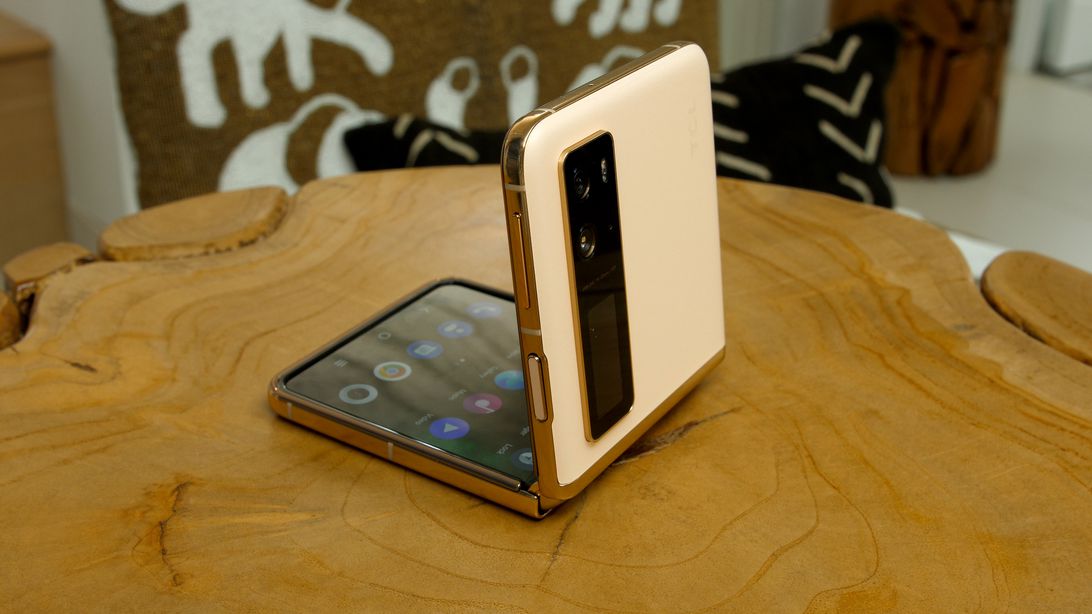
Here’s the affordable TCL foldable phone that could’ve been

TCL’s foldable is real. But you’ll never be able to buy it.
Richard Peterson/CNET
For over two years, TCL has been showing prototypes of possible foldable phones to reporters. One had a 10-inch screen that bent into thirds. Another featured a screen that wrapped around the wrist. Yet another had a large screen that closed like a book, one featured a screen you pulled out to expand it into a tablet and a more futuristic model included foldable and rollable displays in the same device.
And then there was a clamshell model that looked a lot like Samsung’s Galaxy Z Flip and Motorola’s Razr. That device, codenamed the Chicago Project, is the one TCL planned to launch early in the fourth quarter. It aimed to sell the phone for less than Samsung’s $1,000-and-higher foldables and Motorola’s $1,400 Razr. The Chinese giant had the foldable nearly done — and this week even shipped CNET one of the nearly finished prototypes to prove it was real — but ultimately decided to scrap it and start over.
Now TCL won’t launch its first foldable for at least 12 to 18 months, Stefan Streit, TCL’s chief marketing officer, said in an interview ahead of Friday’s announcement. And when it introduces the device, it won’t be Chicago but a revamped product. For now, hopes for a lower-cost foldable device will have to wait.
“We could finish this product and bring it to the market, but this felt somehow … not right,” Streit said. “For us, this category is really, really important. We will bring products. We will bring a number of products.” Just not the first device TCL thought it’d launch.
While TCL has sold phones under the low-cost Alcatel brand for years — and for a brief period under the BlackBerry name — it has only been selling devices under its own TCL branding since early 2020. It’s among the top players in televisions, but TCL doesn’t have the recognition needed in mobile to pull in people willing to try a new product category like foldables. Even Samsung, the world’s biggest phone maker, is still in the early days of getting consumers to trust that foldables are durable enough to withstand normal daily use.
TCL decided to cancel the introduction of its first foldable because of several “commercial” factors — weakness of its brand, expensive components because of the pandemic and lack of carrier support, Streit said.
Perhaps most of all, the move by TCL is an acknowledgement that foldables may not be ready for mainstream users — at least not in huge volumes and at low prices.
Foldables remain a tiny part of the overall smartphone market. This year, vendors should sell about 7 million such devices, according to Strategy Analytics, while companies will sell 1.35 billion regular smartphones. That estimate from last month included potential TCL sales.
It’s not until Apple introduces its first foldables, possibly in the second half of 2023, that the devices start selling in higher numbers, Strategy Analytics analyst Ken Hyers said in August. His firm expects about 15 million foldables to be sold around the world in 2023 and more than double that amount the following year. In 2026, the number of foldables sold across the globe should hit nearly 170 million, Strategy Analytics said.
TCL had aimed to launch a fully featured foldable by the end of 2021 that cost less than the devices from Samsung, but the lowest price it could reach with its first device was $800, Streit said. Samsung’s new Z Flip 3 starts at $1,000, while its Z Fold 3 retails for $1,800.
“If somebody can spend $800, he can also spend $1,000,” Streit said. “Probably, he will go for the brand he knows for many years and trusts more.”
Competing with the Z Flip 3
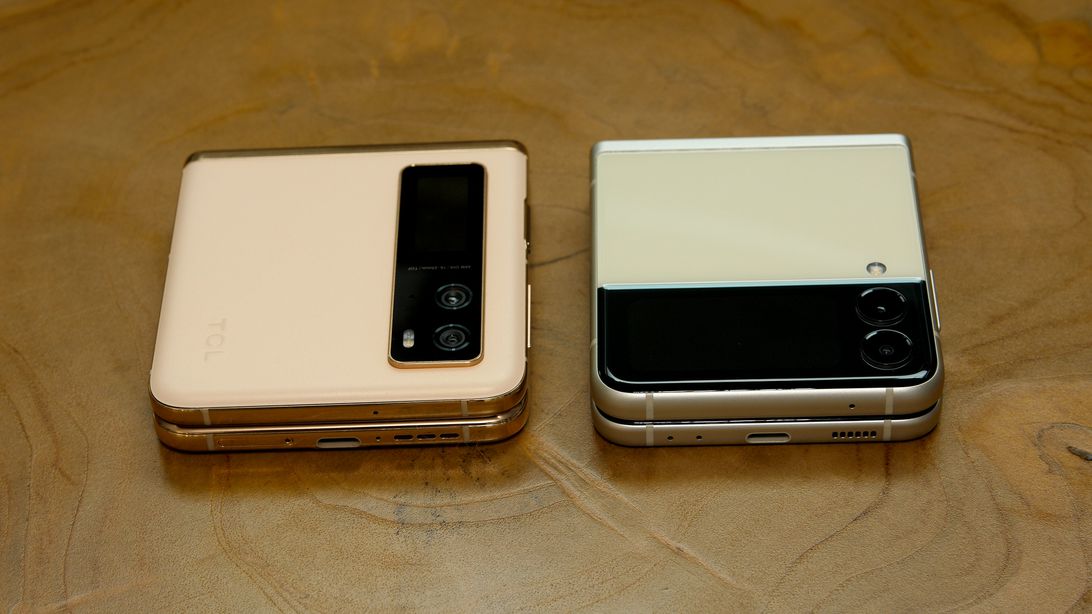
At the same time, some of Chicago’s specs aren’t as high-end as those in the Z Flip 3. The two devices look similar, but TCL’s foldable is a little thicker, a little wider and a little heavier. And the front screen is smaller at 1.1 inches diagonally versus 1.9 inches for the Z Flip 3. The interior screens are about the same size: 6.67 inches diagonally for TCL and 6.7 inches for Samsung.

TCL’s first foldable (left) was canceled partly because of Samsung’s Galaxy Z Flip 3.
Richard Peterson/CNET
Chicago isn’t water resistant like the Z Flip 3, and it’s likely not as sturdy, Streit said. It uses Qualcomm’s Snapdragon 765G processor, which isn’t as fast or as powerful as the Z Flip 3’s Snapdragon 888. Chicago also has a slower version of 5G and couldn’t be used on Verizon’s ultra-wide-band network. Its fastest download speed is 2.7 Gbps versus the Snapdragon 888’s peak of 7.5 Gbps.
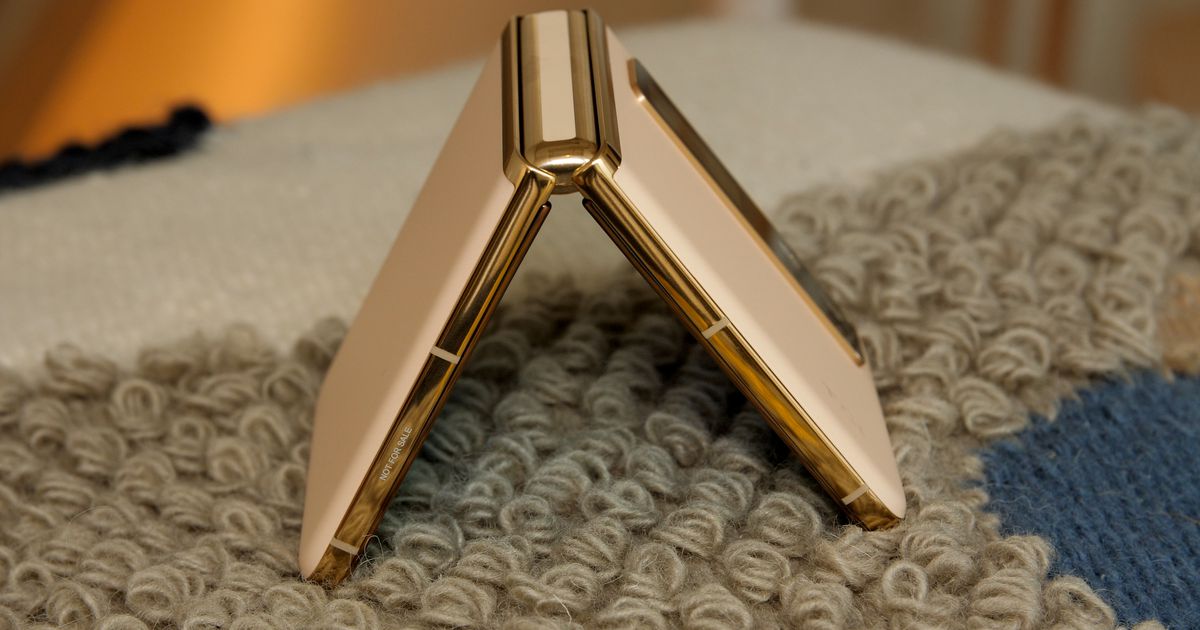
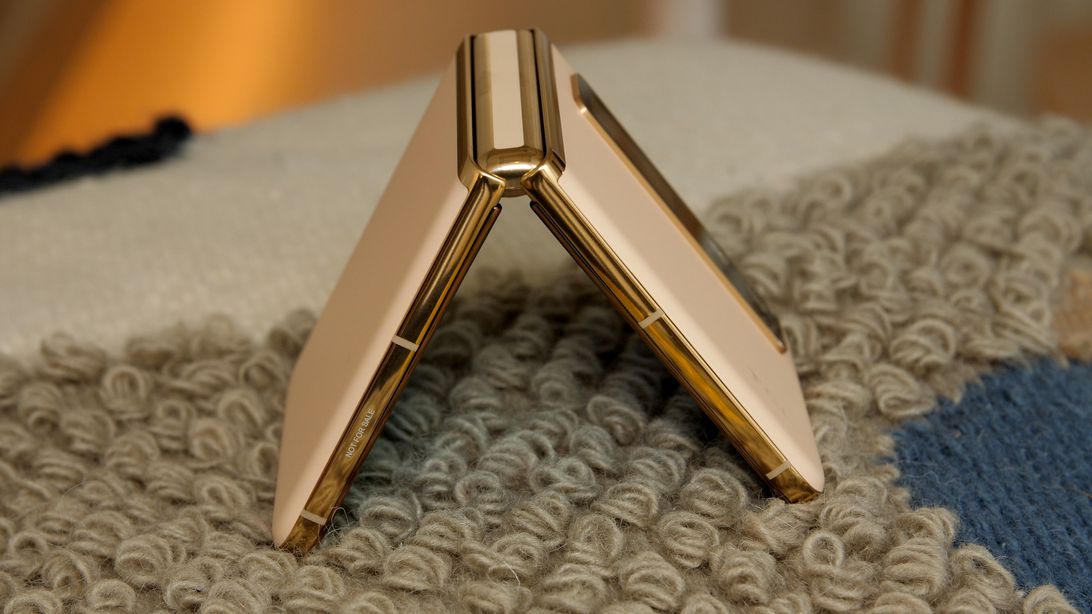
Chicago would have been available in one color, “Pastel Gold,” which looks like a peach-color matte plastic body with gold metal detailing on the sides and edges of the hinge. When displayed next to Samsung’s cream-color Z Flip 3, it’s sometimes difficult to tell the devices apart.
One area where Chicago could have had an advantage over the Z Flip 3 is the part of the interior display where it folds in half. The crease in the prototype sent to CNET is less pronounced — both visually and when touching the display — than on the Z Flip 3. CNET’s Patrick Holland, who reviewed Samsung’s foldables, said the Z Flip 3’s crease doesn’t bother him, though it is noticeable when interacting with the middle of the screen.
When opened, TCL’s Chicago foldable (left) and Samsung’s Galaxy Z Flip look very similar.
Richard Peterson/CNET
TCL decided to cancel Chicago before Samsung’s August Unpacked event, Streit said. But seeing the Z Flip 3 cemented its decision, even though Chicago was finished except for tweaks to features like the software and the hinge.
“I’m using it every day,” Streit said of Chicago. “Nothing has changed” about how much TCL believes in foldables, he said, but market conditions need to improve before it launches a consumer device. For now, TCL has already started working on the foldable it hopes to actually sell.
That device, while similar to Chicago, will be thinner and sturdier, Streit said, but it will likely still be a clamshell, high-tech flip phone design.
“It’s … the most natural step from where we are coming from,” he said.
The hope is that in late 2022 or early 2023, the market will be ready for a lower-cost foldable, Streit said. Component prices will likely be back to normal, TCL’s brand will be stronger, 5G will be broadly deployed so carriers can support other phones, consumers will be looking for new types of devices and prices will finally be low enough for wide adoption, he said.
“We feel like this … is the better time for TCL to then launch something which … hopefully brings it into more mass market segments,” Streit said.

When TCL finally sells a foldable, it won’t be Chicago but could look a lot like it.
Richard Peterson/CNET
For all of you curious about what might have been, here are the key specs:
Dimensions and weight
- Unfolded: 164.8 mm x 78.1 mm x 7.35 mm
- Folded: 86.5 mm x 78.1 mm x 17.9mm
- Weight: 204.5 grams
Interior display
- 6.67-inch AMOLED, DOTCH display
- Resolution: FHD+ (1080 x 2400)
- Screen-to-body ratio: 84.6%
- Aspect ratio: 20:9
- Pixel density: 395 PPI, 16.7M colors
- Brightness: 700 nits (peak), 420 nits (normal)
Front display
Memory
- 6 GB RAM and 128 GB flash memory
Battery and charging
- Battery capacity: 3,545mAh
- Wired charging speed: Up to 18W Qualcomm Quick Charge 3.0
- Wireless charging speed: Up to 10W wireless charging Connections: Type-C
- USB-C 3.1
Rear camera
- 48-megapixel primary camera with optical image stabilization, Sony IMX582 sensor, 0.8μm pixel size
- 16MP ultra wide-angle camera
- Video capture: 4K at 30 frames per second, 720p and 1080p at 30/60 frames per second
- Video playback: 4K at 30 frames per second, 720p and 1080p at 30/60 frames per second
Front camera
- 44-megapixel front camera
- Video capture: 4K at 60 frames per second, 720p and 1080p at 30/60 frames per second
Epic Wins Fortnite App Store Lawsuit Against Apple
Today a U.S. District Court judge ruled in Epic Games’ favor in its lawsuit against Apple. As a result, Apple can no longer dictate that purchases made in apps on its own devices go through the App Store. Apple had previously collected 30% of the revenue for purchases made in Epic Games’ Fortnite.
Despite representing a significant victory for Epic that reduces Apple’s control over how in-app purchases are conducted, it was far from a sweeping win for the game publisher. Judge Yvonne Gonzalez Rogers ruled against Epic on all other counts in the trial. Apple, she concluded, is not in violation of antitrust law, and does not need to allow Epic or other entities the freedom to create their own stores on Apple platforms. Additionally, Apple is not required to allow Fortnite back on the App Store.
Apple also denied Epic’s request to release the iOS version of Fortnite in South Korea, which just passed legislation that states Google and Apple cannot limit app developers to their own payment systems. In a statement to The Verge, the company says it would allow the blockbuster battle royale back onto the App Store if Epic agrees “to play by the same rules as everyone else.”
In 2020, Apple removed Fortnite from the iOS store after Epic offered its users a discount on V-Bucks if they purchased them outside of the App Store. Epic took this move in response to Apple collecting 30% of profits made from V-Buck purchases on Apple devices. The Fortnite developer launched a public campaign using the hashtag #FreeFortnite which framed Apple’s practice as unreasonable. This was quickly followed by Epic filing a lawsuit against Apple in August 2020.
Below is the relevant section of the injunction as ruled by Judge Yvonne Gonzalez Rogers:
The Court, having considered the evidence presented at the bench trial in this matter and consistent with its findings of fact and conclusions of law, HEREBY ORDERS as follows:
1. Apple Inc. and its officers, agents, servants, employees, and any person in active concert or participation with them (“Apple”), are hereby permanently restrained and enjoined from prohibiting developers from (i) including in their apps and their metadata buttons, external links, or other calls to action that direct customers to purchasing mechanisms, in addition to In-App Purchasing and (ii) communicating with customers through points of contact obtained voluntarily from customers through account registration within the app.
G/O Media may get a commission
What does this mean? In 2022, Apple can no longer require that online purchases made in games or apps on Apple devices go through its own App Store. It must allow developers to redirect users to their own marketplaces for online purchases. The injunction will take effect on December 9 unless it is appointed to a higher court, according to Verge.
Tim Sweeney, CEO of Epic Games, tweeted out a response to the court decision, stating:
This decision has potentially large implications for other online storefronts like Google, which Epic also filed a lawsuit against in July of this year. With Epic Games now being allowed to redirect users playing on Apple devices to its own sites for online purchases thanks to this lawsuit, there could be precedent for developers to be able to do so on other storefronts as well.
Kotaku reached out to Epic and Apple for comment. Epic directed us to Tim Sweeney’s tweet, above. Apple did not respond as of press time.
Update: More information and context from the ruling has been added.
Sonos raises prices for majority of products amid supply chain crunch
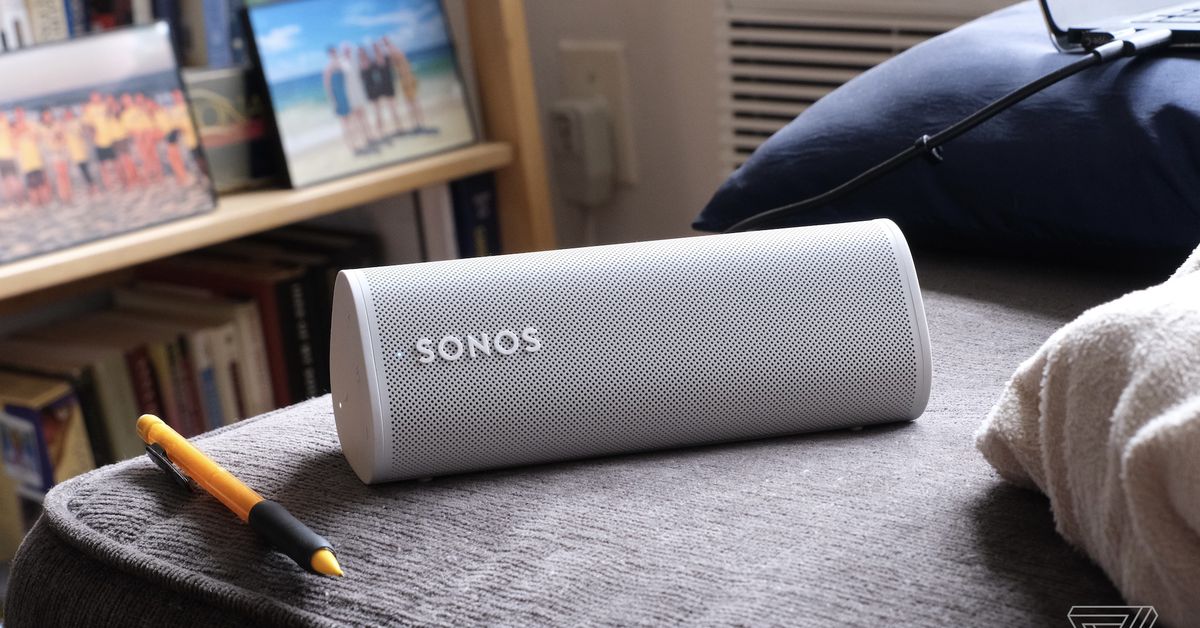
Sonos has announced that many of its speakers will be getting a price increase, ranging from $10 more for its portable Roam, to $100 more for its Arc soundbar. The company says that the price increases are making good on a promise it made during a call with investors last month, and that the increases would be going into effect on Sunday, September 12th. (We’ve reached out to Sonos to clarify if there’s a specific time the increase will happen.) You can see a table with all the price changes below.
During its earnings call, Sonos cited both supply and demand factors in its decision to raise prices. In a statement to The Verge, the company said it’s “always assessing market dynamics — including demand, supply chain, component costs and the competitive landscape.” This seems to imply that the current chip shortage has something to do with these price increases, at least in part. That would also imply that the increased prices will be around for a while: some industry leaders predict that the shortage, which has affected cars, consoles, and computers, will last at least through next year, if not beyond.
Sonos’ announcement doesn’t give consumers a lot of time to decide whether they want to purchase one of the company’s speakers before the prices go up.
Sonos September 12th price increases
| Product | Current price | Price as of 9/12 | Price increase |
|---|---|---|---|
| Product | Current price | Price as of 9/12 | Price increase |
| One | $199.00 | $219.00 | $20.00 |
| One SL | $179.00 | $199.00 | $20.00 |
| Five | $499.00 | $549.00 | $50.00 |
| Roam | $169.00 | $179.00 | $10.00 |
| Move | $399.00 | $399.00 | $0.00 |
| Arc | $799.00 | $899.00 | $100.00 |
| Sub | $699.00 | $749.00 | $50.00 |
| Port | $449.00 | $449.00 | $0.00 |
| Amp | $649.00 | $699.00 | $50.00 |
| Boost | $99.00 | $99.00 | $0.00 |
iRobot Roomba ‘poopocalypse’ problem, solved: This robot vacuum won’t run over pet waste
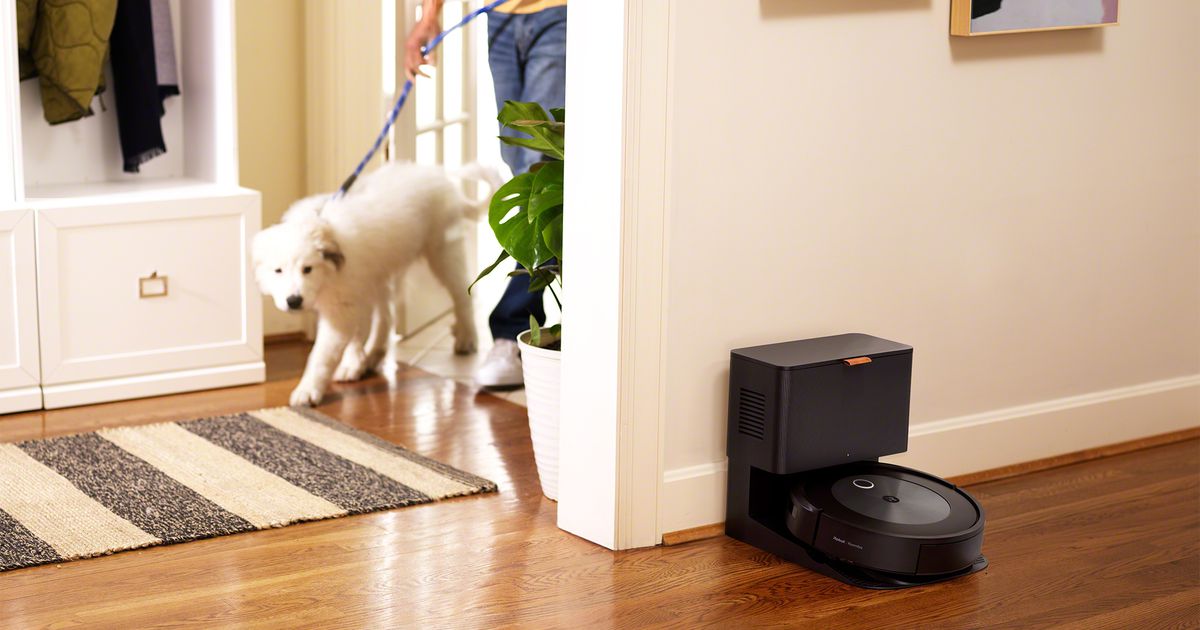
If you’re a pet owner the new Roomba J7 Plus vacuum may give you some piece of mind.
iRobot
Plowing into solid pet waste is the ultimate doomsday situation for robot vacuum cleaners. They can’t avoid it or pick it up, let alone dispose of it. The most likely outcome here is that a robot will further distribute the damage already done to your floor. But what if a robot vacuum could avoid these messy surprises? Enter the new $850 iRobot Roomba J7 Plus.
According to iRobot, the J7 Plus is intelligent enough to recognize and steer clear of pet waste. A company representative explained to me that, “iRobot trained [the vacuum’s] ML (machine learning) algorithms using hundreds of thousands of images of real, fake, and simulated dog and cat waste.” The spokesperson went on to say, “iRobot is so confident that its pet waste detection is up to the task that it is offering customers the Pet Owner Official Promise (P.O.O.P.).” Yes, you read that right.
iRobot says the Roomba J7 Plus robot vacuum can detect and avoid solid pet waste.
iRobot
Essentially that means iRobot will replace for free any Roomba J7 Plus if it fails to detect pet poop and becomes soiled as a result. There are limitations and caveats to this offer. For one, the pledge is good for up to one year from the original owner’s purchase date.
Secondly, the offer covers solid pet waste only. If your furry friend drops wetter deposits (such as diarrhea, vomit or urine), you’re out of luck. Still, iRobot says the vacuum will alert you when it comes across any objects of concern. It will present these as images for review, including anything foul your pet may have left behind.
The Roomba J7 Plus can also recognize obstacles like cords.
iRobot
If the Roomba J7 Plus lives up to these claims, it will be a remarkable accomplishment. Some advanced robot vacuums, such as the Ecovacs Deebot Ozmo T8, can avoid traps like shoes and cords. Neither Ecovacs nor any other robot vacuum maker — other than iRobot — can boast robotic poop avoidance.
The Roomba J7 Plus isn’t only made to handle unsavory situations. As iRobot’s newest flagship vacuum cleaner, the product comes with all the company’s latest bells and whistles. This includes the latest iRobot Genius 3.0 software and advanced navigation features. Key abilities of Genius 3.0 are automatic cleaning when you’re away, suggesting room names as it maps your home, and calculating estimates for cleaning time.
The Roomba J7 Plus comes with a charging dock that also empties the robot’s dustbin. Dirt is collected in handy disposable vacuum bags.
iRobot
Like other iRobot machines such as the Roomba S9 Plus, the Roomba J7 Plus comes with the company’s Clean Base charging dock. It enables the robot to empty its own dustbin as well as keep its battery charged. The dock also deposits dirt into a handy vacuum bag. iRobot claims this vacuum bag can go up to 60 days without needing a replacement. There’s also a J7 model that doesn’t come with the Clean Base and costs $650.
If the Roomba J7 Plus sounds like a floor cleaning dream come true then you’re in for a treat. Both J7 models are on sale now in the US, Canada and Europe, including the UK (where the J7 is £700 and the J7 Plus £900). They should arrive in other major markets throughout 2022.
Steam’s downloads page just got a lot more informative
Valve has just released a big update for Steam that offers a number of small but significant tweaks to the digital games store. Many of these changes have been available in beta for months, but now they’re hitting the software’s stable release channel. The update overhauls the downloads page and introduces a much improved section for managing your storage, amongst a host of other tweaks and fixes.
The downloads page has seen the bulk of the improvements. For starters, as well as showing download progress, the page also now shows installation progress. It should cut down on those frustrating moments when a game appears to be fully downloaded but isn’t playable because it’s not yet fully installed. The priority of downloads in the queue can now be easily reordered by dragging and dropping them, and the interface generally looks a lot cleaner overall. The “View News” button has been renamed “Patch Notes,” to make it easier to find what’s changed in a currently-downloading update, so long as developers have provided that information.
Steam’s storage management section has also been improved to make it easier to see your available storage and move games between drives. You can get to it by going to Settings, Downloads, and then clicking “Steam Library Folders.”
Those are the main improvements, but there are a host of other tweaks and fixes included in the update, which should be available to all users now. Steam should update itself automatically, but you can also click on “Steam” in the software’s menu bar, and then selecting “Check for Steam Client Updates…” to manually check. You can check out a full list of changes on Steam’s website.
iPhone 13 vs. iPhone 12: Comparing Apple’s rumored phone against its current flagship

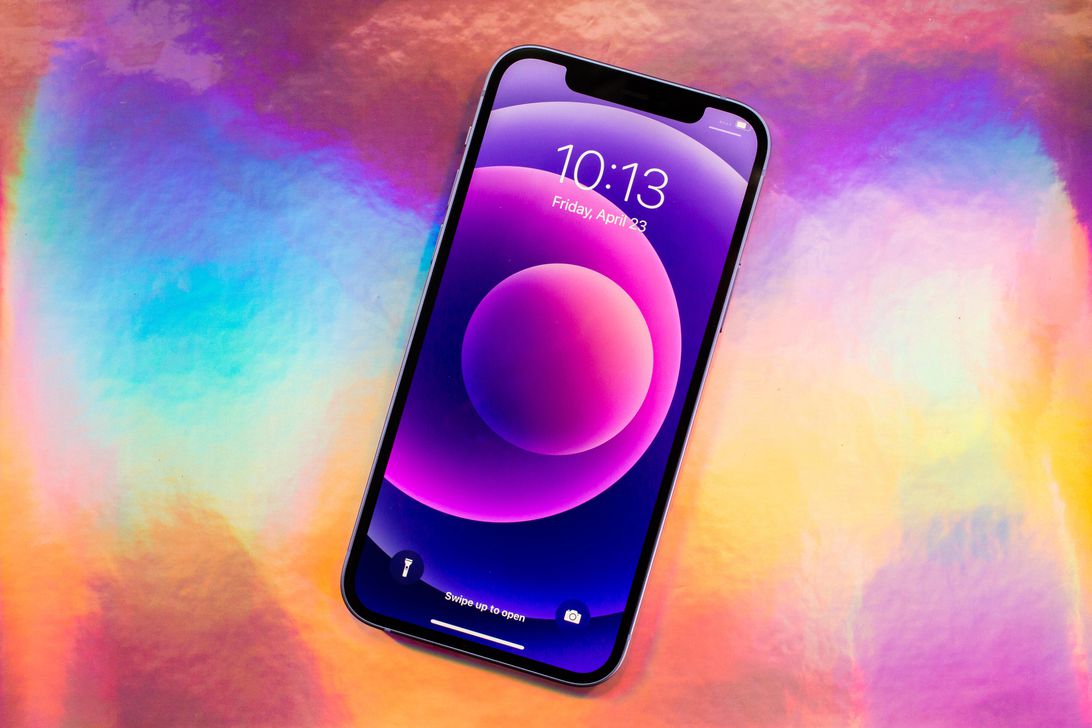
The iPhone 13 could be arriving this month to dethrone the iPhone 12.
Sarah Tew/CNET
This story is part of Apple Event, our full coverage of the latest news from Apple headquarters.
Apple might be just about ready to reveal the iPhone 13 with a Sept. 14 reveal event marked on our calendars. Rumors about the new phone point to a few new features, an updated design and some camera upgrades, but maybe it’s worth keeping in mind that the iPhone 12 that’s available right now is still a great device. Depending on your budget, last year’s iPhone 12 or even the iPhone 11, iPhone SE or the rumored iPhone SE 3 could be best for you. But, if you’re pumped to get your hands on the newest from Apple, the iPhone 13 could be the way to go.
Typically following the devices’ reveal at a September or October event, a potential release date for the iPhone 13 could follow a few weeks after. We’ve collected all of the early rumors around the iPhone 13’s specs, including price, cameras, display size and resolution and the four models that could be arriving soon, to help you plan your potential purchase.
Read more: Should you still buy an iPhone 12? What about an iPhone 11 or an iPhone SE?
Here are the rumors we’ve heard so far about the iPhone 13’s specs, and how they might compare to the iPhone 12. Just note that none of these iPhone 13 specs have been confirmed by Apple. Plus, here’s how the iPhone 12 compares to the iPhone 11 and all the iPhones you can buy in 2021.
We could see four iPhone 13 models
Like the iPhone 12, the iPhone 13 will come in four models, according to analyst Ming-Chi Kuo: the iPhone 13, the iPhone 13 Mini, the iPhone 13 Pro and the iPhone 13 Pro Max. A filing made by Apple with the Federal Communications Commission lends further credence to this rumor, in which there are four “New phone” models that would potentially work with a new version of Apple’s MagSafe charger.
Read more: iPhone 13 vs. 13 Mini vs. 13 Pro vs. 13 Pro Max: All the rumored specs differences
Different phone and camera sizes
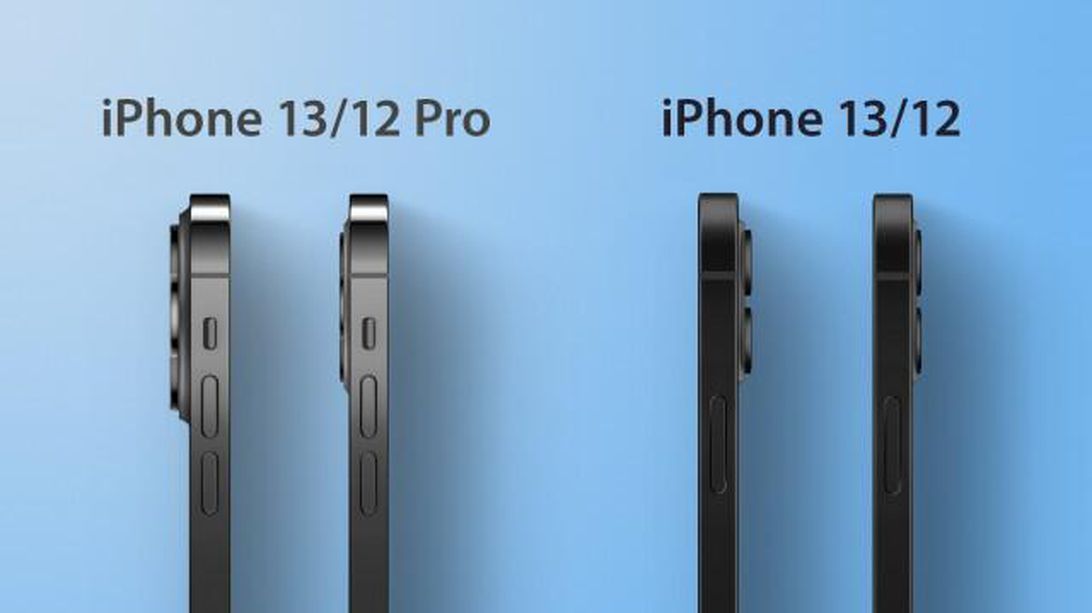
The iPhone 13 and 13 Pro models may end up being thicker than their iPhone 12 predecessors, according to a May MacRumors report. Both of the new models are expected to be 7.57mm thick, up from 7.4mm in the iPhone 12 models. However, that’s a pretty small difference that most people probably won’t notice.
More sizable could be a change to the camera bump, MacRumors reported: While the iPhone 12 and 12 Pro have camera bumps around 1.5mm to 1.7mm, the iPhone 13’s bump will be 2.51mm, and the 13 Pro’s will be 3.56mm. The increased size will prevent the lenses from sticking out as much as they do on the older phones.

The iPhone 13 may be a bit more thick than the iPhone 12.
MacRumors
The iPhone 13 could cost more than the iPhone 12
The iPhone 13 isn’t expected to be a major technical upgrade from the iPhone 12, which was the first to include 5G support, but according to an August report from DigiTimes, Apple is considering raising the price for it 2021 lineup to compensate for the increased cost of chip production from its supplier TSMC. Apple’s supplier is looking to up the cost by as much as 20% for “advanced and mature process technologies” by January 2022, the report says. It’s unclear, based on the report, how much the iPhone price could increase exactly.
Analysts previously predicted that the iPhone 13 will cost around the same as the iPhone 12, the base version of which starts at $799. It’s also possible that Apple may lower the price of the iPhone 13, as Samsung’s Galaxy S20 FE and Google’s Pixel 5 did in 2020. The newly released Samsung Galaxy S21 also boasted a lower price tag, starting at $200 lower than its predecessor.
Here’s the iPhone 12’s US pricing, for reference:
iPhone 12 US pricing
| iPhone 12 model | 64GB | 128GB | 256GB | 512GB |
|---|---|---|---|---|
| iPhone 12 Mini (carrier model) | $699 | $749 | $849 | N/A |
| iPhone 12 Mini (SIM-free from Apple) | $729 | $779 | $879 | N/A |
| iPhone 12 (carrier model) | $799 | $849 | $949 | N/A |
| iPhone 12 (SIM-free from Apple) | $829 | $879 | $979 | N/A |
| iPhone 12 Pro | N/A | $999 | $1,099 | $1,299 |
| iPhone 12 Pro Max | N/A | $1,099 | $1,199 | $1,399 |
Improved refresh rates
Most phones (including the iPhone 12) refresh at 60 frames per second, or 60Hz, but some, like the Galaxy S21 and the OnePlus 8 Pro, refresh at 120Hz. There is speculation that the iPhone 13’s display will have a 120Hz refresh rate (and an always-on OLED display). The higher the refresh rate, the faster and smoother a phone feels when scrolling through apps and websites. While this was rumored for the iPhone 12 as well, it seems more likely to happen this time around.
New and enhanced cameras
The iPhone 12 camera array includes regular, ultrawide and selfie cameras, night mode photos on all cameras, improved HDR mode, a telephoto lens (on the Pro and Pro Max models) and 2.5x zoom (on the Pro Max only).
As is typically the case with new iPhones, you can expect the iPhone 13’s cameras to be upgraded over the iPhone 12. We’ve heard rumors of an added periscope camera to improve zoom, an improved ultrawide-angle lens for night mode photography, and lidar technology on all models, instead of just the Pro and Pro Max, as was the case with the iPhone 12.
The return of Touch ID
The iPhone 13 could bring back Touch ID for the first time since the iPhone 8, with a big difference: It might be embedded under the screen, instead of as a separate button that takes up phone real estate. Some were expecting this to happen with the iPhone 12, but had also said it could get pushed to the next model. Alas, the iPhone 12 lineup lacks a Touch ID button. It’s worth noting that Apple’s 2020 iPad Air integrated a Touch ID button onto the side of the device. This would be a great addition this year in particular, since Face ID doesn’t work when wearing a mask (unless you have an Apple Watch and iOS 14.5, that is).
A Lightning port, but no headphone jack
The iPhone 12 doesn’t have a headphone jack, and we don’t expect any iPhone 13 models to have one either. But the Lightning port may be another story, now that Apple has introduced MagSafe charging capabilities. Kuo predicts that the iPhone 13 models will still include Lightning ports, with the exception of the iPhone 13 Pro Max, which could be completely portless. The iPhone 12, by contrast, featured a Lightning port on all four models.
Read more: The best ways to sell or trade in your old iPhone
Until Apple formally announces the iPhone 13 this fall, all we can do is speculate how it could compare to the iPhone 12. In the meantime, here’s how the iPhone 12 compares to the iPhone 11, whether you should buy an iPhone 12, iPhone 11 or iPhone SE and everything coming in iOS 15. You can also check out other rumored Apple products like the Apple Watch 7, AirPods 3 and iPad Mini 6.
Rumored Apple iPhone 13 vs. iPhone 12 specs
| iPhone 13 | iPhone 12 | |
|---|---|---|
| Display size | 6.1-inch OLED | 6.1-inch OLED |
| Refresh rate | 120Hz | 60Hz |
| Cameras | Regular, ultrawide, selfie, periscope | Regular, ultrawide, selfie, telephoto (Pro Max) |
| Fingerprint sensor | Yes | No |
| Connector | Lightning, except in Pro Max | Lightning |
| Headphone jack | No | No |
| Price (US) | $799 | $799 |