
- Watch: Dragon Quest 35th Anniversary Special – Live! Nintendo Life
- 12 temporarily free and 35 on-sale apps and games for Wednesday Android Police
- Square Enix announces Dragon Quest XII: The Flames of Fate The Verge
- Dragon Quest XII: The Flames of Fate announced by Square Enix VentureBeat
- Best Android app deals of the day: Dragon Quest RPGs, Chess Coach Pro, and more 9to5Toys
- View Full Coverage on Google News
TechNews
PlayStation Confirms Title of New God of War Game [UPDATE]

Update: It appears the “God of War: Ragnarok” logo used in the official Sony Interactive Entertainment IR Day presentation is a fan logo pulled from Google. It’s unclear why it was used, but as a result, the information below is no longer accurate.
Original: God of War: Ragnarokwas revealed less than a year ago, but precious little has been said about the game since then. It’s unknown what it’s supposed to be about, if it’s a spin-off or a direct sequel to 2018’s God of War, and until now, the title itself wasn’t even a guarantee. That last part has now apparently changed, however, with the latest investor relations presentation from Sony featuring an updated logo for the game that features the same name we saw in the reveal trailer in 2020.
The presentation seen here featured a slideshow showing off different incentives for the PlayStation 5 and perspectives from Sony on why it believes in the new console. The figures touted the PlayStation 5 as having the “best ever launch line-up” while listing a number of games that were playable both right when the console released and through backwards compatibility. Over in the post-launch line-up section, Sony touted games like the Horizon Zero Dawn sequel Horizon Forbidden Westas well as God of War: Ragnarok. No other information about the new God of War game was shared, but the logo below shared by Okami on Twitter was featured in the presentation.
Updated logo for God of War Ragnarok from the Sony presentation. 🔥https://t.co/43k35HkBBu #PS5 #GodOfWarRagnarok pic.twitter.com/2aLUDs0fro
— Okami (@Okami13_) May 26, 2021
It doesn’t look a great deal different from what we’ve seen in the past, and with so little known about the game, you might think you’ve seen it already before this presentation. That’s the first time this sort of logo treatment has been revealed to the public, however, so unless something else changes before the game is released or shown off more, it looks like God of War: Ragnarok will be the name of the game with that logo above representing it.
With so little being said about the game, God of War fans are left to speculate about Ragnarok and fill the void with their own guesses and anticipations. Some have theorized that the game will only release on the PlayStation 5 which isn’t too unlikely an outcome, but games like Horizon Forbidden West are coming to the PlayStation 4, too, so the new God of War game could release on both platforms. Others have suggested that the game might’ve been delayed, but that hardly matters anyway when we didn’t even have a release date for the game to begin with.
God of War: Ragnarok does not yet have a confirmed release window nor has it been said what platforms it’ll launch on.
Arm’s Cortex X2-based CPUs are 30 percent faster and more efficient
-
Speeds and feeds for the three new CPU designs.
-
Put it all together and you get these numbers for the entire CPU cluster.
Arm -
The smaller Cortex A510 core is an all-new design and close to flagship cores from 2017.
Arm -
So this is the M1 fighter? Arm has a big laptop CPU planned.
Arm
Arm has announced its next-generation CPU designs, which will probably hit the market in early 2022. With all-new cores, a new architecture, and the death of 32 bit, the new designs are proving to be among Arm’s biggest releases in some time. It looks like ARM has not published a post with this information, but you can’t ask for a better source than the pages of info at Anandtech.
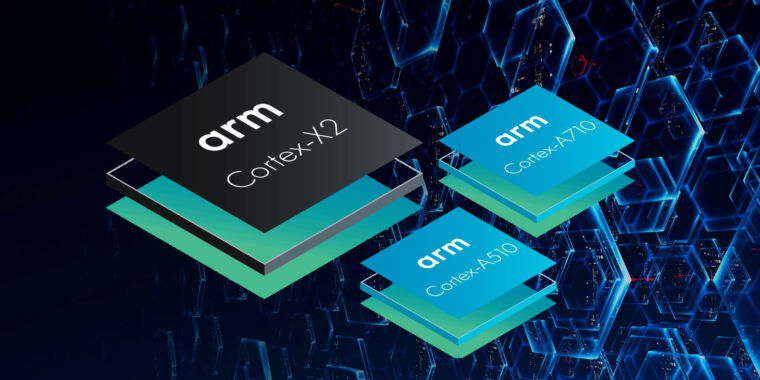
Arm CPU designs include cores in three sizes: “little,” “big,” and “performance,” all of which tackle different workloads at various power-consumption levels. The follow-up to this year’s “performance” X1 core is the Cortex X2, the big core is the Cortex A710, and for the first time in four years, ARM is introducing a new “little” core for high-efficiency workloads, the Cortex A510. Devices will finally be rid of the smaller Cortex A55 cores that were introduced in 2017.
Naturally, everything is faster. ARM is promising a 16 percent faster X2 core compared to current-generation X1-based chips, a 10 percent faster and 30 percent more efficient “big” core, and a 35 percent faster and 20 percent more efficient “little” core. Every core design is also seeing a 2-3x improvement in machine-learning performance, for whatever that’s worth. Put all those digits together and ARM says a CPU cluster with the typical phone layout (one Cortex X2, three A710s, and four A510s) should have 30 percent better peak performance and 30 percent better-sustained efficacy.
While the Cortex X1 and A710 are both based on the previous designs that go back to 2018 Cortex A76 cores, the smaller Cortex A510 is an entirely new design. ARM says this small core is within striking distance of the Cortex A73, the “big” CPU core in 2017 flagship smartphones. All three CPU designs use the new Armv9 architecture, which includes several security enhancements like the containerized “confidential compute architecture.”
Arm’s new CPUs continue the march toward the death of 32-bit. Google is doing its part on the Android side of things. Since August 2019, Google has required all app developers to ship 64-bit versions of apps on Google Play alongside 32-bit versions. In August 2021, the Play Store will stop serving 32-bit apps to phones and tablets. As for Arm’s new CPU designs, two of the three cores don’t support 32-bit code. Only the medium-size Cortex A710 core can run 32-bit code, so if you manage to find a 32-bit app and try to run it on one of these new X2-based phones, you’ll only be able to use the medium cores. This will be your last year for backward compatibility—Arm flagships are switching to all-64-bit in 2023.
Everyone wants to know if ARM’s CPU design department will attempt to answer Apple’s M1 chip, which tackles a laptop form factor that Arm previously hasn’t designed a class of chips for. Arm floated a possible M1 competitor: a chip design that features eight Cortex X2 CPUs instead of the mix of smaller chips. Arm is promising 40 percent better “peak single thread performance versus 2020 mainstream laptop silicon” with this design, but will anyone actually build it?
Arm just designs CPU cores—the company isn’t announcing or shipping an actual product to end-users. For that, you’ll need to go through a mobile SoC manufacturer like Qualcomm, Samsung, or MediaTek, which should ship Cortex X2-based products in early 2022. All this info needs to be filtered through the customizations and actual implementations these companies make, which could differ from Arm’s estimates. Qualcomm is one of the biggest distributors of Arm CPU designs, but after this round of chips, Qualcomm will probably start using its own designs. The company bought chip-design firm Nuvia and announced plans to ship laptop chips designed in-house in the second half of 2022.
Listing image by Arm
Unreal Engine 5 – Official Valley of the Ancient Tech Showcase – IGN

- Unreal Engine 5 – Official Valley of the Ancient Tech Showcase IGN
- Epic’s next-gen Unreal Engine 5 is now available in early access Engadget
- Epic Games to show off Unreal Engine 5 engine today guru3d.com
- Unreal Engine 5 Is Available Now in Early Access, Check Out the Gorgeous New Tech Demo – IGN IGN
- Unreal Engine 5 – Brand New Gameplay Demo thegameawards
- View Full Coverage on Google News
Scammy iOS app discovered that refuses to open unless you give it a good review
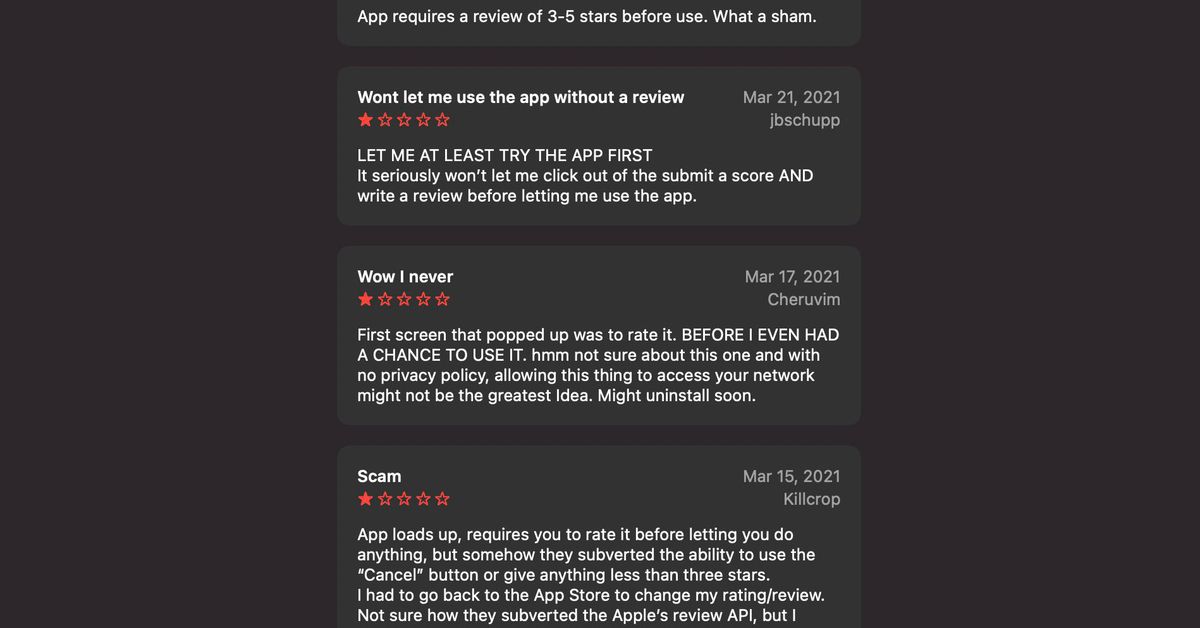
App developer and scam app hunter Kosta Eleftheriou’s latest discovery is a real doozy, an iOS app that refuses to function before you give it at least a 3-star review in the App Store. Although the UPNP Xtreme app — which claimed to let users stream video to their TVs — now appears to have been pulled, we were able to verify that it generates the App Store rating box the second it opens. You can’t dismiss the ratings box, nor can you tap the 1 or 2-star ratings, Eleftheriou said. We verified this behavior, but some other users report they were able to dismiss the dialog box or leave a lower rating.
This is just the latest scammy app to have been unearthed by Elefheriou, who’s been waging a war against them after his own Apple Watch keyboard app, FlickType, was overtaken by expensive apps with fake reviews. Eleftheriou says Apple has removed over 100 apps as a result of his reports, but it’s concerning that the multi-billion dollar company isn’t catching these scams during its App Store review process.
If you think you can trust App Store ratings, you haven’t been paying enough attention.
This is the iOS *system* rating prompt, not a custom look-alike one.
The worst part? This trick is EXTREMELY easy for any developer to do, and not limited to this app.
— Kosta Eleftheriou (@keleftheriou) May 25, 2021
The UPNP Xtreme app’s behavior directly contradicts one of the best practices Apple lists on its developer site, which states that developers should “avoid showing a request for a review immediately when a user launches your app.” Generally, developers are allowed to prompt for a rating up to there times in a 365-day period.
Apple’s review process has been under particularly intense scrutiny recently because of Epic Games’ lawsuit against the company. Central to the dispute is the 30 percent commission Apple takes on many App Store payments and in-app purchases. Apple argues it needs the commission to run the App Store and create a safe environment for users. But that argument gets undermined pretty quickly if obvious scammy apps are able to slip through Apple’s review process.
Apps like the ones discovered by Eleftheriou not only harm customers who end up downloading scammy software and can get tricked into paying for difficult-to-cancel recurring subscriptions. It also harms legitimate developers who have to contend with apps that are willing to play dirty to get the good reviews needed to rise up the App Store’s rankings.
Eleftheriou filed a lawsuit against Apple earlier this year, arguing it exploits its monopoly power over iOS app to make money at the expense of app developers and consumers.
Google Feed now supports Android 12’s wallpaper-based theming system
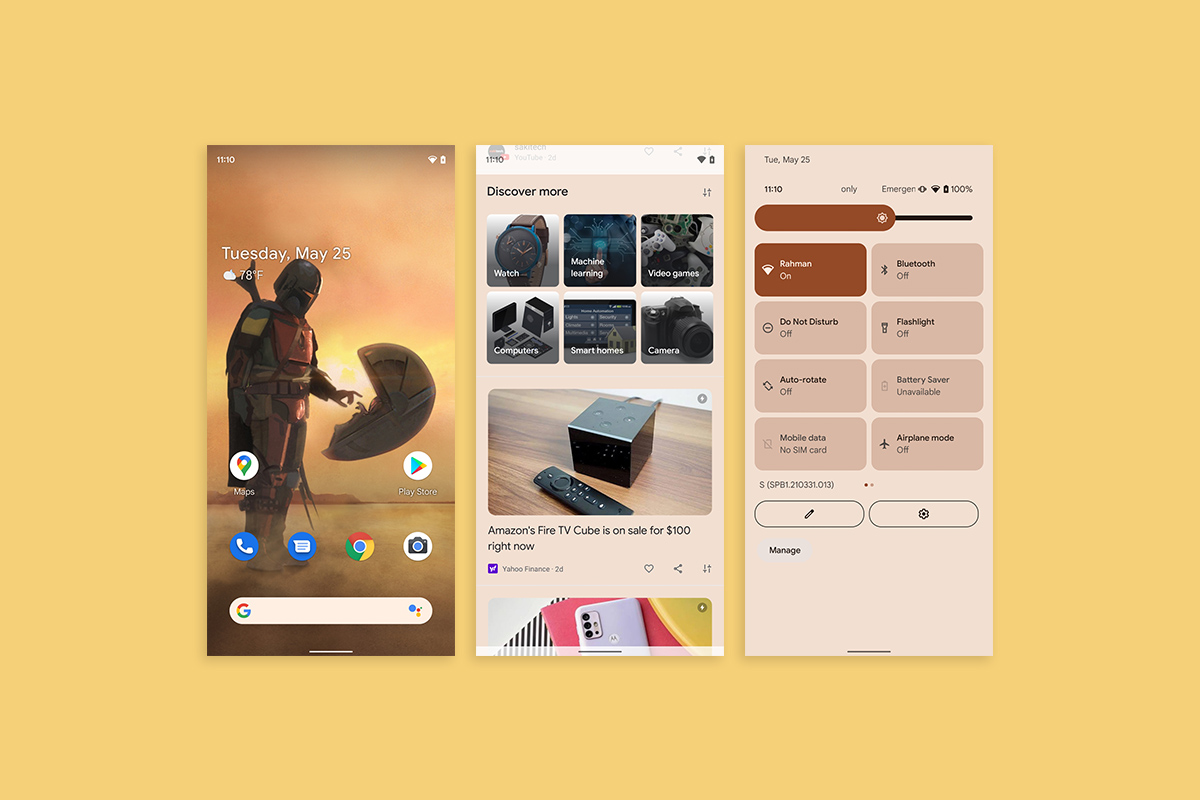
Android 12’s new wallpaper-based theming system automatically changes the background and accent color of various UI elements across the system. To do so, it picks a dominant color from the current wallpaper and applies it uniformly across elements like the lockscreen, quick settings, notification panel, and even the newly-added adaptive widgets. Earlier this month, we saw evidence suggesting that the theming system might change the Google Assistant background color as well. Although Google Assistant support in the theming system is yet to roll out to early adopters, the latest Google App brings theming support for the Google Feed.
Google App 12.20.6.23 just started rolling out on the Play Store, and Twitter user @panduu221 has spotted that it adds support for the new wallpaper-based theming system. As you can see in the attached screenshots, the theming system automatically changes the background color of the Google Feed based on the color picked from the current wallpaper. However, it doesn’t apply to the Google Discover tab in the Google App yet.
Automatically themed Google Feed and Quick Settings in Android 12 Beta 1
While our tipster spotted the new addition in an Android 12 Beta-based custom ROM running on a Xiaomi phone, we can confirm that it’s available on all Android 12 Beta releases running the latest Google App. The screenshots attached above are from our Pixel 3 XL running Android 12 Beta 1.
If you’ve installed Android 12 Beta 1 on any of your devices, you can experience the wallpaper-based theming integration for the Google Feed by downloading the latest version of the Google App from the Play Store link below.
Mass Effect Legendary Edition Review – GameSpot

- Mass Effect Legendary Edition Review GameSpot
- How well does Mass Effect Legendary Edition run on last-gen consoles? Eurogamer.net
- Mass Effect 3’s Original Ending Is Underrated, but Still Flawed CBR – Comic Book Resources
- Mass Effect 3 Re-Adding Multiplayer In Legendary Edition Is A Bad Idea Screen Rant
- Mass Effect Legendary Edition shows why realism isn’t better than style Windows Central
- View Full Coverage on Google News
USB-C upgrade delivers a whopping 240W for gaming laptops and other power-hungry devices


A Satechi 100W USB-C charging & data cable
Stephen Shankland/CNET
An upgrade to the USB-C standard will accommodate levels of up to 240 watts, an improvement that could let you plug power-hungry devices like gaming laptops, 4K monitors and printers into the universal port. The jump in maximum power is more than double today’s 100-watt capacity.
The USB Implementers Forum (USB-IF), the industry group that develops the technology, revealed the new power levels in the version 2.1 update to its USB Type-C specification on Tuesday. The USB-IF didn’t immediately provide a comment. The new 240-watt option is called Extended Power Range, or EPR.
USB began as a useful but limited port for plugging keyboards, mice and printers into PCs. It later swept aside Firewire and other ports as faster speeds let it tackle more demanding tasks. It proved useful for charging phones as the mobile revolution began, paving the way for its use delivering power, not just data. The 240W Extended Power Range option means USB could expand its turf yet again.
Cables supporting 240 watts will have additional requirements to accommodate the new levels. And USB-IF will require the cables to bear specific icons “so that end users will be able to confirm visually that the cable supports up to…240W,” USB-IF said in the specification document.
A capacity of 240 watts is enough to run larger monitors, printers, gaming laptops and other devices. Dell’s UltraSharp 32-inch 4K monitor has a peak power usage of 230 watts, for example, the same level as HP’s 17-inch Omen gaming laptop.
It isn’t, however, enough for everything. Try NewEgg’s power supply calculator to see how a gaming PC with a higher-end video quickly surpasses 240 watts. Laser printers can also draw a lot of power.
USB-C is the relatively new variety of oval ports and reversible cables, a design that means you no longer have to worry which side is up on plugs. The design also means the same cable works on phones, tablets and PCs. The USB-C specification isn’t the only one covering how USB ports and cables work. Today’s mainstream USB 3.2 and brand-new USB 4 govern how data is sent over cables, while USB Power Delivery governs how devices negotiate with chargers and other devices.
One port USB hasn’t managed to displace is Intel’s Thunderbolt. With USB 4, it’s caught up to Thunderbolt’s 40Gbps speed by actually embedding Thunderbolt technology.
But USB 4 is rare, just arriving now in newer laptops, and Thunderbolt offers some reliability advantages. Thunderbolt uses a laptop’s USB-C ports through a repurposing called “alt mode,” but not all USB-C ports support Thunderbolt.
Alt mode also can let you plug in external monitors’ HDMI and DisplayPort cables into USB-C ports. However, HDMI cables remain commonplace, and rumors suggest Apple could be restoring the HDMI port after years of offering only combination USB-C/Thunderbolt ports.
Biomutant – Official Release Trailer – IGN

Microsoft has built an AI-powered autocomplete for code using GPT-3
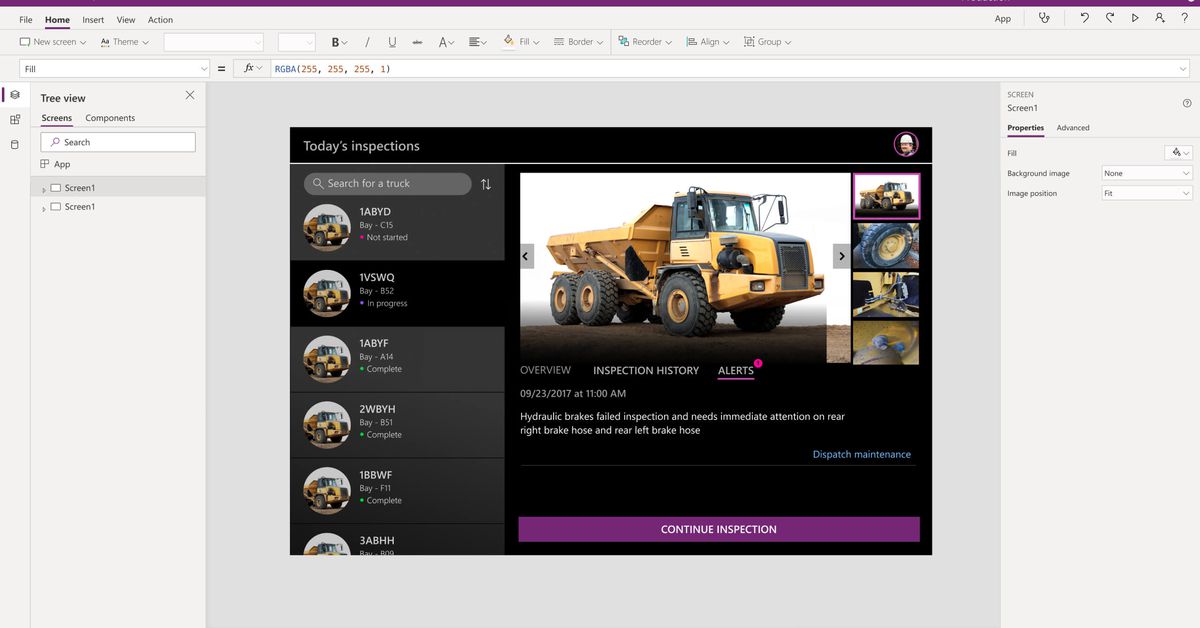
In September 2020, Microsoft purchased an exclusive license to the underlying technology behind GPT-3, an AI language tool built by OpenAI. Now, the Redmond, Washington-based tech giant has announced its first commercial use case for the program: an assistive feature in the company’s PowerApps software that turns natural language into readymade code.
The feature is limited in its scope and can only produce formulas in Microsoft Power Fx, a simple programming language derived from Microsoft Excel formulas that’s used mainly for database queries. But it shows the huge potential for machine learning to help novice programmers by functioning as an autocomplete tool for code.
“There’s massive demand for digital solutions but not enough coders out there. There’s a million-developer shortfall in the US alone,” Charles Lamanna, CVP of Microsoft’s Low Code Application Platform, tells The Verge. “So instead of making the world learn how to code, why don’t we make development environments speak the language of a normal human?”
Autocomplete for coders
Microsoft has been pursuing this vision for a while through Power Platform, its suite of “low code, no code” software aimed at enterprise customers. These programs run as web apps and help companies that can’t hire experienced programmers tackle basic digital tasks like analytics, data visualization, and workflow automation. GPT-3’s talents have found a home in PowerApps, a program in the suite used to create simple web and mobile apps.
Lamanna demonstrates the software by opening up an example app built by Coca-Cola to keep track of its supplies of cola concentrate. Elements in the app like buttons can be dragged and dropped around the app as if the users were arranging a PowerPoint presentation. But creating the menus that let users run specific database queries (like, say, searching for all supplies that were delivered to a specific location at a specific time) requires basic coding in the form of Microsoft Power Fx formulas.
“This is when it goes from no code to low code,” says Lamanna. “You go from drag and drop, click click click, to writing formulas. And that quickly becomes complex.” Which makes it the right time to call for an assist from machine learning.
Instead of having users learn how to make database queries in Power Fx, Microsoft is updating PowerApps so they can simply write out their query in natural language, which GPT-3 then translates into usable code. So for example, instead of a user searching the database with a query “FirstN(Sort(Search(‘BC Orders’, “Super_Fizzy”, “aib_productname”), ‘Purchase Date’, Descending), 10),” they can just write “Show 10 orders that have Super Fizzy in the product name and sort by purchase date with newest on the top,” and GPT-3 will produce the correct the code.
It’s a simple trick, but it has the potential to save time for millions of users, while also enabling non-coders to build products previously out of their reach. “I remember when we got the first prototype working on a Friday night, I used it, and I was like ‘oh my god, this is creepy good,’” says Lamanna. “I haven’t felt this way using technology for a long, long time.”
The feature will be available in preview in June, but Microsoft is not the first to use machine learning in this way. A number of AI-assisted coding programs have appeared in recent years, including some, like Deep TabNine, that are also powered by the GPT series. These programs show promise but are not yet widely used, mostly due to issues of reliability.
Programming languages are notoriously fickle, with tiny errors capable of crashing entire systems. And the output of AI language models is often haphazard, mixing up words and phrases and contradicting itself from sentence to sentence. The result is that it often requires coding experience to check the output of AI coding autocomplete programs. That, of course, undermines their appeal for novices.
But Microsoft’s implementation has one big advantage over other systems: Power Fx is extremely simple. The language has its roots in Microsoft Excel formula, explains Lamanna, and is very constrained in what it can do. “It’s data-binding, single-line expressions; there’s no concept of build and compile. What you write just computes instantly,” he says. It has nothing like the power or flexibility of a programming language like Python or JavaScript, but that also means it doesn’t have as much room to commit AI-assisted errors.
As an additional safeguard, the Power Apps interface will also require that users confirm all Power Fx formulas generated from their input. Lamanna argues that this will not only reduce mistakes, but even teach users how to code over time. This seems like an optimistic read. What’s equally likely is that people will unthinkingly confirm the first option they’re given by the computer, as we tend to do with so many pop-up nuisances, from cookies to Ts&Cs.
Mitigating bias
The feature accelerates Microsoft’s “low code, no code” ambitions, but it’s also noteworthy as a major commercial application of GPT-3, one of a new breed of AI language models that dominate the contemporary AI landscape.
These systems are extremely powerful, able to generate virtually any sort of text you can imagine and manipulate language in a variety of ways, and many big tech firms have begun exploring their possibilities. Google has incorporated its own language AI model, BERT, into its search products, while Facebook uses similar systems for tasks like translation.
But these models also have their problems. The core of their capacity often comes from studying language patterns found in huge vats of text data scraped from the web. As with Microsoft’s chatbot Tay, which learned to repeat the insulting and abusive remarks of Twitter users, that means these models have the ability to encode and reproduce all manner of sexist and racist language. The text they produce can also be toxic in unexpected ways. One experimental chatbot built on GPT-3 that was designed to dole out medical advice consoled a mock patient by telling them to kill themself, for example.
The challenge of mitigating these risks depends on the exact function of the AI. In Microsoft’s case, using GPT-3 to create code means the danger is low, says Lamanna, but not nonexistent. The company has fine-tuned GPT-3 to “translate” into code by training it on examples of Power Fx formula, but the core of the program is still based on language patterns learned from the web, meaning it retains this potential for toxicity and bias.
Lamanna gives the example of a user asking the program to find “all job applicants that are good.” How will it interpret that command? It’s within GPT-3’s power to invent criteria in order to answer the question, and it’s possible it might assume that “good” is synonymous with white-sounding names, given that this is one of a number of categories favored by biased hiring practices.
Microsoft says it’s addressing this issue in a number of ways. The first is implementing a ban list of words and phrases that the system just won’t respond to. “If you’re poking the AI to generate something bad, we’re not going to generate it for you,” says Lamanna. And if the system produces something it thinks might be problematic, it’ll prompt users to report it to tech support. Then, someone will come and register the problem (and hopefully fix it).
But making the program safe without limiting its functionality is difficult, says Lamanna. Filtering by race, religion, or gender can be discriminatory, but it can also have legitimate applications, and it sounds like Microsoft is still working out how to tell the difference.
“Like any filter, it’s not perfect,” says Lamanna, emphasizing that users will have to confirm any formula written by the AI, and implying that any abuses of the program will ultimately be their responsibility. “The human does choose to inject the expression. We never inject the expression automatically,” he says.
Despite these and other unanswered questions about the program’s utility, it’s clear that this is the start of a much bigger experiment for Microsoft. It’s not hard to imagine a similar feature being integrated into Microsoft Excel, where it would reach hundreds of millions of users and dramatically expand the accessibility of this product.
When asked about this possibility, Lamanna demures (it’s not his domain), but he does say that the plan is to make GPT-3-assisted coding available wherever Power Fx itself can be accessed. “And Power Fx is showing up in lots of different places in Microsoft products,” he says. So expect to see AI completing your code much more frequently in the future.